REVIEW · HOI AN
Hoian Old Town – Immersive Free Walking Tour
Book on GetYourGuide →Operated by Quoc Le · Bookable on GetYourGuide
Hoi An grabs you fast. This 2-hour Old Town walk is a practical way to connect the dots between the Japanese, Chinese, and Vietnamese parts of the city, without spending your whole day stuck in crowds. You’ll hit major landmarks on foot and get local-style explanations that make the old buildings feel less like postcards and more like places with jobs, rituals, and everyday life.
I especially like two things. First, the English-speaking guide approach makes it easy to understand what you’re seeing as you move, not after you get home. Second, the tour doesn’t only do stone and streets; it includes a traditional art performance stop (45 minutes), so you experience Hoi An culture with your ears, not just your eyes.
One consideration: the tour price is $10, but UNESCO entry tickets are required for UNESCO attractions, priced at $5 (120,000 VND) per ticket. Plan for that extra cost so you’re not surprised mid-walk, and wear comfortable clothes since the tour runs rain or shine.
In This Review
- Key highlights you’ll feel on the street
- Why this Hoi An Old Town walk works so well
- Meeting Quoc Le at 125 Phan Chu Trinh
- Japanese Covered Bridge: more than a photo stop
- Tan Ky Old House: merchant life in house form
- Performance theatre stop: culture you can hear in 45 minutes
- Fujian and Cantonese assembly halls: community identity in stone
- Kazik Park: a breather inside the old town loop
- Phung Hung Ancient House: the “keep walking, keep learning” stop
- Finish at Hoi An Central Market: end with real life
- Price and UNESCO tickets: the real cost picture
- What to wear and how to handle rain or shine
- Who should book this walking tour
- Should you book this Hoi An Old Town immersive free walking tour?
Key highlights you’ll feel on the street

- Small group of up to 5 participants, so you can actually ask questions.
- English live guide (Quoc Le) meeting you at 125 Phan Chu Trinh.
- Japanese Covered Bridge and multiple merchant-era house stops that show different community influences.
- A traditional art performance at the Hoi An Traditional Art Performance Theatre.
- Stops that mix heritage sights with everyday life at the Hoi An Central Market.
- A tip-based format, with guidance given for what to offer.
Why this Hoi An Old Town walk works so well
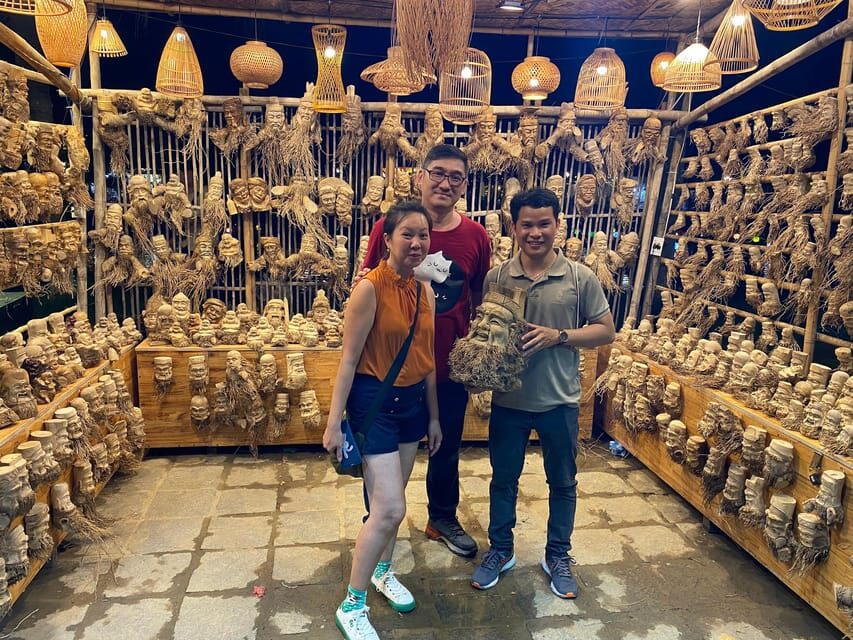
Hoi An Old Town is UNESCO-listed, and it can feel overwhelming fast if you try to plan everything yourself. This tour keeps things tight: a short walking loop, clear landmark stops, and an English-speaking guide who helps you connect the architecture to the people who built and used it.
The value for me is balance. You get the big names, but you also get context for why those names matter. And because the group stays small, you can keep your bearings without constantly asking the same question twice.
The other smart choice here is pacing. Two hours is long enough to see real highlights and short enough that you’re still fresh when you reach the market.
You can also read our reviews of more walking tours in Hoi An



Meeting Quoc Le at 125 Phan Chu Trinh
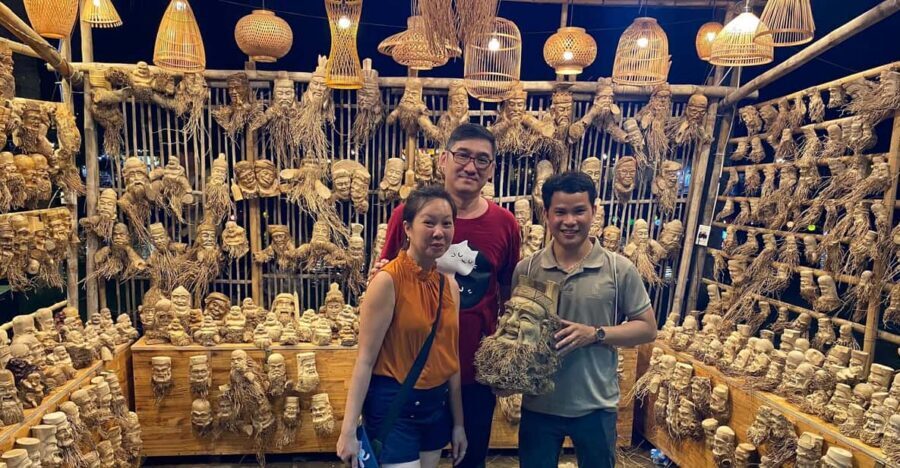
You start at 125 Phan Chu Trinh. The guide is easy to spot: a white T-shirt and a shoulder bag.
That detail matters more than you might think. In Hoi An, streets can twist and signage can be inconsistent, so a clear meeting point helps you avoid wasting your first 20 minutes searching. Since the tour is limited to 5 participants, the guide can also move at a human pace rather than herding a larger crowd.
If you want the best experience, join early in your visit so you get orientation for what you’ll want to explore later on your own. The tour itself is short, so using it as your first “map in motion” is a strong strategy.
Japanese Covered Bridge: more than a photo stop
The walk includes the Japanese Covered Bridge Pagoda. This is the kind of Hoi An landmark that almost forces your eyes to look upward: it’s compact, iconic, and instantly recognizable.
What I like about this stop on a guided walk is that you’re not just staring at the bridge. You’re learning how Hoi An’s trading history shaped the mix of communities in the town. The Japanese presence shows up here in a way that feels integrated, not pasted on.
The visit time is about 10 minutes, which is perfect. You get time to see it from a couple of angles, but you don’t lose the whole tour waiting for the ideal background. If you want a few extra minutes for a slower look, you can do it when the group regroups—just be sure you don’t fall behind.
Tan Ky Old House: merchant life in house form
Next up is the Old House of Tan Ky, another heritage stop with a strong sense of place. Traditional houses like this are great because they show everyday life rather than just big monuments.
The visit is also around 10 minutes, and that timing is important. Houses can be dense with details, and trying to memorize everything in one sitting can make you feel tired instead of inspired. A short, guided glance gives you enough structure to know what to watch for.
On a walking tour like this, I find house stops work best when you treat them like a living lesson: notice how the building is organized, how it connects to the street, and what that implies about how people worked and hosted visitors. Even if you only catch the highlights, you’ll leave with a better instinct for what you’re seeing across Hoi An Old Town.
Performance theatre stop: culture you can hear in 45 minutes
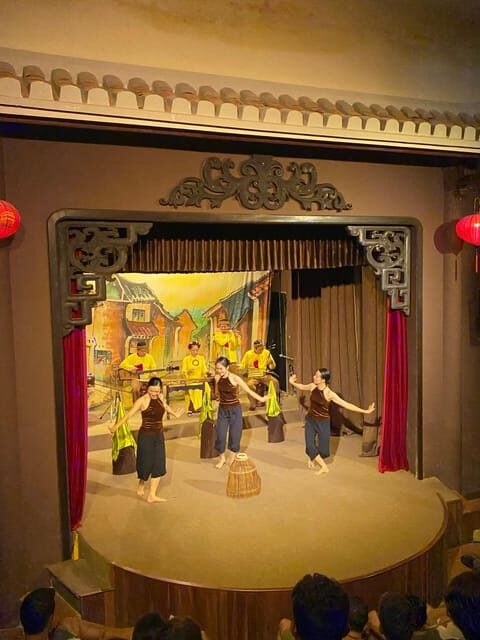
The itinerary includes the Hoi An Traditional Art Performance Theatre, where you’ll spend about 45 minutes for sightseeing plus a concert and dance show.
This is a standout part of the experience for a simple reason: it slows everything down in a good way. After walking between houses and assembly halls, your brain starts to feel like it’s running on images. The performance gives you rhythm, melody, and movement, so Hoi An culture lands in a fuller way.
If you’re someone who worries that Old Town walking tours can turn into rushed sightseeing, this theatre block is the built-in remedy. It also makes the tour feel more than a checklist of landmarks.
One practical note: comfortable clothes matter here too, because you’ll be seated and standing depending on the show flow. If your plan is to keep walking afterward, wear something you can move in.






Fujian and Cantonese assembly halls: community identity in stone
You’ll visit the Fujian Assembly Hall (sometimes described as connected to the Cantonese community influence, depending on the context you get from your guide). Expect about 10 minutes here.
Assembly halls are fascinating because they’re social infrastructure. These buildings weren’t only for worship or ceremony in a narrow sense. They acted like meeting places that reinforced community ties for people who shared origin, language, or trade networks.
On a guided walk, you’ll get the story behind why these halls matter. Without that context, they can look like any other old building. With it, you start reading them like clues: who gathered here, what they cared about, and how they made community life more organized.
If you’re the type who loves understanding how a city works, this is one of those stops where you can feel your understanding sharpen in real time.
Kazik Park: a breather inside the old town loop
There’s also time at Kazik Park. Think of this as a reset point during the walk. Old Town streets can be tight and visually intense, so a green pocket—even a small one—helps you breathe and regroup.
I like having this mid-tour pause because it prevents fatigue from turning into impatience. It also gives you a moment to look at the area around the heritage buildings without feeling like you’re rushing to the next ticketed stop.
Even if you keep your focus on photos, use the break to check how your energy level feels. Two hours is short, but it’s still a lot of walking in the old town.
Phung Hung Ancient House: the “keep walking, keep learning” stop
The tour includes Phung Hung Ancient House. Like the other house stop, it’s a chance to see how Hoi An’s heritage wasn’t all about trading ships and warehouses. It was also about domestic spaces—where families lived, learned social rules, and managed daily routines.
Because the stop is part of a tight walking loop, it’s helpful to go in with a simple mindset: look for the differences between houses, not just the similarities. You’ll start noticing how each heritage structure reflects the community that shaped it.
The payoff is that by the time you reach the market, you’ll recognize more than “old buildings.” You’ll recognize patterns: how Hoi An’s foreign influences blended into local life over generations.
Finish at Hoi An Central Market: end with real life
The tour ends at Hoi An Central Market. This is a practical and fun way to close the loop because markets are where you can translate history into today.
You’ll be in the right mood to snack, browse, or pick up basic travel supplies after the heritage stops. Even if you’re not buying much, the market gives you that final sensory hit—what people actually eat, how goods are displayed, and how everyday commerce feels.
I like ending here because you don’t have to sprint back to your hotel feeling like you only saw the “tourist version” of Hoi An. You get a transition from heritage buildings to living street culture.
If you want to keep exploring after the tour, the market location is also a useful springboard. You’ll have a better sense of what’s nearby and what you might want to revisit at a slower pace.
Price and UNESCO tickets: the real cost picture
The $10 price buys you the guided experience: the English-speaking host, the walking route, the landmark sequencing, and the cultural performance stop.
But you also need to budget for UNESCO entrance tickets for UNESCO attractions. The ticket price is $5 (120,000 VND) per ticket. The tour is short, and not every stop may require the ticket, but UNESCO rules in Hoi An mean you should assume at least some sites will require entry.
So the real value question is simple: are you paying for guidance and context, or for entries to everything? Here, you’re mostly paying for guidance, timing, and a focused experience. Once you add UNESCO tickets, your total spend becomes more accurate.
Then there’s the tip-based element. This tour is described as tip-based, with guidance for what to tip:
- 250,000 VND per person for nice
- 300,000 to 400,000 VND per person for great
Because tips are part of the system, I’d plan your budget like this: base ticket (the $10), plus any UNESCO entries you’re required to cover, plus a tip that matches how much you enjoyed the guide and pace.
If you like tours where you can ask questions and get more than a script, tipping well is a good match. In a small group, the guide can actually respond to you, which is exactly what you’re paying for.
What to wear and how to handle rain or shine
This tour runs rain or shine, so dress like weather is real (because it is). Wear comfortable clothes and avoid loose clothing or see-through outfits, since those are listed as not allowed.
A practical approach:
- Wear breathable fabric if it’s hot, but something you don’t mind getting damp if it rains.
- Bring something small for rain coverage if you have it.
- Wear shoes you trust on uneven old-town pavement.
Also remember the performance theatre stop. Even if the street is wet, you’ll likely be moving between outdoor and indoor spaces. Being comfortable in both is the key to enjoying the full two hours.
One more detail: the tour is not suitable for people over 95 years. If you’re in that range, you’ll want to look for a more flexible option.
Who should book this walking tour
This is a strong fit if you want:
- An easy first introduction to Hoi An Old Town landmarks
- A small-group format where questions feel possible
- An English guide and a clear route over about 2 hours
- A mix of heritage sights plus a traditional art performance
- A tour that ends at the market, so you can keep exploring in a practical way
You might skip it if you hate guided structure and prefer totally independent wandering. You might also reconsider if you’re trying to avoid any extra costs beyond the $10, since UNESCO tickets are required for UNESCO attractions.
Should you book this Hoi An Old Town immersive free walking tour?
If your goal is to get your bearings fast and learn what you’re actually looking at, I think it’s worth booking. The combination of small group, English live guiding by Quoc Le, landmark stops like the Japanese Covered Bridge, a real culture moment with the theatre performance, and a sensible finish at Hoi An Central Market hits a lot of the right notes for two hours.
Just plan your budget for UNESCO entries at $5 (120,000 VND) per ticket, and be ready to tip in line with the guide’s suggestions if you feel the experience delivered.
In short: book it early in your trip, wear comfy shoes, bring some cash for UNESCO tickets and tipping, and use the tour as your launchpad for deeper exploring afterward.