REVIEW · HOI AN
Private Traditional Silk Process in Hoi An Silk Village
Book on Viator →Operated by Bay Mau Tour · Bookable on Viator
Silk starts with a mulberry leaf. In Hoi An Silk Village, you get a focused look at how Vietnam’s silk garments are made, from the mulberry and silkworm areas through the cocoon-to-thread process, all explained by an English-speaking guide. The trade-off: it’s a short, compact visit, so if you want a long, hands-on farm day, this may feel a bit like a showroom tour.
I also like that the visit includes an exhibition that helps you spot the difference between pure silk and fake fabric—useful when you’re planning tailoring or shopping. If you end up with a guide such as Luni (a name that shows up in standout experiences), you’ll likely get clearer, more practical guidance than the usual “watch and rush” approach.
In This Review
- Key things to know before you go
- Price and what you really get for $10
- Finding Silk Village Hoi An and keeping expectations realistic
- Welcome drink, Quang Nam stories, and why mulberry matters
- From cocoon to thread in the Unraveling House
- Traditional weaving, Champ people textiles, and the Champa Dai Viet link
- The exhibition that helps you spot pure silk vs fake
- Shopping and tailoring: use the tour order to your advantage
- The main drawback: it can feel compact and demo-style
- Who this tour suits best (and who should skip it)
- Booking tips that help you get the most from your 45 minutes
- Should you book Private Traditional Silk Process in Hoi An Silk Village?
- FAQ
- How long is the Private Traditional Silk Process tour?
- Is this tour private?
- What’s the meeting point for the tour?
- What’s included in the price?
- Is hotel pickup or drop-off included?
- Do I need to print a ticket?
- What language is the guide?
- Can I cancel for a full refund?
- Is the tour suitable for most visitors?
Key things to know before you go
- A private group experience in 45 minutes with only your party attending
- Mulberry gardens and silkworm feeding made simple with a real craft walkthrough
- The Unraveling House shows how silk thread comes from cocoons
- Champa Dai Viet weaving methods explained through traditional weaving practices
- A pure-silk vs fake-silk exhibition that helps you shop with confidence
- Mobile ticket plus entrance fee and a water bottle included
Price and what you really get for $10
At $10 per person for about 45 minutes, this tour is priced like an “add-on that actually teaches something.” You’re not paying for transport (there’s no hotel pickup or drop-off), and you’re not buying a long Old Town loop. Instead, you’re buying time with a guide inside a working silk environment, where the focus is the making of silk—plants, worms, thread, and weaving.
For value, the big win is that you’re seeing multiple steps in one go: mulberry and silkworm raising, cocoon unraveling, and then weaving and textile production. That matters because it turns shopping from guesswork into understanding. You’ll still have choices to make at the end, but you’ll make them faster and with fewer regrets.
A second value point: entrance is included, and you get an English-speaking guide plus a bottle of water. That means you can show up, follow along, and stay comfortable without juggling extra costs mid-visit.
You can also read our reviews of more private tours in Hoi An



Finding Silk Village Hoi An and keeping expectations realistic
You’ll meet at Silk Village Hoi An – The Tourist, at 28 Nguyễn Tất Thành, Tân An, Hội An. The activity ends back at the same meeting point, so you’re not left wondering how to get out or where you go next.
The visit runs about 45 minutes, and that time constraint shapes the vibe. Expect to move through several small stops and demonstrations rather than spend hours watching one step over and over. If you prefer slow, deep craft immersion, you might wish it were longer. On the other hand, if your goal is to understand the basics and shop smarter, 45 minutes is a sweet spot.
Also, because it’s private, you’re not competing with crowds for the guide’s attention. That’s a practical advantage if you have questions like how to tell real silk, how tailoring works in general, or why the process starts with mulberry leaves.
Welcome drink, Quang Nam stories, and why mulberry matters
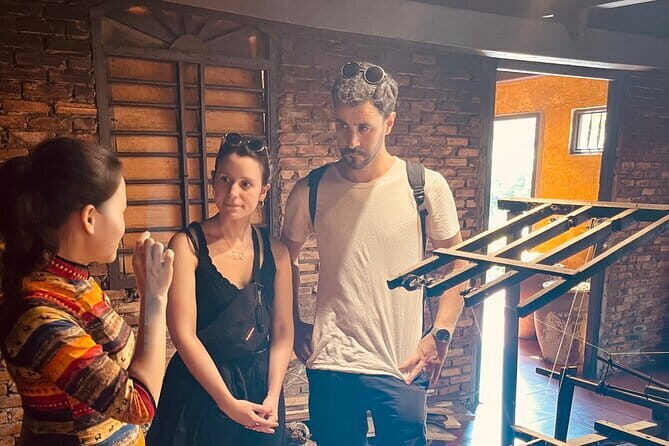
The first part sets the tone. You’ll start with a welcome drink, then head into a traditional house area in Quang Nam. This is where you hear the story of craft sericulture—how silk farming and silk making fit into traditional life in Central Vietnam.
Here’s the part that helps you understand silk instead of just watching it. Silk doesn’t begin with cloth; it begins with feeding. The tour includes visits to ancient mulberry gardens and a silkworm breeding house, plus you’ll see how to feed silkworms.
The silk village is described as the only location with valuable genetic sources of mulberry. Whether you care about the science details or not, the takeaway is simple: the place is presenting itself as a center for preserving the raw starting point of silk production. That’s why they lean so hard on mulberry gardens and silkworm breeding in the early stops.
One more practical note: since the guide is English-speaking, you’ll get the context quickly. That’s important in Vietnam craft spaces, where the first few minutes can otherwise feel like you’re watching without knowing what you’re seeing.
From cocoon to thread in the Unraveling House
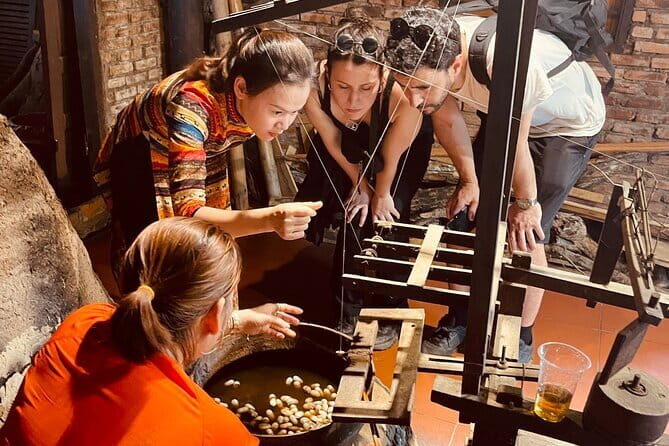
One of the most useful stops is the Unraveling House. This is where the tour explains how to get a silk thread from the cocoon to weave silk fabric.
Even if you’ve seen silk demonstrations before, this kind of step-by-step explanation helps. You get the idea that the thread you’re buying isn’t just a random material—it comes from a process that starts with raising silkworms, then harvesting cocoons, then turning them into usable thread.
This is also where your shopping mindset changes. When you understand the work behind the thread stage, price differences and fabric claims start to make more sense. You’ll be less likely to get distracted by shiny color alone and more likely to ask the right questions in the later exhibition and shop areas.
Traditional weaving, Champ people textiles, and the Champa Dai Viet link

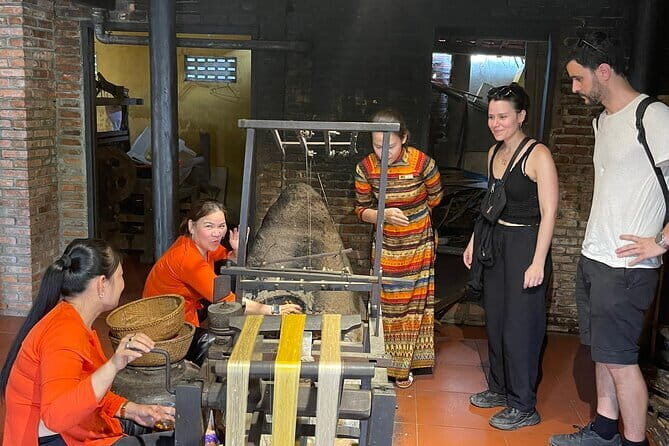
After the cocoon-to-thread stage, the tour moves into the weaving house area. This is where you discover handicrafts of Champ people and traditional textiles as part of the traditional Vietnamese silk weaving process.
The tour frames the weaving methods as being preserved from the Champa Dai Viet era. That’s not just a date on a wall. It’s a reason to pay attention to the technique and the way the craft is presented. It helps you see weaving as something maintained over time, not just something produced for visitors today.
In practical terms, this stop often includes hands-on or close-up viewing of textiles being made or prepared. You’ll likely notice how the craft is presented as a process chain: mulberry and worms lead to thread, thread leads to weaving, and weaving leads to the fabrics and products you can buy later.
Because your visit is private, you can ask the guide to explain what you’re seeing instead of trying to decode it alone. That’s where English support really earns its keep.






The exhibition that helps you spot pure silk vs fake

The tour ends with an exhibition focused on pure silk and fake silk fabric. This is one of the most valuable sections because it directly affects decisions outside the village—like whether you buy ready-made items, fabrics for tailoring, or silk gifts for friends at home.
The exhibition’s purpose is straightforward: you learn the difference between pure silk and imitation or lower-quality fabric. Even without turning it into a lab test, that kind of guidance helps you avoid the classic mistake of buying something that looks right but isn’t what you thought it was.
This matters even more if you’re combining the silk village visit with Hoi An tailoring plans. A lot of the stress around shopping disappears when you arrive already knowing what to look for. You can also compare what different shops claim, because you’ve already been taught the categories.
Shopping and tailoring: use the tour order to your advantage

If you’re planning to buy silk in Hoi An, timing matters. The silk village visit is built to feed your questions and then give you a place to shop and tailor.
Here’s how I’d use it in your itinerary: do this before you commit to buying fabrics or ordering a tailored piece. Once you’ve seen the thread and weaving explanation, you’ll be able to judge claims more confidently. You’ll also feel more comfortable asking direct questions about what you’re buying.
Also, the guide can help you interpret what you see in the exhibitions and product areas. Some guides—like Luni, specifically named in highly positive experiences—are known for making the craft side clearer and helping people avoid unnecessary upsells. Even if you don’t get the exact same guide, the format is designed to support that helpful, practical shopping mindset.
The main drawback: it can feel compact and demo-style
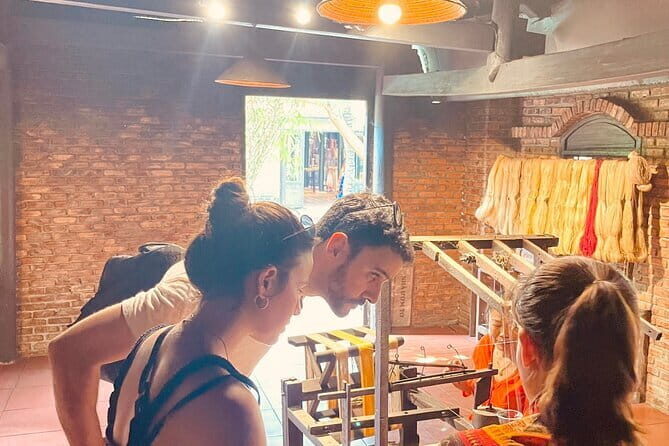
Not every moment is going to feel like a hands-on craft workshop. One caution: this experience can come across as a set of small rooms and demonstrations, with weaving happening in view rather than a whole-day “see everything, do everything” experience.
That’s not automatically bad. For many people, it’s the point—45 minutes, clear steps, quick education, then you move on. But if you expect a more rustic, immersive rural setting, you might find the environment more tourist-facing than you hoped.
If you’re sensitive to that style, go in with the right goal: learn the process basics fast, then use that knowledge to shop intelligently.
Who this tour suits best (and who should skip it)
This private silk process visit is ideal if you:
- want a short, structured silk education without spending hours
- care about tailoring or silk purchases and want to avoid blind buying
- like seeing the full chain from mulberry and silkworms to thread and weaving
- prefer a private, English-guided experience rather than drifting through on your own
It may be less satisfying if you:
- want a long, deeply hands-on workshop day
- expect the tour to include hotel pickup or a full-day itinerary
- dislike demo-style craft spaces with limited time in each room
If you’re on a tight schedule in Hoi An, this is a smart use of time. If you have more time, you can always add other experiences later—but this one gives you the context that makes the rest of your silk shopping easier.
Booking tips that help you get the most from your 45 minutes
The tour uses a mobile ticket, and you’ll receive confirmation at booking. Plan to arrive a few minutes early at the meeting point so you don’t feel rushed.
Since there’s no hotel pickup, build in time to get there on your own. If you’re combining this with Old Town plans, treat the silk village as your “education anchor.” That way, you can shop with fewer second guesses.
Bring a clear goal into your head before you go. For example, decide what you want to understand most: thread-to-weaving, how silk is classified as pure versus fake, or how tailoring decisions connect to fabric quality. When you know what you’re looking for, the short time moves much faster.
Should you book Private Traditional Silk Process in Hoi An Silk Village?
If you want a practical, no-nonsense silk crash course in central Hoi An, I’d say yes. For $10 and about 45 minutes, you’re getting the key steps that actually matter: mulberry and silkworm feeding, cocoon unraveling, weaving practices, and a pure-silk vs fake-silk exhibition. That combination is exactly what makes silk shopping feel less risky.
Book it especially if you’re considering tailoring or want higher confidence when buying silk products. The private format and English-speaking guide also help you get answers rather than just watch.
Skip it only if you’re chasing a long, deeply hands-on craft day or you dislike compact demo-style environments. Otherwise, it’s a strong use of time—and a useful one.
FAQ
How long is the Private Traditional Silk Process tour?
It lasts about 45 minutes.
Is this tour private?
Yes. It’s a private tour, and only your group participates.
What’s the meeting point for the tour?
You’ll meet at Silk Village Hoi An – The Tourist, 28 Nguyễn Tất Thành, Tân An, Hội An, Quảng Nam, Vietnam.
What’s included in the price?
The tour includes an English speaking guide, entrance fee, and a bottle of water. Admission is included.
Is hotel pickup or drop-off included?
No. Hotel pick up and drop off are not included.
Do I need to print a ticket?
No. It’s a mobile ticket.
What language is the guide?
The guide is English speaking.
Can I cancel for a full refund?
Yes. Free cancellation is available up to 24 hours in advance for a full refund.
Is the tour suitable for most visitors?
Most travelers can participate.