REVIEW · HOI AN
Hoi An walking Tour – Private Tour
Book on Viator →Operated by Local Life Hoi An · Bookable on Viator
Hoi An feels like a living map. This private walk strings together the town’s key trading-port stops, starting at the Hoi An History Museum and moving through legendary Chinese and Japanese landmarks in just 2 to 3 hours.
I especially like the way the guide turns buildings into stories you can actually picture, and I like that the route is short enough to leave you breathing room for the afternoon. One possible drawback: it’s still a walking tour in warm weather, so comfortable shoes help, and poor weather can mean a date change.
In This Review
- Key highlights at a glance
- Why this short private walk works in Hoi An
- Hoi An History Museum: start with the big picture
- Quan Thang House (77 Tran Phu): a Chinese merchant home, 18th-century style
- Phuc Kien Assembly Hall (46 Tran Phu): meet Thien Hau, goddess of the sea
- Japanese Covered Bridge (Chua Cau): the postcard icon with a purpose
- Tan Ky ancient house: classic old-town architecture, not the oldest
- The guide matters: pacing, English, and room for your questions
- Price and value: what $69 gets you
- Weather, shoes, and how to stay comfortable
- What to do after: use the afternoon your way
- Should you book this Hoi An walking tour?
- FAQ
- How long is the Hoi An walking tour?
- Is pickup offered?
- What’s the group size limit?
- Where does the tour start?
- What sites are included?
- Is this tour private?
- Do I get confirmation and a ticket?
- Is the tour suitable for most travelers?
- What happens if the weather is poor?
- Can I cancel for a full refund?
Key highlights at a glance
- Small group size (up to 10) keeps questions easy and pacing relaxed.
- Hoi An History Museum first gives you the context before the streets start making sense.
- Tran Phu street architecture shows Hoi An’s merchant past, house by house.
- Phuc Kien Assembly Hall + Thien Hau adds a spiritual layer to the Chinese community story.
- Japanese Covered Bridge (Chua Cau) is iconic, but the explanations make it more than a photo stop.
- Tan Ky ancient house rounds out the tour with classic old-town home design.
Why this short private walk works in Hoi An
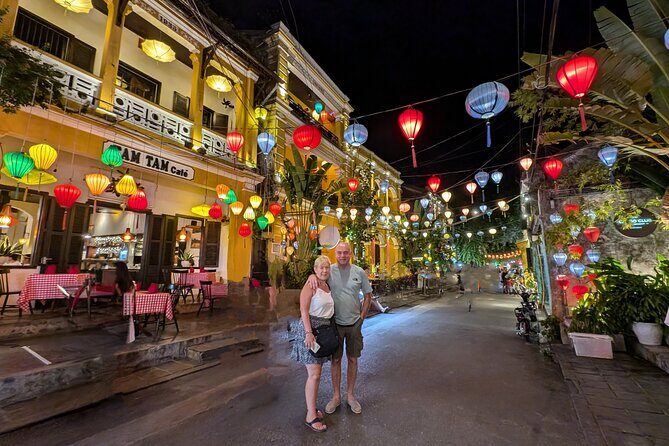
Hoi An can overwhelm you fast. You’ll see lanterns, tiled roofs, canal views, and photo spots that blur together. This tour is designed to slow that down. Instead of trying to cover everything, it focuses on a tight set of places that explain how Hoi An became a major trading port.
The smart part for you is time. At around 2 to 3 hours, you still get your mornings (or late mornings) to yourself after. It’s long enough to learn what you’re looking at, but short enough that you don’t feel like you lost an entire day to walking. And because it’s private with a maximum of 10 people, it’s easier to ask questions and go at a comfortable pace.
You can also read our reviews of more walking tours in Hoi An



Hoi An History Museum: start with the big picture
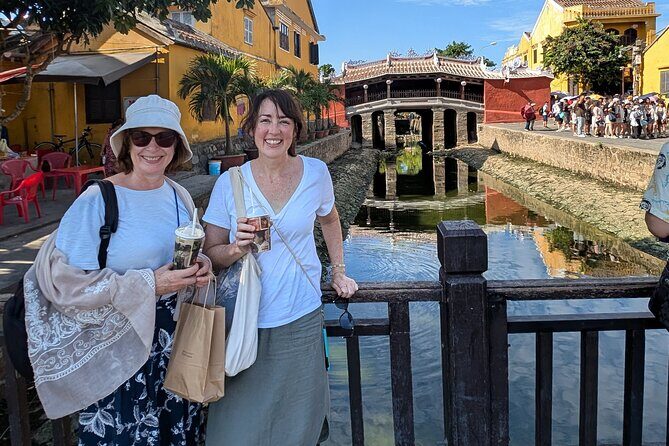
The tour begins at the Hoi An History Museum. This is not just a ticket-scan-and-sit moment. You’ll get a guided overview of Hoi An’s historical process and cultural background—basically the “why” behind what you’ll see later on the streets.
I like this approach because it prevents the common problem in old towns: you admire a building without knowing what it meant. Here, you start with the origin story, so when the guide points out details at the houses and halls later, it clicks instead of sounding like a random list.
Practical note: museums can be cool inside, which helps if you’re starting during warm parts of the day.
Quan Thang House (77 Tran Phu): a Chinese merchant home, 18th-century style
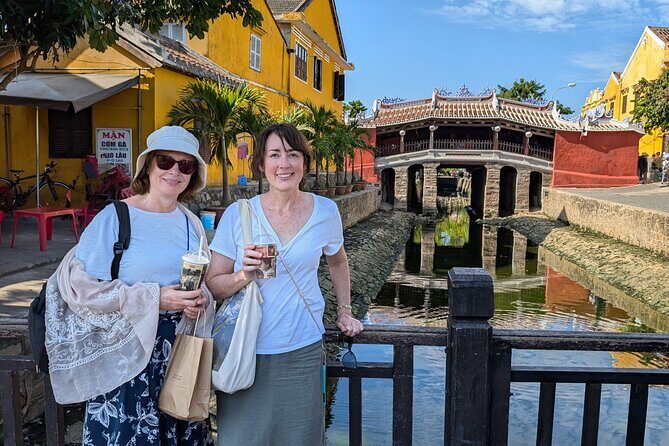
Next up is Quan Thang House at 77 Tran Phu, an 18th-century home originally owned by a Chinese captain and merchant. For many visitors, “ancient house” sounds similar from place to place. What makes this stop worthwhile is the specific person and community link.
You’re not just looking at old wood and walls. You’re learning how merchant life shaped the town’s architecture and street presence. Hoi An was built on trade connections, and homes like this show how that wealth and influence were reflected in everyday domestic space.
What to watch for: the layout and traditional design cues that help explain why certain styles became common in this part of town. If you’re the type who likes to understand how people actually lived, this one tends to land well.
Phuc Kien Assembly Hall (46 Tran Phu): meet Thien Hau, goddess of the sea
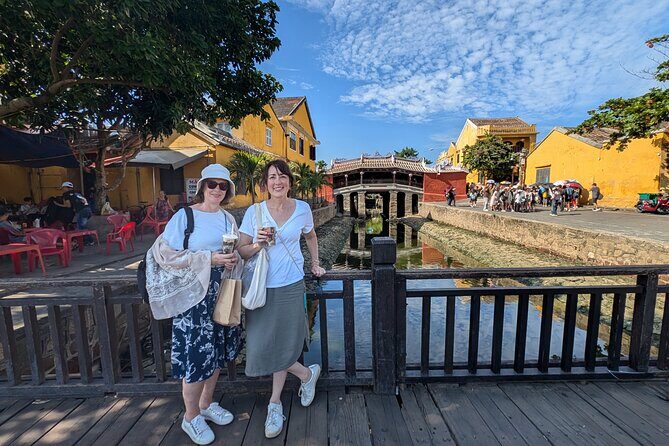
Then you’ll head to Phuc Kien Assembly Hall at 46 Tran Phu Street. This hall is dedicated to Thien Hau, the goddess of the sea. It’s a fascinating pivot in the tour: you go from merchant home to community worship, still tied to the same trading world.
Why this matters for you: Hoi An’s Chinese communities weren’t only economic networks. They were also cultural and spiritual networks. A place like Phuc Kien helps you see why maritime life mattered so much—especially for people traveling, settling, and building business in a port city where the sea is never an abstract backdrop.
Practical note: assembly halls are often busy with local activity when you visit. Keep your voice low, respect space, and remember this isn’t a dead museum. It’s part of ongoing life.
Japanese Covered Bridge (Chua Cau): the postcard icon with a purpose
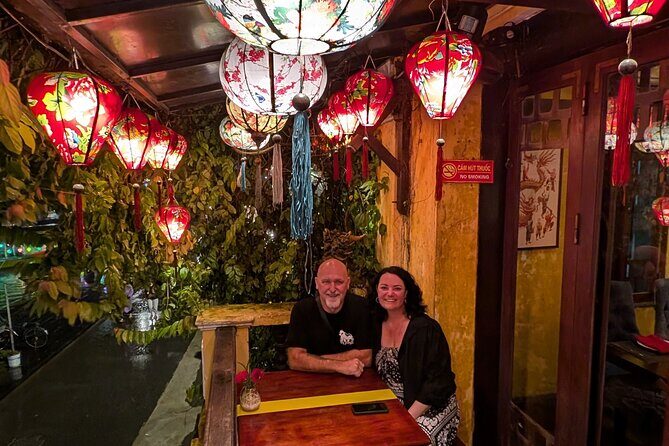
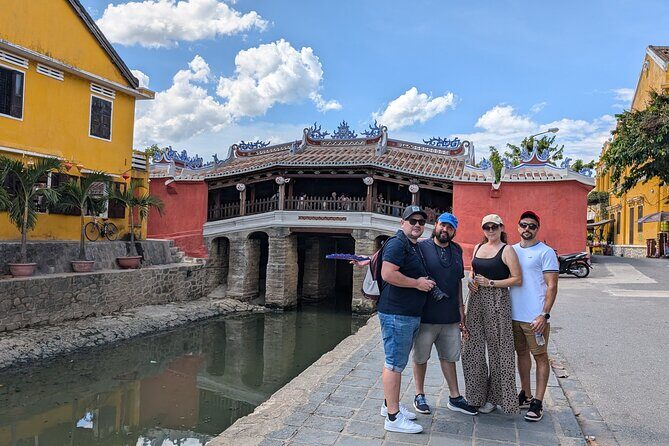
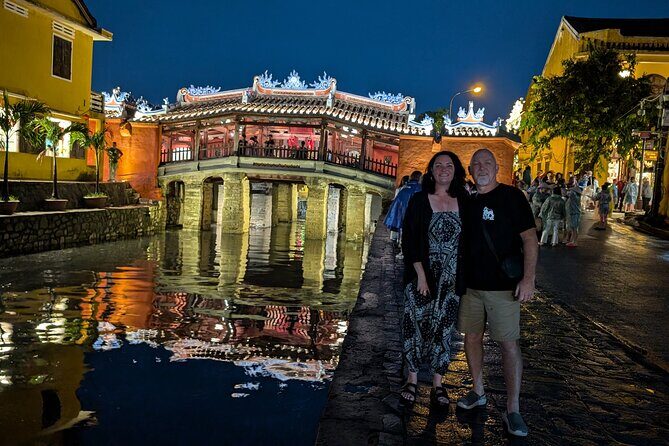
No Hoi An walk feels complete without the Japanese Covered Bridge, also called the Pagoda Bridge (Chua Cau). The tour explains that it was built by Japanese craftsmen tied to a broader Japanese merchant community in Hoi An.
Here’s the key value: you’ll understand what you’re looking at beyond its famous silhouette. The bridge represents contact, cooperation, and the way different communities left physical marks on the same town.
This is one of those spots where you’ll probably see lots of people holding phones up in every direction. The guide’s job is to help you slow down and notice the details that make the bridge more interesting than a quick photo. Even if you’ve seen it before, the story can make it feel newly relevant.
You can also read our reviews of more private tours in Hoi An






Tan Ky ancient house: classic old-town architecture, not the oldest
The final main stop is Tan Ky ancient house. It’s not described as the oldest house in Hoi An, but its architecture is among the most typical—which is exactly why it’s a good closing point.
After visiting homes and assembly spaces tied to merchant communities, Tan Ky gives you a more rounded “how it looks and works” experience of old-town domestic design. Think of it as the piece that helps you picture the everyday side of history, not only the trade and religion.
Why this works as an ending: by the time you reach Tan Ky, your brain has been trained to look at details. Windows, doors, and interior-style elements start to make more sense because you’ve already been given context.
The guide matters: pacing, English, and room for your questions
A big reason this tour performs so well is the guide style. The experience is often led by Hai, a fourth-generation local who’s known for excellent English, an easygoing, friendly approach, and a calm pace. The route includes regular “shirt stop” moments where the guide points out points of interest so you aren’t just walking from one landmark to the next.
Another plus: the guide is typically open to suggestions and changes if you want to shift what you focus on. That’s a big deal because Hoi An has a lot of options. If you’re more into architecture than legends, or you want a few extra minutes at one stop, that flexibility helps.
If you’re the kind of traveler who likes to ask why things are shaped a certain way or who wants practical context (not just dates), this tour is set up to match that energy.
Price and value: what $69 gets you
At $69 per person, this is not the cheapest way to walk around Hoi An. But it is also not “pay for a name” pricing. You’re paying for a guided route that does real interpretation—plus the convenience that makes old towns easier to navigate.
What you get for the money:
- Private tour format with a small maximum group size (10).
- A pre-planned route tied to major stops: History Museum, Quan Thang House, Phuc Kien Assembly Hall, Japanese Covered Bridge, and Tan Ky.
- Pickup offered, which helps when you want to start without fuss.
- A mobile ticket, which is usually smoother than juggling paper tickets.
A practical reality check: because the itinerary is fixed to a short set of high-value sites, you don’t get an all-day wander with endless detours. If you want a lot of free wandering time inside the old town, you’ll appreciate that the afternoon is free after the walk—so you can do your own thing.
I’d say the best value is for you if you want guided context fast and you don’t want to spend your time guessing what every building “means.”
Weather, shoes, and how to stay comfortable
This tour requires good weather. If conditions are poor, the plan can shift with a different date or a full refund. That matters because Hoi An walking can get sweaty quickly, and you’ll do most of your experiencing outside or between short indoor stops.
Plan like a local:
- Wear comfortable shoes with grip.
- Bring water and use the stops to rest your legs.
- If your schedule is tight, keep a little flexibility in your day. The tour duration is short, but weather can still change the timing.
What to do after: use the afternoon your way
The structure ends with free time in the afternoon. That’s actually a smart design choice because Hoi An rewards wandering at your own rhythm. After your guided session, you’ll have a framework to explore with more confidence.
Now you can:
- revisit the areas you loved most during the tour,
- look for street-level details you didn’t have time to notice,
- and enjoy the city without feeling like you’re late for the next stop.
Because you’ll understand the “who built this and why” behind key landmarks, your self-guided wandering feels less random.
Should you book this Hoi An walking tour?
Book it if you want a fast, structured way to understand Hoi An’s trading-port story, and you prefer a guide who can explain what you’re seeing while keeping the pace comfortable. The stop selection hits real anchor points: museum context, merchant-era architecture, a sea-goddess assembly hall, the Japanese Covered Bridge, and a classic ancient house ending.
Skip it or reconsider if you dislike walking in warm weather, or if your plan can’t handle weather-related changes. Also, if you only want a casual photo walk with no interpretation, you might find a guided route more than you need.
If you want Hoi An to make sense quickly, this is a solid choice.
FAQ
How long is the Hoi An walking tour?
The tour runs for about 2 to 3 hours.
Is pickup offered?
Yes, pickup is offered.
What’s the group size limit?
The tour has a maximum of 10 travelers.
Where does the tour start?
It starts in Hội An, Quảng Nam, Vietnam.
What sites are included?
You’ll visit the Hoi An History Museum, Quan Thang House (77 Tran Phu), Phuc Kien Assembly Hall (46 Tran Phu), the Japanese Covered Bridge (Pagoda Bridge/Chua Cau), and Tan Ky ancient house.
Is this tour private?
It is described as a private tour.
Do I get confirmation and a ticket?
You receive confirmation at the time of booking, and you’ll use a mobile ticket.
Is the tour suitable for most travelers?
Yes, most travelers can participate.
What happens if the weather is poor?
The tour requires good weather. If it’s canceled due to poor weather, you’ll be offered a different date or a full refund.
Can I cancel for a full refund?
Yes. You can cancel up to 24 hours in advance for a full refund. If you cancel less than 24 hours before the start time, the payment is not refunded.