REVIEW · HOI AN
Vietnamese Cooking Class in Historical Hoi An Restaurant
Book on Viator →Operated by Green Mango · Bookable on Viator
Good dumplings start with good timing.
This Vietnamese cooking class in Hoi An pairs hands-on cooking with a culture lesson inside a 180-year-old, heritage-listed building in the old town. I like that you get practical tips and tricks you can actually use at home, not just a script of what to do. One thing to consider: the class can feel fast-paced, so if you prefer lots of slow explanation, you’ll want to ask questions early.
I also love the way the menus structure the whole evening. You pick from five different five-course options, and each one maps to a different side of Vietnamese food culture. The meal at the end is a sit-down with what you made, so you’re not just cooking for points on a checklist.
A possible drawback is pacing. Some people describe the experience as “chop chop,” which can be fun if you like momentum, but less ideal if you want extra time to linger over techniques.
In This Review
- Key highlights at a glance
- Vietnamese Cooking Class in Hoi An: More Than a Dinner Performance
- Where You Start: Meeting at Green Mango in the Old Town
- The Building and the Classroom Feel (180 Years of Vietnamese Kitchen Reality)
- Choose Your Five-Course Menu: Essentials vs Street Eats vs Hanoi Streets
- How the Cooking Lesson Works: Ingredients, Techniques, and Home-Kitchen Tricks
- Market Add-On: Shopping With Context (Only If You Want It)
- The Best Part: Sit-Down Dinner Made From Your Own Cooking
- The Teaching Style: Friendly, Engaging, and Sometimes Fast
- Price and Value: What $33 Buys You (and What It Doesn’t)
- Who This Vietnamese Cooking Class Suits Best
- Should You Book This Hoi An Vietnamese Cooking Class?
- FAQ
- How long is the Vietnamese cooking class in Hoi An?
- What is included in the $33 price?
- Do I need to choose a menu in advance?
- Is a market visit included?
- Are drinks included?
- Is this a private experience?
- What happens if weather is bad?
Key highlights at a glance
- Heritage-listed cooking school in the heart of Hoi An old town, in a building dating back around 180 years
- Five-course menu choices (Essentials, Balancing Act, Street Eats, Hanoi Streets, Veggie Eats) so you can match your curiosity
- Digital recipe book emailed after class, built for what you cooked
- Sit-down meal of your own dishes, not a quick standing buffet
- Optional local market add-on if you want to shop with context before cooking
- Teaching energy you can feel in the room, including instructors known for being friendly and engaging like Pinky, Que, and Jam
Vietnamese Cooking Class in Hoi An: More Than a Dinner Performance
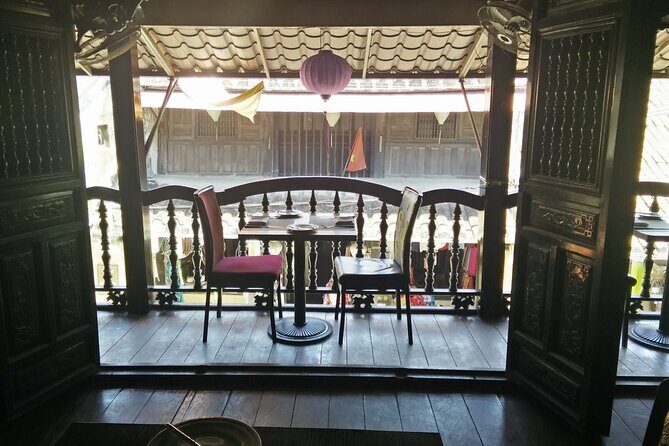
Hoi An is great for slow travel, but this experience gives you a different kind of pace. You’ll spend about 3 hours cooking in a real school setting, then sit down and eat your work. It’s the kind of activity that turns Vietnamese food from “something I ate” into “something I can recreate.”
The smartest part is that the class isn’t only recipe-focused. You learn why ingredients matter in Vietnamese cuisine—how tastes balance, how fresh herbs and aromatics drive flavor, and how traditional dishes can be approached in a modern, practical way. And the chef at the center of it all is Hai Nguyen, known in Vietnam for a creative take on traditional food.
If you’re the type who likes to learn by doing, this fits you. If you hate getting your hands dirty, you’ll still watch and eat, but the value is clearly highest when you cook along.
You can also read our reviews of more historical tours in Hoi An



Where You Start: Meeting at Green Mango in the Old Town
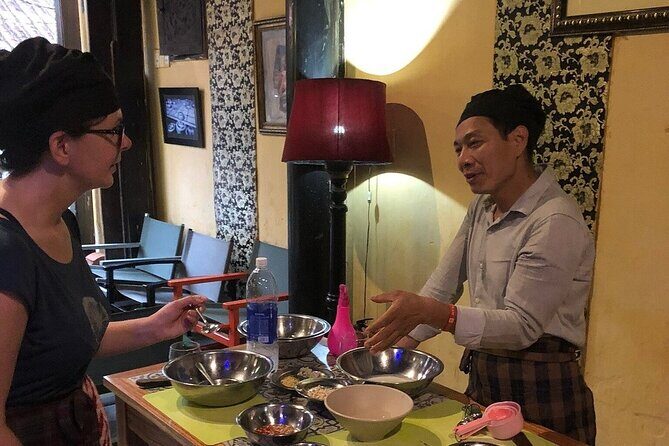
You meet at Green Mango Restaurant, 54 Nguyễn Thái Học, Phường, Hội An, Quảng Nam 563800. The experience runs from there and ends back at the same point, which keeps logistics simple after a day of walking around town.
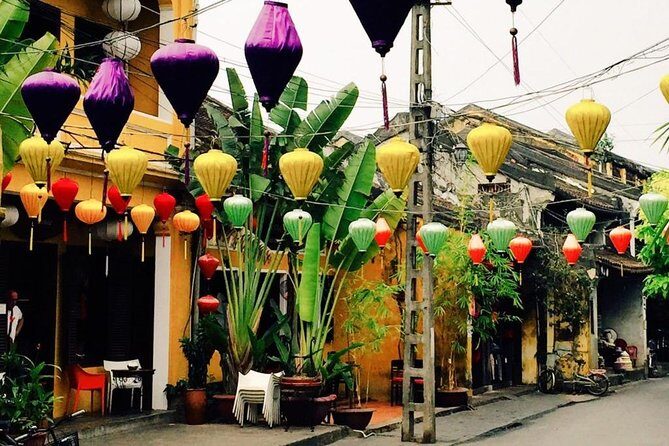
The location matters because it puts you in the old town atmosphere right away. You’re not commuting across town to a studio. You’re stepping into a cooking school housed in a heritage-listed building that dates back about 180 years, which gives the evening a more grounded, local feel than a generic cooking setup.
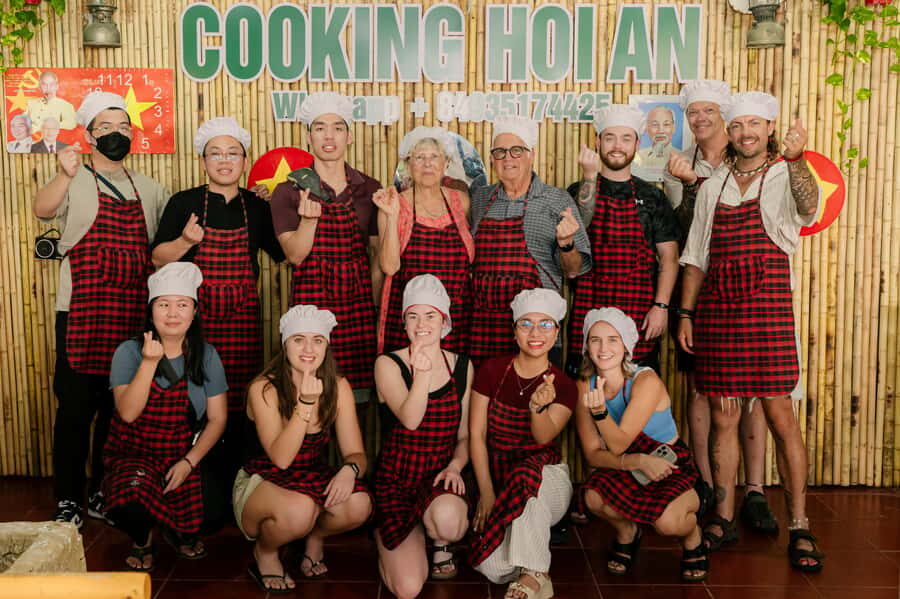
This is also a private activity, meaning it’s only your group. That tends to make the class more comfortable—less waiting, fewer awkward turns for who asks questions, and usually more chance for the instructor to check how everyone’s doing.
The Building and the Classroom Feel (180 Years of Vietnamese Kitchen Reality)
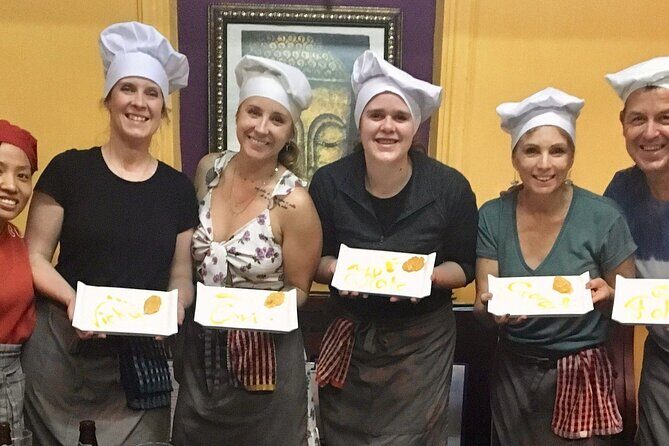
The cooking school is in a heritage-listed building—old walls, old-world character, and a space designed for the work of feeding people. That matters because cooking is physical. If the room is too cramped, too cold, or too spread out, your attention breaks. Here, you’re in a focused setting where you can move from station to station.
You’ll also have clear structure. The class includes a digital recipe book and a sit-down meal, so you’re not constantly wondering what’s next. The format is designed to teach you how to cook and how to finish strong—plate it, taste it, and eat it while it’s still at its best.
One small practical note: since this happens in a real restaurant/cooking school environment, you’ll likely feel a bit of “get moving” energy. It’s not a leisurely kitchen tour. It’s more like a guided cooking session with instruction layered in as you work.
Choose Your Five-Course Menu: Essentials vs Street Eats vs Hanoi Streets
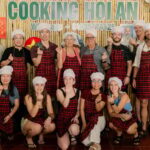
Your biggest decision is the menu. You can choose from five five-course menus: The Essentials, Balancing Act, Street Eats, Hanoi Streets, and Veggie Eats. If you don’t pick, the default is The Essentials.
Here’s how that helps you as a visitor. Instead of sampling random dishes, you’re learning a theme. Each menu represents a distinct angle of Vietnamese cuisine and culture. That means your tasting and cooking make more sense, because the chef isn’t just throwing recipes at you—there’s an intentional sequence.
- The Essentials is the safest choice if you want a broad “core Vietnamese” foundation.
- Balancing Act appeals if you want to focus on how flavors work together—sweet, sour, salty, and fresh herb notes.
- Street Eats is ideal if you’re drawn to the fast, snackable energy of Vietnamese casual food.
- Hanoi Streets works well if you’re interested in how Northern Vietnam’s style differs from what you’ll often see elsewhere.
- Veggie Eats is the best fit if you want a plant-forward menu that’s still built like a full meal.
If you’re shopping for value, picking the menu you’d actually want to eat again at home is your best move. You’re not just buying an experience—you’re buying a set of dishes you’ll recreate.
How the Cooking Lesson Works: Ingredients, Techniques, and Home-Kitchen Tricks
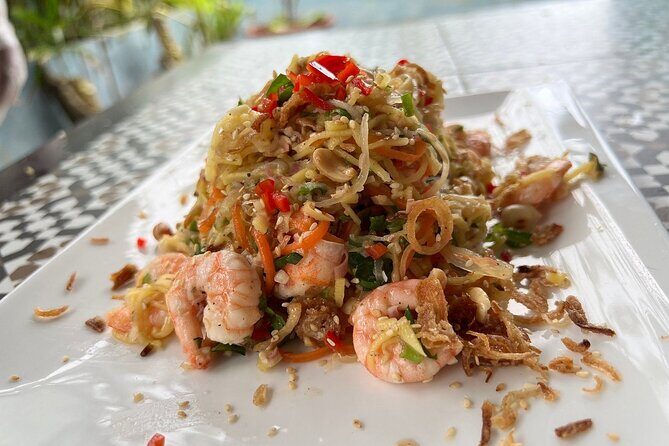
This class is built around understanding ingredients, not memorizing steps only. You’ll learn essential components and why they show up so often in Vietnamese cooking—things like herbs, aromatics, sauces, and balancing elements that make the food taste “Vietnamese” even when you’re cooking far from Vietnam.
What I like most is the promise of practical guidance. The school focuses on traditional recipes, yes, but it also includes tips and tricks for preparing them in your own kitchen. That’s important because Vietnamese cooking can feel hard when you don’t know what to substitute or how to adjust when you don’t have the exact same pantry.
You’ll also use a digital recipe book (emailed to you after class). That’s a big value add. You’re not relying on memory after you get back to your hotel. You’ll have a reference that matches what you cooked, which makes the class feel “portable.”
If you want to get the best results, watch for the moments where the instructor explains the purpose behind a step. When you understand the why, the how becomes much easier.
You can also read our reviews of more cooking classes in Hoi An
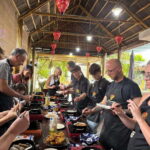

Market Add-On: Shopping With Context (Only If You Want It)
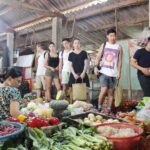
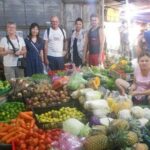
A market visit is listed as an optional add-on. That’s a smart choice if you like learning where ingredients come from and how vendors think about freshness and quality.
Even without the market, the class teaches you about essential ingredients and their importance in Vietnamese cuisine. But adding the market can sharpen your awareness. You’ll see what the ingredients look like in real life, how they’re handled, and how they show up in Vietnamese cooking.
This is also a good option if you’re a “texture and aroma” person. When you shop first, you’re more likely to notice why certain ingredients change the flavor at the end.
The Best Part: Sit-Down Dinner Made From Your Own Cooking
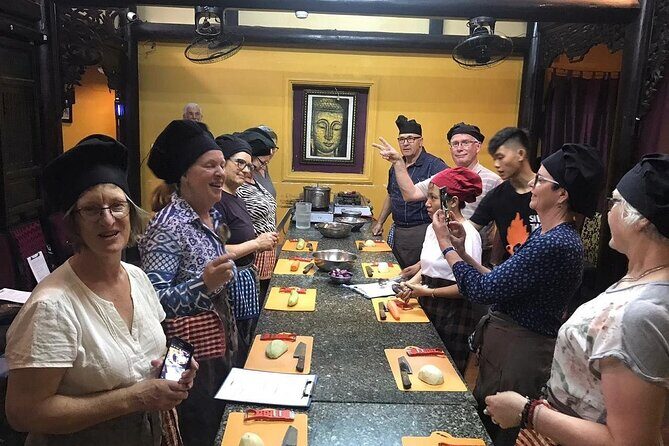
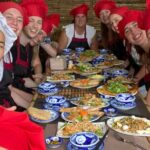
At the end, you get a sit-down meal and you eat what you prepared. That’s a simple detail, but it changes the whole vibe. Instead of standing around waiting for food, you get a real dining rhythm—taste, adjust, and enjoy without rushing.
The “dinner” isn’t just a reward. It’s part of the learning loop. Vietnamese cooking is all about balance, and eating your own dishes right after cooking helps you connect what you did with what you tasted. It also makes the class feel complete, because you leave with both the recipe and the memory of how it should taste.
And if you’re thinking about drinks, alcoholic beverages are not included. There’s a cocktail bar where drinks run from 40,000vnd to 200,000vnd. So you can keep it simple with water, or add something if you want.
The Teaching Style: Friendly, Engaging, and Sometimes Fast
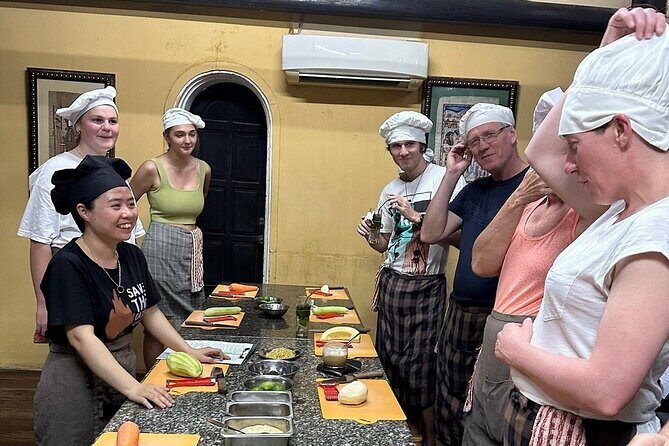
From past classes, the teaching energy seems to land in the same sweet spot again and again: friendly, entertaining, and focused on getting results. People reference instructors like Pinky, Que, and Jam as examples of teachers who keep things lively while guiding you through the process.
The one caution is pacing. Some feedback points to the class feeling “chop chop,” meaning it moves quickly. For many people, that’s exactly why it works: you stay engaged, you don’t lose momentum, and you finish with a full meal you made yourself.
If you’re the type who needs extra time to digest instructions, come prepared with questions. During the cooking, ask why a step matters or how you should adjust a flavor at home. The best outcome usually comes from being proactive.
Price and Value: What $33 Buys You (and What It Doesn’t)
At $33.00 per person, this isn’t a luxury, and it’s not a budget “watch and taste” gimmick either. You’re paying for a structured, guided session in a top local setting, plus dinner and a digital recipe book.
Here’s the value breakdown based on what’s included:
- Dinner (the sit-down meal of what you cook)
- Digital recipe book emailed after the class
Not included:
- Alcoholic beverages (you can buy drinks at the cocktail bar if you want)
So you’re essentially getting a guided cooking lesson plus a full meal, within a real old-town cooking school. The optional market add-on can add to the overall value if you enjoy ingredients and shopping context.
Also, the experience is described as a private group activity, and private often means better attention. Even if your group is just a small circle, it can help you learn faster than a larger, more crowded setup.
Who This Vietnamese Cooking Class Suits Best
This fits best if you want hands-on learning with a clear outcome. You’ll leave with dishes you can make again and a digital recipe book that supports that. It’s also a great choice if you like culture tied to food—this class is framed as a look at Vietnamese tradition and history through what you cook.
It’s also a good match for:
- Couples and small groups who want a shared activity
- Food-focused travelers who want more than a generic cooking demo
- Vegetarians who choose Veggie Eats and want a full, structured menu
It may be less ideal if you strongly prefer slow, lecture-style lessons. If you’re anxious about speed, bring a calm mindset and ask questions.
Should You Book This Hoi An Vietnamese Cooking Class?
If you want an evening where you learn Vietnamese cooking through real instruction, then eat a full sit-down meal you made, this is an easy yes. The menu choice system helps you steer the experience toward what you actually want to eat again later.
I’d book it if you’re comfortable cooking with a bit of momentum and you like practical, home-ready tips. I’d think twice if you want long explanations and a slower pace. Otherwise, this is a solid value way to spend a few hours in Hoi An’s old-town setting.
FAQ
How long is the Vietnamese cooking class in Hoi An?
The class lasts about 3 hours.
What is included in the $33 price?
The experience includes dinner (a sit-down meal of the dishes you prepare) and a digital recipe book that is emailed after the class.
Do I need to choose a menu in advance?
Yes. You can choose from five different five-course menus, and it’s best to tell the provider which menu you prefer when booking. The default choice is The Essentials.
Is a market visit included?
A local market visit is listed as an optional add-on, not included by default.
Are drinks included?
Alcoholic beverages are not included. The cocktail bar is open, with drink prices listed from 40,000vnd to 200,000vnd.
Is this a private experience?
Yes. It’s described as a private tour/activity, so only your group participates.
What happens if weather is bad?
The experience requires good weather. If it’s canceled due to poor weather, you’ll be offered a different date or a full refund.