REVIEW · HOI AN
Luxury Half-Day Tour of Hoi An Ancient Town
Book on GetYourGuide →Operated by Vietnam Travel Group VNTG · Bookable on GetYourGuide
Hoi An is best at walking speed. This half-day tour shines because it bundles the big, photo-friendly stops like the Japanese Covered Bridge with quieter cultural visits, including Phuc Kien Temple. I also like that you get a guide to steer you through the Old Town’s tight lane system. One thing to consider: the tour is short and compact, and you can’t bring luggage or large bags.
You’ll start at 08:00 with hotel pick-up and head straight into the Old Town, where the streets mix Chinese, Japanese, French, and European influences. Guides like Huy, Tea, and Minh come up in people’s experiences for clear storytelling and practical help with questions and shopping. The pace is active, so comfortable shoes matter.
The best part for value is that this isn’t just a walk-and-watch plan. Entrance tickets, an English-speaking guide, and even a bicycle with a helmet are included, so you’re less likely to get nickeled-and-dimed mid-tour. Still, it ends around 11:00, so if you want a long sit-down meal or extra museums, you’ll need a second outing.
In This Review
- Key things to know before you go
- From Your Hotel to the Old Town Lanes
- Japanese Covered Bridge and Cultural Show Rooms
- Phuc Kien Assembly Hall: When Architecture Explains Belonging
- Temple Kwan (Quan) and the Spiritual Side of Old Hoi An
- Tan Ky Ancient House: A Merchant Home You Can Picture
- Local Fish Market Views and What They Add to the Tour
- Old Town Shopping Time: How to Do It Without Losing Your Mind
- Bicycle, Helmet, and What to Wear (and Carry)
- Price and Value Check for $55 per Person
- Who This Tour Is Best For (and Who Should Skip It)
- Should You Book This Luxury Half-Day Tour of Hoi An?
- FAQ
- What time does the tour start?
- How long is the Hoi An Ancient Town tour?
- Where do I meet the guide?
- What are the main stops during the tour?
- Are entrance fees included?
- Is a bicycle and helmet included?
- What should I bring?
- Is luggage allowed?
- Is the tour suitable for wheelchair users?
Key things to know before you go
- Japanese Covered Bridge at the center of the walk: a signature landmark that anchors your orientation in Hoi An
- Temple stops that explain community life: Kwan Temple and Phuc Kien Assembly Halls bring context to the architecture
- Tan Ky Ancient House: a look at how a merchant home in old Hoi An was built and used
- A local fish market and Japanese Bridge area: helpful for seeing how the town works beyond the postcards
- Shopping with guidance: time in the Old Town without getting lost in the lanes
- Bicycle + helmet included: useful support even if the core is walking
From Your Hotel to the Old Town Lanes
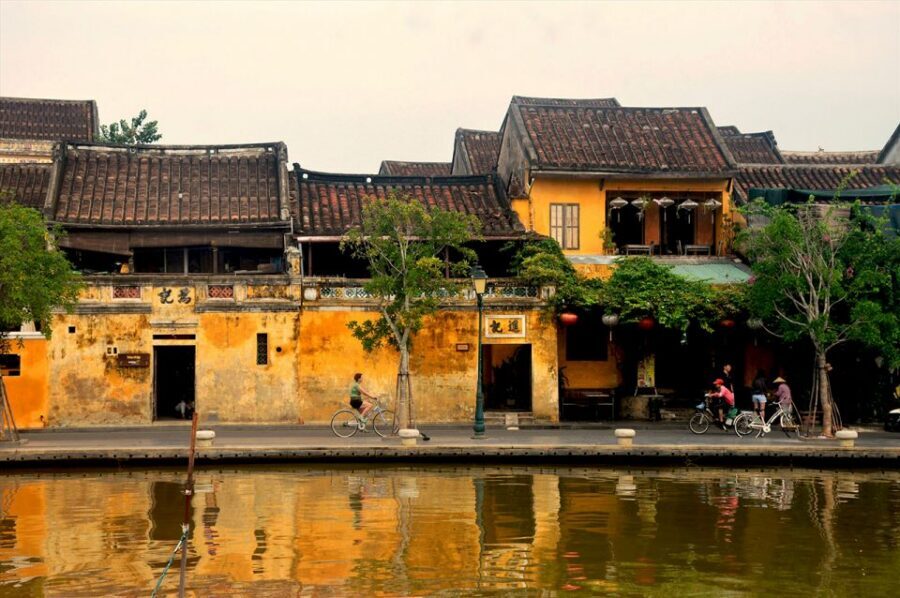
This tour starts at 08:00, and your guide meets you at your hotel lobby. From there, you walk into the Old Town area, where you’ll buy entrance tickets before you begin sightseeing. It’s a smart way to get your bearings fast because Hoi An’s center isn’t laid out for long, straight strolls.
Hoi An’s Old Town sits along the Thu Bon River, and the whole area carries a trading-port past. You’ll hear the older international names like Lam Ap, Faifo, and Hoi An, which helps explain why you’ll see so many architectural styles stacked together.
You’ll also learn how the streets evolved through contact with different communities—Chinese, Japanese, French, and European. That matters because it turns the visit from a set of landmarks into a story of trade and cultural overlap.
You can also read our reviews of more tours and experiences in Hoi An


Japanese Covered Bridge and Cultural Show Rooms
The Japanese Covered Bridge is one of those places you’ll want to see early, because it helps you understand the town’s layout. It’s about more than a bridge—it’s a recognizable focal point that makes it easier to judge distances and directions as you continue.
After that, you’ll move through areas connected with Japanese influence and local cultural display spaces. The tour includes stops that function like show rooms, which are often the quick, structured way to understand what you’re looking at. If you want a little context without spending hours reading on your own, this part works.
One practical note: this is still an Old Town. Expect lots of turns, small courtyards, and places where you stop for photos and then immediately walk on. If you’re easily rushed, slow down on your own at the bridge and temples—then keep a steady pace the rest of the time.
Phuc Kien Assembly Hall: When Architecture Explains Belonging

The Phuc Kien Assembly Halls are a major cultural stop on this route, and they’re exactly the kind of place that makes a guided tour worth it. You’re not just seeing old wood and carved details—you’re also getting the social meaning behind the buildings.
These halls connect to the idea of organized community support, shaped by people who shared origins and language. In a town known for mixed influences, Phuc Kien is a key piece of the Chinese connection to merchant life in Hoi An.
You’ll likely notice how the site’s layout guides movement: you enter, pause, look up, and then walk on. It’s a good rhythm for a half-day. Just keep your comfortable shoes close and be ready for standing time during explanation.
Temple Kwan (Quan) and the Spiritual Side of Old Hoi An

You’ll also visit Temple Kwan, a stop that rounds out the day beyond architecture. Temples in Hoi An aren’t only about decoration; they reflect daily respect and local tradition.
This kind of visit helps you understand why the town isn’t just a “history town” on paper. It’s a living place where people still connect with spiritual spaces, even while the streets are busy with visitors.
If you’re the type who likes your sightseeing to mean something, this temple stop delivers. You’ll get a clearer sense of how communities organized themselves—then you can spot those patterns again as you continue through the Old Town lanes.
Tan Ky Ancient House: A Merchant Home You Can Picture
Tan Ky Ancient House is the best type of historical stop for many first-time visitors: it’s specific. Instead of covering everything, it shows you one household built for real life in old Hoi An.
You’ll see how the house works as a living space. In places like this, look for the practical side as much as the decorative side: how rooms connect, how light and airflow are handled, and how the front and inner areas relate.
The value of Tan Ky in a half-day is pacing. You get a strong “how did people live” moment without needing a full day of museum touring. And once you’ve seen one well-known house, the rest of the Old Town’s older structures start to make more sense.
You can also read our reviews of more tours and experiences in Hoi An






Local Fish Market Views and What They Add to the Tour
This itinerary includes the local fish market area, which is one of the best ways to keep the day grounded. A market visit can feel like a contrast to the “pretty lanes,” but that contrast is the point.
Markets show you the town as it functions, not only how it’s photographed. You may not spend long here, but even a short stop helps you shift from souvenir hunting mode to observer mode.
If you like travel photos with context, this part gives you scenes that feel more tied to everyday life. It also helps balance the heavier, more formal stops like assembly halls and houses.
Old Town Shopping Time: How to Do It Without Losing Your Mind

After the main walking portion, you’ll have free time to shop around the Old Town. The guide will take you back to the hotel at 11:00, which means your shopping window is built-in rather than open-ended.
This is where having a guide can matter, even for experienced shoppers. If you’ve ever wandered Old Town lanes too long, you know how fast your feet get tired and your choices blur together. With a set time, you can shop with intention.
A practical tip: focus on one or two categories first—small gifts, textiles, or lacquer-style items—then check pricing before you commit. You’ll get less decision fatigue, and you’ll still end up with time for a final look around before you head back.
Bicycle, Helmet, and What to Wear (and Carry)
The tour includes a bicycle and helmet, which is a useful add-on for a half-day. Even if the sightseeing is mostly on foot, having that option can make transfers and shorter moves feel less exhausting.
Dress for walking. Comfortable shoes are a must because the Old Town lanes can be uneven and crowded. Also remember the restriction: luggage or large bags aren’t allowed.
This is a key consideration for your planning. If you’re coming straight from a hotel daypack, you’re fine. If you’re traveling heavy, rethink how you manage your storage on tour morning.
Price and Value Check for $55 per Person
At $55 per person for about four hours, this tour is priced like a “do-the-highlights-with-some-comfort” plan. The big value factor is what’s included: hotel pick-up and drop-off, entrance fees, an English-speaking guide, and a bicycle with a helmet.
In other words, you’re not paying extra at every turn for basic access. That’s especially helpful in Hoi An, where you’ll encounter multiple sites in a compact area.
You do pay attention to what’s not included: beverages and meals aren’t covered (so plan for a drink before you go or grab one after), and Vietnam visa fees are separate. Personal expenses like shopping are on you, which is normal for a shopping-friendly itinerary.
Overall, this is good value if:
- it’s your first half-day in Hoi An and you want the key stops
- you like structured time with a guide and some free browsing
- you prefer “short and solid” over long, slow museum days
Who This Tour Is Best For (and Who Should Skip It)
This tour fits best if you want a focused Old Town experience with a guide doing the navigation and explaining the meaning of what you see. It’s also a solid pick for travelers who want culture stops plus shopping time, without committing to a full-day tour.
It’s especially good for first-timers who don’t want to build their own route around Temple Kwan, Phuc Kien, Tan Ky, and the Japanese Covered Bridge area. In a small time window, the guided flow keeps you from skipping the obvious highlights.
One caution: mobility needs deserve a double-check. The activity is listed as wheelchair accessible, yet it also says it’s not suitable for people with mobility impairments. If that applies to you, contact the provider before booking and ask how the route handles uneven lanes and walking time.
Should You Book This Luxury Half-Day Tour of Hoi An?
I’d book it if you want a well-paced introduction to Hoi An with the right mix of temples, a famous historic house, the Japanese Bridge area, and time to shop before lunch. The included entrance fees and English guide make it feel efficient, and the start-at-your-hotel setup is the kind of convenience that pays off early.
Skip it or ask questions first if you:
- have trouble with walking and tight Old Town lanes
- need to bring luggage or large bags (those aren’t allowed)
- want a longer day with more stops far beyond the center
If you’re comfortable with a half-day schedule and enjoy learning as you walk, this is a strong way to see Hoi An’s essentials without turning your first hours into navigation homework.
FAQ
What time does the tour start?
The tour starts at 08:00, and your guide will welcome you at your hotel lobby.
How long is the Hoi An Ancient Town tour?
It runs for about 4 hours.
Where do I meet the guide?
The tour meets at your hotel of stay. Pickup is available from most centrally located Hoi An hotels.
What are the main stops during the tour?
You’ll visit Temple Kwan and Phuc Kien Temple, see Tan Ky Ancient House, visit the Japanese Covered Bridge area and cultural show rooms, and you’ll also have time to shop around the Old Town.
Are entrance fees included?
Yes. All entrance fees are included in the tour price.
Is a bicycle and helmet included?
Yes, a bicycle and helmet are included.
What should I bring?
Bring comfortable shoes.
Is luggage allowed?
No. Luggage or large bags are not allowed.
Is the tour suitable for wheelchair users?
It’s listed as wheelchair accessible, but it also notes that it is not suitable for people with mobility impairments. If mobility is a factor, check with the provider before booking.