REVIEW · HOI AN
Hoi An Countryside Bicycle Tour : 25 Km Real Vietnam
Book on GetYourGuide →Operated by Heaven and Earth Bicycle Tours · Bookable on GetYourGuide
Hoi An hides a whole other Vietnam. I love the Thu Bon River boat ride and the hands-on rice paper moment more than any museum stop you could add to your day. You’ll also get a full, friendly day with a small group and a real focus on how people live, not just what they sell. Only heads-up: it’s a long 9-hour day with lots of short visits, so comfortable shoes and patience matter.
What really makes this tour feel worth it is how organized it stays while you’re moving through countryside life. I’m also a big fan of the flat, low-stress cycling on small concrete roads with no traffic to manage. And when I rode, the experience didn’t feel stiff—our guide (Tram/Tran) kept things moving with an assistant who was quick and helpful, like Kein—so you get both information and good energy.
If you’re choosing between active sightseeing and slow, show-and-tell tourism, this one leans active. The loop is 25 km (it can be 28 km from October to February), and you’ll be stopping often—so don’t expect a fast, uninterrupted ride.
In This Review
- Key highlights worth your attention
- Arriving at 61 Ngo Quyen and rolling out at 8:00
- The Thu Bon River boat transfer that sets the tone
- Cycling the delta: flat roads, small bridges, and a real route loop
- The bamboo bridge moment: crossing like you mean it
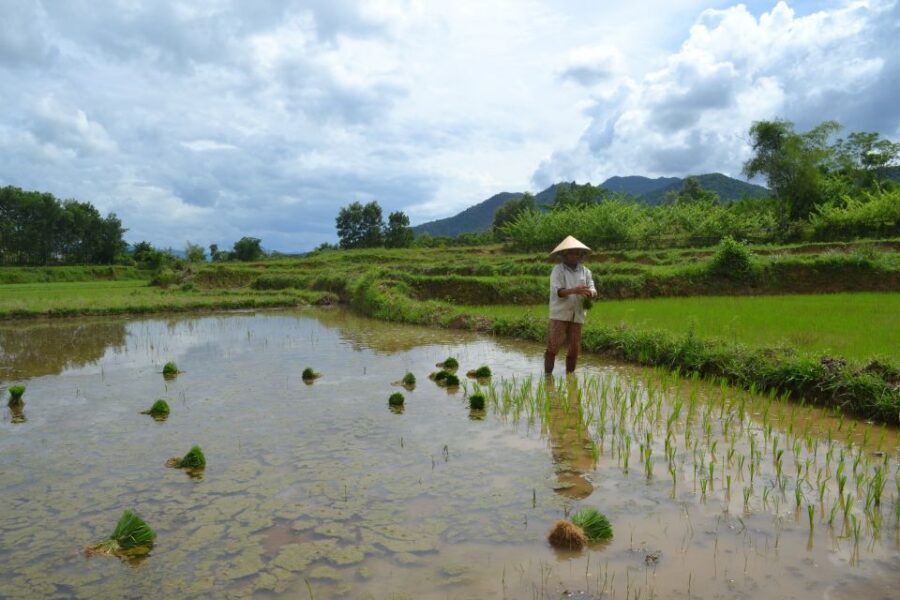
- Rice paddies and the rhythm of village demonstrations
- Boat-building yards and basket boats: where skills get practical
- Ferries, floating bridges, and when conditions matter
- Lunch at a local family house: choosing chicken, fish, or vegetarian
- What the guides add: Tram/Tran and the smooth team feel
- Price and value: why $44 can feel reasonable here
- When you should go (and what to bring)
- Who this tour fits best
- Should you book Hoi An Countryside Bicycle Tour: 25 Km Real Vietnam?
- FAQ
- Where does the tour start and when do we meet?
- How far do you ride on the bicycle?
- How long is the tour?
- What’s included in the price?
- What lunch options are available?
- Is there a lot of stopping during the day?
- Can I request a tandem bike or a baby seat?
Key highlights worth your attention
- 1-hour Thu Bon River boat ride to reach the countryside village area
- Rice paper making and other practical farm and craft skills you can see up close
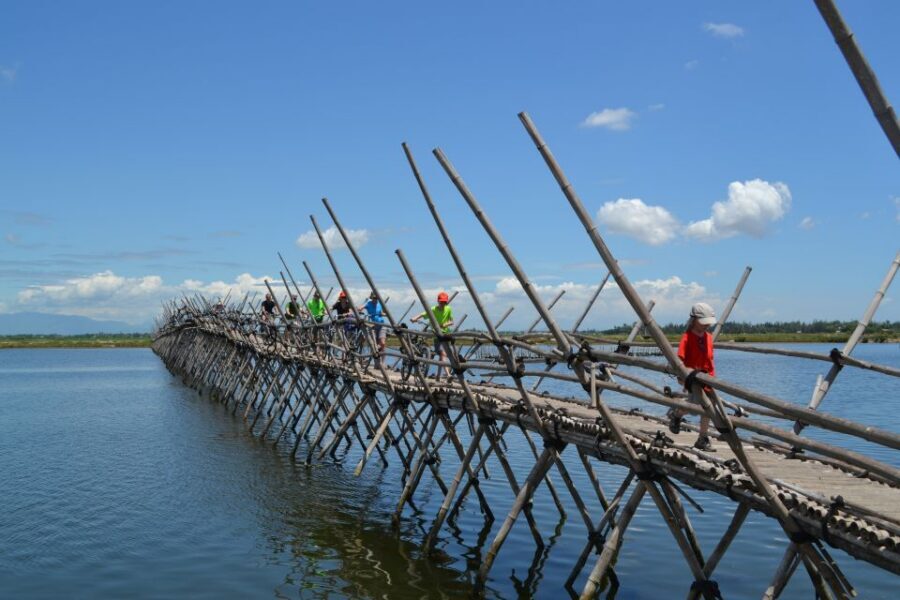
- Bamboo bridge crossing plus small-bridge countryside walking moments
- Basket boat building and testing, where you understand the why, not just the result
- Rice wine family making and the story of a countryside family temple
- Small group of max 8 with English or French guidance
Arriving at 61 Ngo Quyen and rolling out at 8:00
The day starts in Hoi An at 61 Ngo Quyen Street. Plan to meet at 7:45 AM, because the tour’s departure is 8:00 AM, and they run it like a well-timed local operation. By the time you’re on the road, you’ll have everything you need: a bicycle, a helmet, and a guide who keeps you informed in English or French.
This is one of those tours where the early start actually pays you back. You get cooler morning light for cycling through rice fields, and you reach the village area before the day’s activity gets too intense. If you’re used to sleeping in on vacation, set an alarm now.
The group size stays small—up to 8 people—so it’s easier for the guide to explain what you’re seeing and keep the pace comfortable. That matters on a day with many short stops for demonstrations and conversations.
You can also read our reviews of more tours and experiences in Hoi An.

The Thu Bon River boat transfer that sets the tone
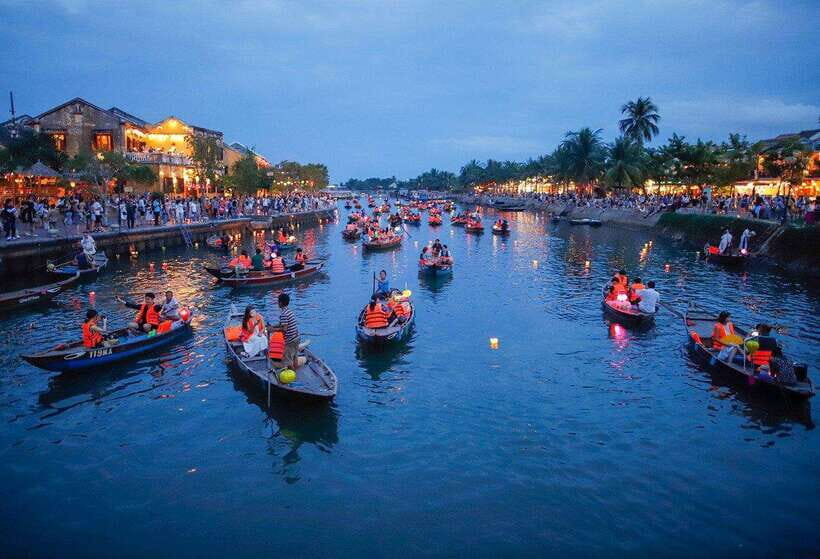
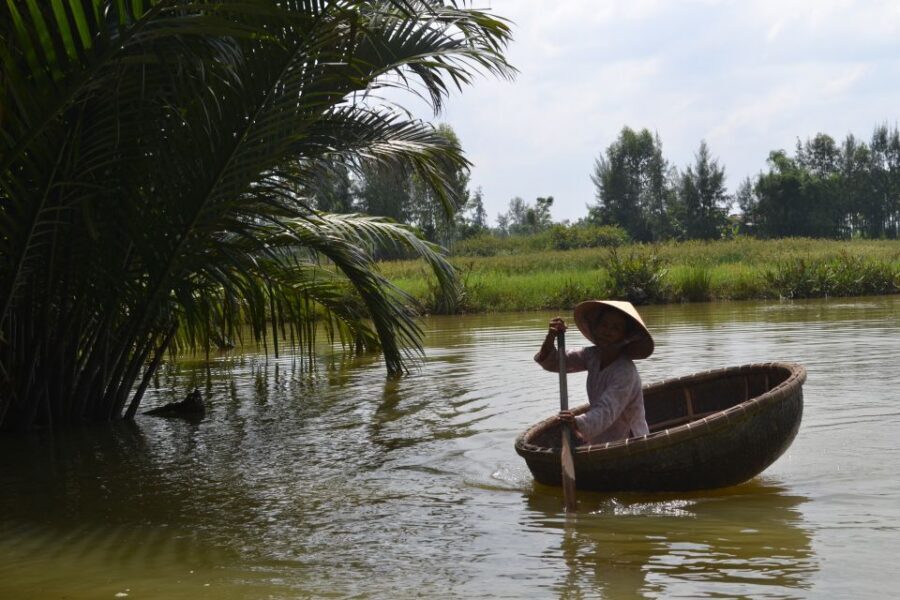
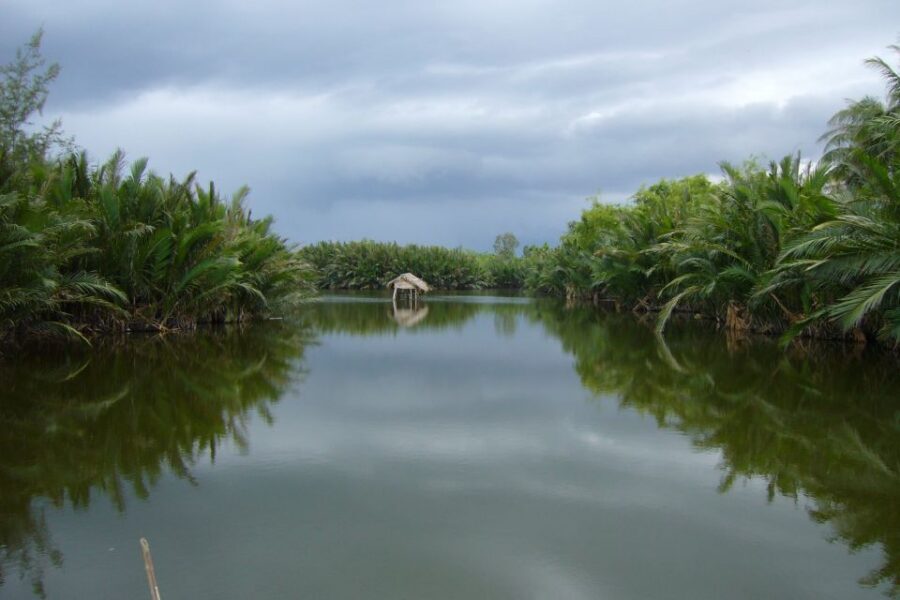
Before you bike much, you shift from town life to delta life by boat. The tour includes a 1-hour boat transfer up the Thu Bon River, aimed at reaching a small village in the middle of the delta where the day’s story begins.
I like this approach because it breaks up the logistics. Instead of cycling the entire distance from Hoi An, you get a slow, scenic transition into the countryside first. You also arrive in the right mindset: you’re not rushing into villages just to tick boxes—you’re already traveling like a local in the delta.
Once you’re back on the water later in the day (there’s another 1-hour boat trip on the Thu Bon delta), you get a nice rhythm—bike, stop, learn, ride again, boat again. It makes the 9-hour total feel less like a grind and more like a real day out.
Cycling the delta: flat roads, small bridges, and a real route loop
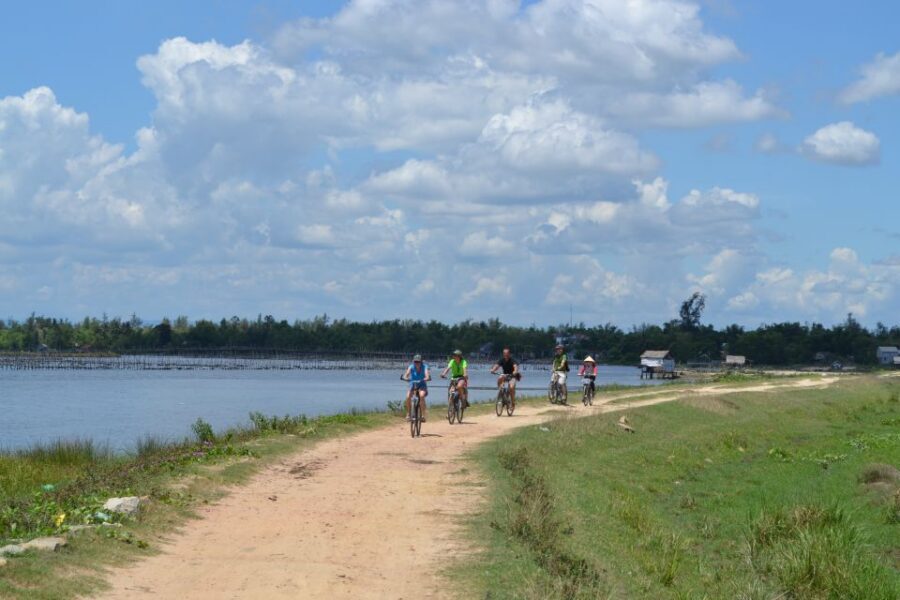
The cycling portion is built for safety and simplicity. You’ll use small countryside concrete roads that are described as flat and safe without traffic. Also, it’s a loop trip and you won’t ride the same road twice, which keeps it from feeling repetitive.
The distance is 25 km for most months, and it becomes 28 km from October to February. Either way, this isn’t a race. It’s more like a long string of countryside moments connected by bike—rice paddies, little crossings, and short visits where you slow down on purpose.
Two practical notes I’d plan for:
- You’ll likely be riding in stop-start patterns because of frequent stops for visits.
- Even on flat roads, 25–28 km can feel like a workout after a boat ride and an active morning—so bring the energy.
The bamboo bridge moment: crossing like you mean it
One of the standout experiences is crossing a bamboo bridge. This is one of those “small thing, big feeling” stops. You slow down, you look around, and you get a quick, physical sense of how practical these crossings are in daily village life.
If you’re the type who likes photographs, this one will give you more than pretty scenery. You’ll see how the bridge fits into the surrounding paddies and paths, not as a tourist prop. The day is full of these small, grounded details that help the area make sense.
Rice paddies and the rhythm of village demonstrations
The tour keeps returning to a theme: you’re not just watching Vietnam—you’re learning what people do, and why it matters. Between boat and bike segments, you’ll visit places and meet families connected to rural production and household life.
Here’s what you can expect to encounter during the day’s stops:
- How to make rice paper
- A countryside rice mill
- Traditional handicrafts and customs
- How to weave traditional sleeping mats
- Basket boat building and then testing the basket boat
- Traditional Vietnamese countryside house learning moments
- A countryside family temple story tied to daily life
- Rice wine family making
Even without getting your hands fully covered in materials, the value is in the explanations. You’ll hear how these crafts function within local routines—what gets made, how it’s used, and how the countryside economy and culture feed into each other.

Boat-building yards and basket boats: where skills get practical
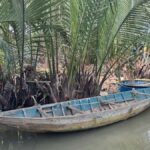
A big attraction here is the traditional boat-building and basket boat part of the day. You’ll get to see traditional boat-building yards, and then there’s a hands-on element with a basket boat builder followed by testing the basket boat.
I like this segment because it turns learning into problem-solving. You’re not just hearing a story; you’re seeing how design and materials affect function. That’s a better use of your time than another guided talk where you can’t visualize anything.
If you enjoy craft work or you’re traveling with kids, this is the part most likely to keep attention high. It’s active, visual, and connected to how people move around the water-rich delta.
Ferries, floating bridges, and when conditions matter
You’ll also experience a beautiful river crossing on a local ferry. There’s even mention of a floating bridge crossing when available. That’s important because it tells you the day isn’t staged to perfection—sometimes local conditions control what’s possible.
Plan your expectations like this: you’re touring a working landscape. If a floating bridge isn’t available that day, the tour still has plenty of other village-focused stops and crossings to keep things full.
Lunch at a local family house: choosing chicken, fish, or vegetarian
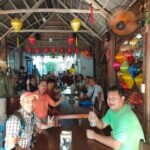
One of the simplest ways to judge a countryside tour is lunch quality, and this one is built around eating with a local family at a house. The lunch is included, and you can choose between chicken, fish, or vegetarian.
This matters for value because it removes the usual problem of hunting for food while you’re in the middle of nowhere. It’s also the kind of meal that fits the theme of the day: household life, local routines, and a slower pace where you can ask questions without rushing off to your next stop.
If you’re picky, use your vegetarian or choice option ahead of time if the system allows it. And if you’re not used to village-style meals, expect it to be hearty and straightforward rather than restaurant-fancy.
What the guides add: Tram/Tran and the smooth team feel
The difference between a good countryside day and a truly memorable one is the guide. The tour’s reviews highlight guides who are exceptionally organized and engaging, and I felt that same structure in how information landed during each stop.
In particular, names like Tram/Tran came up along with an assistant called Kein, described as efficient and helpful. Even if you don’t catch every name in the moment, you’ll notice the impact: the day flows, you get explanations when you need them, and you’re not left standing around wondering what comes next.
This matters most when you’re seeing practical skills like rice paper making or basket boat building. You want context, not just visuals. A strong guide gives you just enough background to make the craft meaningful.
Price and value: why $44 can feel reasonable here
At $44 per person, this is not a budget-only tour, but it’s also not trying to sell you a fantasy. The pricing makes sense because you’re paying for a bundled day:
- English or French-speaking guide
- Bicycle and helmet
- Boat transfer (1 hour) plus later 1-hour delta boat trip
- All visits and multiple craft and village stops
- Lunch at a local family house
- Water
If you tried to recreate this independently, you’d spend time coordinating transport, hiring a guide, and arranging entry to family-run demonstrations. The tour price buys you not only logistics, but also access to people and places you likely wouldn’t find on your own.
So I’d treat it as good value if you want a day that’s part riding, part learning, and part eating with locals. If you prefer free time and self-guided exploration, you may feel more constrained.
When you should go (and what to bring)
This is designed for comfort outdoors. Bring:
- Sunscreen
- Hat
- Sunglasses
If you’re traveling from November to January, bring a windbreaker, because mornings and river areas can feel cooler.
Also, expect a day with lots of stops. That means you’ll benefit from:
- A light layer you can remove later
- A bottle or small snacks if you know you get hungry between visits (the tour includes water, but your personal appetite might vary)
Tandem bikes are available on request, quantity limited, and baby seats are available for children up to 23 kg, also on request. If you need either, ask early so you’re not disappointed.
Who this tour fits best
This works especially well if you:
- Want a countryside day that’s more about daily life than monuments
- Enjoy active travel but prefer safe, flat routes
- Like craft and food experiences tied to real village routines
- Appreciate a small-group setting where questions feel welcome
It might not be your best match if you:
- Want a quiet day with minimal stops
- Get impatient with frequent transitions between cycling and short visits
- Prefer a shorter ride and more unstructured time
Should you book Hoi An Countryside Bicycle Tour: 25 Km Real Vietnam?
If your goal is to understand rural Central Vietnam beyond photos, I think you should book. This tour is built around practical experiences—rice paper, rice mills, mat weaving, basket boats, and rice wine—paired with boat rides that place you right in the Thu Bon delta rhythm.
Book it if you’re comfortable riding 25–28 km over flat roads and you don’t mind that the day runs on many stops. Skip it if you’re hoping for a fast, effortless bicycle outing with long stretches and no village visits.
Bottom line: if you value real access, small-group guidance, and lunch with a local family, this is one of the better ways to spend a full day outside Hoi An.
FAQ
Where does the tour start and when do we meet?
You meet at 61 Ngo Quyen St., Hoi An with a start time listed for 7:45 AM. The tour departs at 8:00 AM and returns around 5:00 PM.
How far do you ride on the bicycle?
The loop ride is 25 km (about 15 miles). From October to February, it’s listed as 28 km (about 17 miles).
How long is the tour?
The full tour duration is 9 hours.
What’s included in the price?
Included items are all visits, boat transfer (1 hour), an English or French-speaking guide, a bicycle, a helmet, lunch at a local family house, and water.
What lunch options are available?
Lunch at the local family house can be chicken, fish, or vegetarian.
Is there a lot of stopping during the day?
Yes. The itinerary includes a lot of stops for visits, so expect a stop-and-go day rather than continuous riding.
Can I request a tandem bike or a baby seat?
Yes. A tandem bike is available on request (limited quantity). A baby seat is available for children up to 23 kg (also on request).