REVIEW · HOI AN
Hoi An Ancient Town Tour: Japanese Covered Bridge & Old House from Hoi An
Book on Viator →Operated by TripGuru · Bookable on Viator
Japanese Bridge days can be cloudy—plan smart. This Hoi An Ancient Town tour is a smooth, guided way to see the town’s UNESCO sights on foot, with the classic Japanese Covered Bridge photo moment built into the morning plan. You’ll also stop at a local market, a traditional assembly hall, and a pottery-focused visit, so the day isn’t just about icons—it’s about how Hoi An works.
I especially like two parts: the Hoi An Market start, which shows you what locals are buying and cooking-ready in the early morning, and the Cantonese Assembly Hall + pottery stop combo, where the architecture and the town’s ceramics trade both feel real.
One thing to consider: the Japanese Covered Bridge can be under renovation, and some viewpoints may be blocked or look incomplete on certain days—so go with flexible photo expectations.
In This Review
- Key highlights at a glance
- Hoi An Ancient Town, 8:00 start: how this 6-hour format feels
- Hoi An Market at the start: fresh, local, and fast
- Cantonese Assembly Hall + pottery museum: where craft meets architecture
- Japanese Covered Bridge photo stop: classic icon, real-world renovation
- Handicraft tour and souvenir time: buy with a plan, not a panic
- Walking in Hoi An: why this tour works even if you go off-script
- Price and value: what $0 means in real travel terms
- Should you book this Hoi An Ancient Town tour?
- FAQ
- What time does the tour start?
- How long is the tour?
- Is pickup and drop-off included?
- What’s included in the tour?
- Is lunch included?
- Are entrance fees included?
- How big is the group?
- What happens if the weather is bad?
- Is free cancellation available?
Key highlights at a glance
- Early Hoi An Market stop for a strong sense of local rhythm
- Chinese/Japanese assembly hall explanations with guide-led photo angles
- Pottery museum visit where you can see ceramic work in action
- Japanese Covered Bridge photo time (check renovation conditions on the day)
- Handicraft tour and shopping for practical souvenir ideas
- Small group size (max 9) keeps the pace manageable
Hoi An Ancient Town, 8:00 start: how this 6-hour format feels

This tour is built for a first-time visit. You start at 8:00 am, then you’re out and moving through Hoi An’s most photo-friendly areas for about 6 hours. The schedule is compact enough that you get multiple “wow” moments without spending your whole day stuck in transit.
What makes the format practical is the balance: you’re not just wandering alone, and you’re not stuck in a long bus loop either. Pickup and drop-off are included from central Hoi An, and there’s an air-conditioned vehicle between stops. You also get a mobile ticket and bottled water, so you’re not hunting down basic comforts while you’re trying to keep up with a walking route.
There’s also a small group limit (9 travelers). In a place like Hoi An—where lanes narrow and crowds can appear fast—that group size helps you move without constantly getting “bunched up” behind others.
You can also read our reviews of more tours and experiences in Hoi An.



Hoi An Market at the start: fresh, local, and fast
Your morning begins at Hoi An Market. The biggest value here isn’t a museum-style lesson—it’s timing. The market runs early because locals do their shopping early, and that shapes the whole feel of the stop. You’ll browse fresh fruit, vegetables, and seafood that are harvested the same morning.
Even if you don’t plan to buy much, I like this stop for one reason: it helps you understand what you’re seeing later. Hoi An’s old-town charm can feel like scenery if you only focus on buildings. But when you’ve just watched people grab produce and seafood, the town feels more like a living place—not a set.
The tour gives you about 30 minutes here. That’s short enough to keep energy up, but long enough to walk through the colors, notice what’s in season, and pick up ideas for what to look for when you eat later on your own. Admission is listed as not included, so factor that in if you’re sensitive about budgeting every fee.
Cantonese Assembly Hall + pottery museum: where craft meets architecture
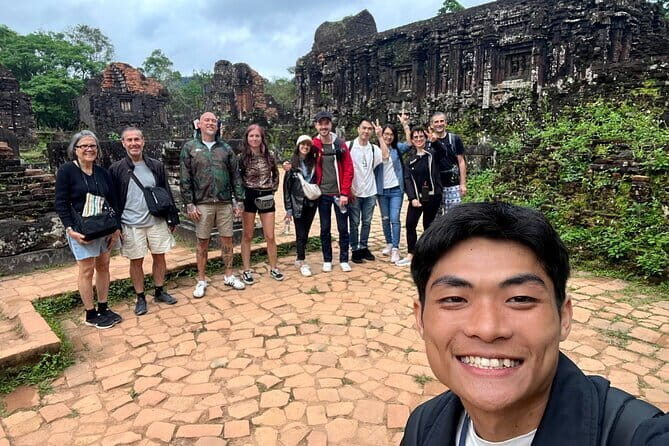
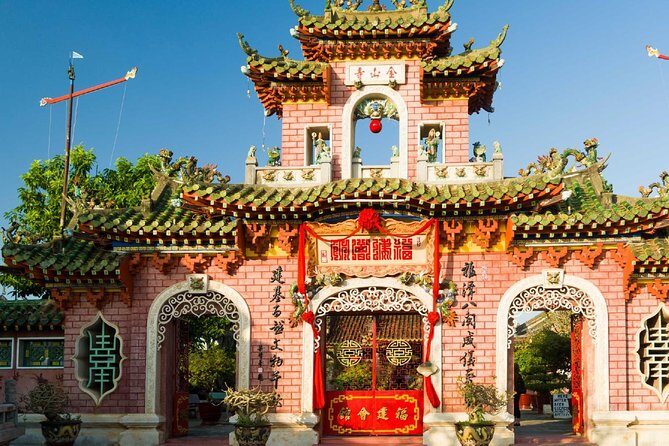
Next comes the Cantonese Assembly Hall. This matters because Hoi An’s identity is tied to the groups who historically shaped the town—Chinese and Japanese communities are especially visible in the architecture. Your guide explains the halls’ history and decoration, and they’ll help you find good photo angles.
I like that the tour doesn’t treat assembly halls as silent background. You’re given context for what you’re looking at, which makes the carvings, colors, and layout more meaningful. And since you’re with an English-speaking guide, you’re not stuck guessing what each detail represents.
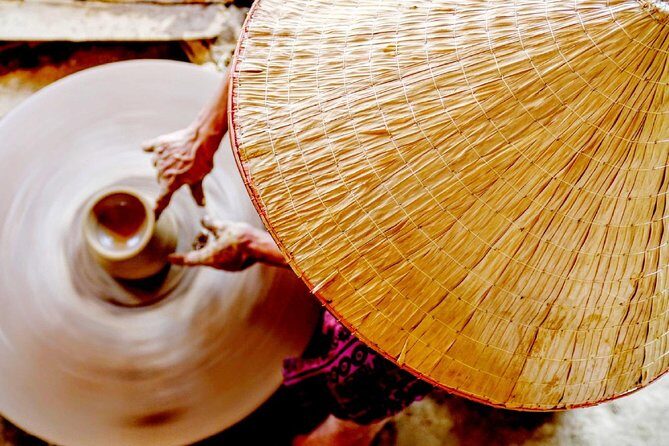
After the hall, the plan shifts to a traditional ceramics stop: a pottery museum where locals work. This is the part that turns the day from “pretty buildings” into “why Hoi An became known for ceramics.” You can watch the process and see how the town’s pottery trade continues.
Expect about 1 hour total for this section. Entrance fees are listed as not included. Also, since you’re in a museum/workspace environment, it helps to keep your shopping impulse a little controlled until you see the later handicraft stop—otherwise your priorities can get scrambled fast.
Japanese Covered Bridge photo stop: classic icon, real-world renovation
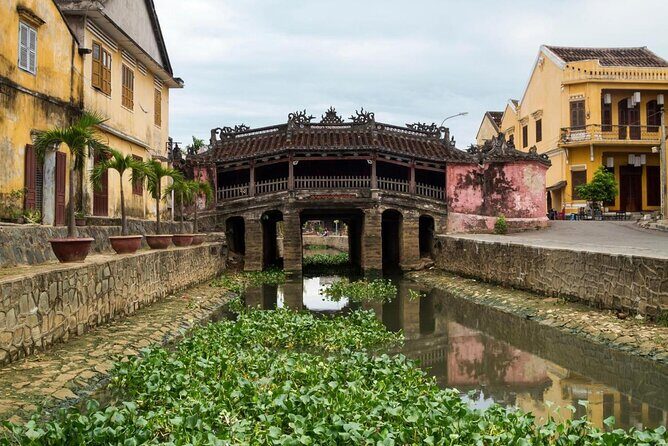
The Japanese Covered Bridge is the star of the morning. It’s known for its elegant pink color and for its historical role during the Japanese occupation, when it helped divide the city. Today, it’s one of Hoi An’s most recognizable spots.
But here’s the honest part: the bridge can be under renovation. In at least some situations, steel construction or covering materials can block your view from certain angles, and you may only glimpse parts of the bridge rather than seeing the whole beauty clearly. If you’re coming specifically for the perfect postcard photo, you’ll want to manage expectations.
What you can still do well is focus on what is available. Even with partial views, the bridge area is still a good place to:
- Get a few angles quickly before crowds build
- Capture details you can see (railings, structure lines)
- Take photos after your guide’s quick explanations, because they often point you toward angles that work
The tour then transitions into the next segment, so you don’t have to “live” at the bridge waiting for a full restoration reveal.
Handicraft tour and souvenir time: buy with a plan, not a panic
After the bridge, the tour finishes with a handicraft tour. This is where you learn about traditional trades and get a chance to shop for colorful souvenirs. I like handicraft tours when they do two things: explain the process and help you separate your wants from the first thing you see at the counter. This one is framed that way, with time built in for learning and then for optional shopping.
You get about 1 hour 45 minutes here. That’s enough time to:
- Ask basic questions about materials and how items are made (within the pace of the group)
- Compare a few shops or displays without feeling rushed
- Decide what’s actually worth carrying home
A practical tip: set a rough budget before you arrive. Hoi An souvenirs can be tempting because the town is so photo-friendly, and it’s easy to overspend when you’re already in a “memory mode.” If you’re buying gifts, think about weight and size. If you’re buying for yourself, think about what you’ll actually use or display.
Also, remember that entrance fees for parts of the broader area can be separate. The listing notes fees for places like Pottery Village and even activities such as a Basket Boat Ride and Camh Village. So if your day includes extra paid entries, you’ll want cash or card ready (depending on local setup) and a little buffer in your budget.






Walking in Hoi An: why this tour works even if you go off-script
One of the quiet advantages of this style of tour is that it gives you a working mental map. Hoi An is best enjoyed by foot—its lanes are made for slow wandering. A guided morning helps you get your bearings fast, so later you can get lost in the good way, not the frustrating way.
Since this plan includes multiple categories of stops—market, heritage halls, pottery, the bridge, and crafts—you come away with more than a checklist. You understand the town’s “systems”: food starts at the market, identity is tied to community halls, and long-running trades show up in pottery and handicrafts.
This also helps you decide how to spend the rest of your day. If you’re more into architecture, you’ll know where to return. If you’re into making-and-buying, you’ll know what to look for when you browse on your own.
A small note: lunches aren’t included, so you’ll likely want to plan where you’ll eat after the tour ends. If your appetite tends to show up fast, consider bringing a snack in your bag before you start, since the day runs from the morning into early afternoon.
Price and value: what $0 means in real travel terms

The listed price shows $0.00 per person. That’s hard to ignore. But in travel, “free” usually means you still pay for what’s not included.
In this case, the tour includes:
- Pickup and drop-off from central Hoi An
- Air-conditioned vehicle
- English-speaking guide
- Bottled water
Not included are key costs you should expect in the background:
- Lunch
- Personal expenses
- Entrance fees (including items like Hoi An Old Town and pottery-related and activity-related entries)
So here’s how I’d think about value: if you’re truly getting the guided portion at no cost, you’re buying time, interpretation, and a tight route. That can be worth a lot in Hoi An because the town rewards context—especially around heritage buildings. The guide helps you understand what you’re seeing, and the schedule stacks major sights without wasting the day.
If you still need to pay entrance fees once you arrive, it won’t be “free” in the total sense. But the tour can still be a strong deal, particularly because the group is capped at 9 travelers and you’re getting both transport and a guide.
Should you book this Hoi An Ancient Town tour?
Book it if you want a guided first look at Hoi An that includes the big icon (the Japanese Covered Bridge) plus the town’s everyday textures—market energy, heritage explanation, and craft-making. It’s especially good for first-timers who don’t want to spend their morning figuring out where to start.
Pass or adjust expectations if your number-one goal is a perfect view of the Japanese Covered Bridge. Renovation can mean the bridge looks partially blocked, and you may only catch pieces rather than a fully open, photo-ready monument.
If you do book, do yourself one favor: plan to treat the bridge as a photo mission with a backup mindset. In a town this walkable, you’ll still be fine if one site isn’t fully “on display.”
FAQ
What time does the tour start?
It starts at 8:00 am.
How long is the tour?
The duration is about 6 hours.
Is pickup and drop-off included?
Yes. Pickup and drop-off from central Hoi An are included.
What’s included in the tour?
Included items are an English-speaking tour guide, air-conditioned vehicle, bottled water, and pickup/drop-off.
Is lunch included?
No, lunch is not included.
Are entrance fees included?
No. entrance fees are not included (including items listed such as Hoi An Old Town and other site/activity fees).
How big is the group?
The tour has a maximum of 9 travelers.
What happens if the weather is bad?
This experience requires good weather. If it’s canceled due to poor weather, you’ll be offered a different date or a full refund.
Is free cancellation available?
Yes, free cancellation is available up to 24 hours before the experience starts for a full refund.