REVIEW · HOI AN
Vietnamese Cooking Class with Local Family in Hoi An
Book on GetYourGuide →Operated by GJ Travel Viet Nam · Bookable on GetYourGuide
Food lessons rarely taste this real. This hands-on Vietnamese cooking class takes you out toward Cam Thanh Coconut Village and into a local family setup where you cook classic Hoi An favorites with an English-speaking chef. You’re not just watching from the sidelines—you’re learning how the dishes are built, ingredient by ingredient.
I especially like the mix of practical skills and good humor. You’ll make Hoi An rice pancake and Hoi An spring rolls alongside papaya salad, then sit down to eat what you cooked. It feels like a relaxed evening with real people, not a stiff “tour activity” routine.
One consideration: the exact clay-pot dish can vary based on your menu needs (fish with steam rice or cao lau, and tofu for vegan/vegetarian). If you have allergies or dietary preferences, tell the team clearly so the swaps are done in advance.
In This Review
- Key things to know before you go
- From hotel pickup to Cam Thanh: an easy start that saves time
- Cam Thanh Coconut Village: why the setting is more than scenery
- The English-speaking chef class: your step-by-step roadmap to four Hoi An dishes
- Hoi An rice pancake: learning texture, not just taste
- Hoi An spring rolls: balancing filling and wrapping
- Papaya salad: the sour-salty-herb balance
- Clay-pot dish with steam rice (fish, cao lau, or tofu)
- Chef personalities: clear instruction with a lighter mood
- What happens after cooking: eating together is part of the lesson
- Dietary options and allergies: handled, but your message has to be clear
- Price and value: what $24 buys you in real terms
- Timing that fits Hoi An plans: 3 hours that don’t steal your whole day
- Who this cooking class is best for
- Should you book the Vietnamese cooking class with a local family in Hoi An?
- FAQ
- What dishes will I learn in this Hoi An cooking class?
- Is there a vegan or vegetarian option?
- Can the chef adapt the ingredients for allergies or dietary needs?
- How long is the experience?
- Is hotel pickup and drop-off included?
- Is lunch or dinner included?
- Are drinks included?
- What is the price per person?
- Is there a child policy?
Key things to know before you go
- Hotel pickup to Cam Thanh: makes it easy to start and end without navigating on your own
- Coconut village setting: the rural vibe helps the whole experience feel more grounded
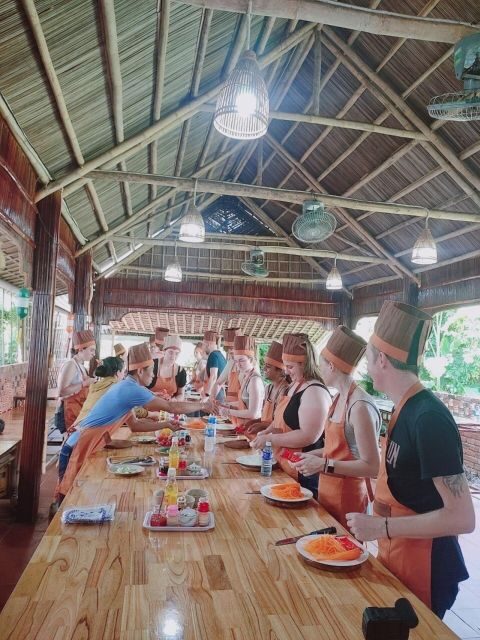
- You cook 4 dishes: rice pancake, spring rolls, papaya salad, plus a clay-pot dish
- English-speaking chef coaching: step-by-step guidance you can actually follow
- Meal and conversation after cooking: you taste, then compare notes with the group
- Dietary changes are built in: vegan/vegetarian options and allergy adaptations are supported
From hotel pickup to Cam Thanh: an easy start that saves time
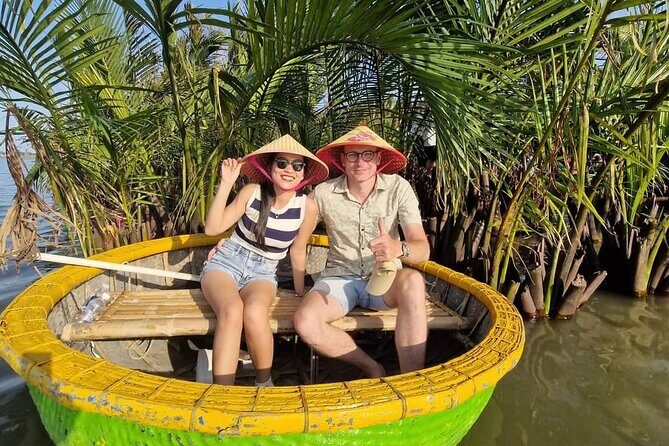
This experience is designed for low-friction logistics. You start with hotel pickup in Hoi An city center, then ride out to the Cam Thanh Coconut Village area. That matters here because the best part of the class is the hands-on work, not figuring out transport or arriving frazzled.
Once you’re out in the village zone, the pace stays unhurried. You get a welcome drink, a short breather, and then you transition into the cooking setup. Think of it as a gentle ramp: you’re fed information, you relax for a bit, and then you start chopping and mixing when you’re ready.
If you’re visiting Hoi An and want an evening (or meal-time slot) activity that feels local, this structure hits the sweet spot: get out of town for a bit, learn real food technique, and come back still having energy.
You can also read our reviews of more cooking classes in Hoi An
Cam Thanh Coconut Village: why the setting is more than scenery
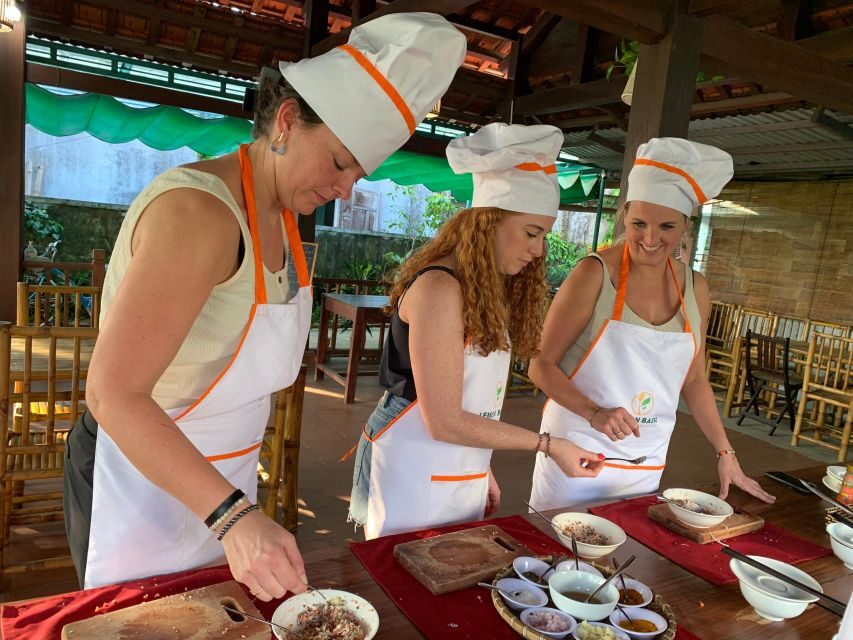
The coconut village setting isn’t just a backdrop. It helps explain why the food tastes the way it does. Rural coastal Central Vietnam has its own rhythm—markets, ingredients, and cooking styles shaped by the surrounding landscape and local daily life.
In practice, that means you’re cooking in a context that feels familiar to the people who live there. You get the sense that these dishes aren’t “performance foods” made only for visitors. Instead, you’re stepping into the daily logic of meals—what goes in, what gets cooked first, and how balance is achieved with salty, sour, and fragrant elements.
There’s also a psychological boost. When the environment feels real, you pay closer attention to the instructions. You don’t just follow steps; you start recognizing patterns—like how herbs and acidity show up at specific moments, or how the texture of a pancake or roll is built through technique.
The English-speaking chef class: your step-by-step roadmap to four Hoi An dishes
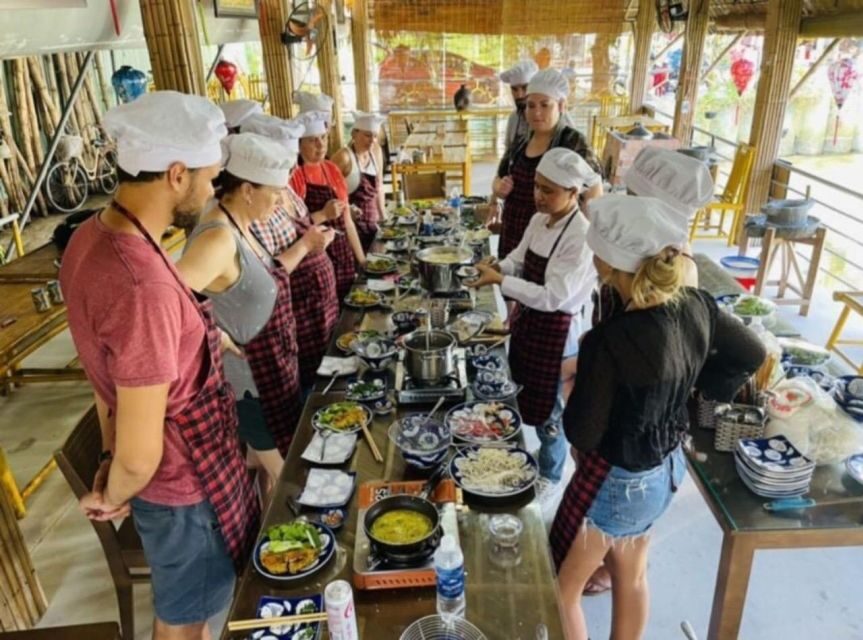
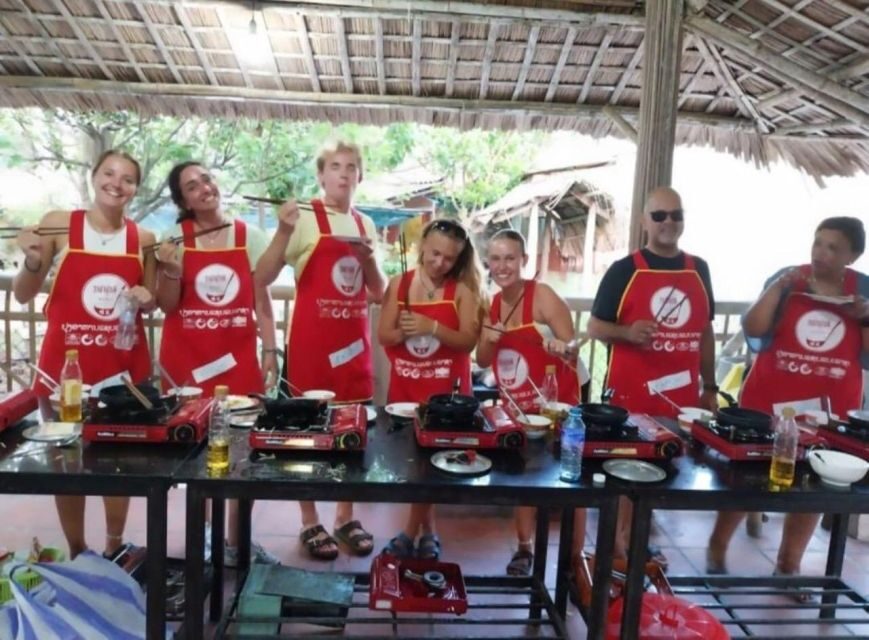
The core of the experience is the cooking lesson itself, taught by an English-speaking chef who walks you through each recipe step by step. The teaching style is clearly built for non-experts, which is great news if your kitchen skills are more “survive and reheat” than “knife-master.”
The dishes you learn are the heart of the menu, and they cover different cooking methods so you come away with real variety:
Hoi An rice pancake: learning texture, not just taste
You’ll make Hoi An rice pancake, a dish that’s all about batter consistency and careful heat. If you’ve had versions of rice pancakes before, this one helps you understand why they can be chewy, thin, or crisp depending on how the batter is handled and how the pan is managed.
What I like about including this dish in a class is that it teaches you to pay attention. You can’t fake texture. You learn the visual cues—how it looks as it sets and how it behaves when cooked. After that, you’ll understand why restaurant versions can feel different, even when ingredients sound similar.
Hoi An spring rolls: balancing filling and wrapping
Then comes Hoi An spring rolls, which are a great lesson in assembly. The key skills here are managing the filling so it isn’t too dry or too loose, and getting the wrap right so it stays intact while cooking.
This is also a dish that builds confidence fast. Even if your first attempt isn’t perfect, the chef’s guidance helps you correct course quickly. You learn what matters most, and that’s what you want from a cooking class.
You can also read our reviews of more tours and experiences in Hoi An


Papaya salad: the sour-salty-herb balance
Papaya salad is where Vietnamese flavor logic shows up clearly. You’ll work with ingredients like papaya, carrots, and basil, and you’ll see how the balance of sour, salty, and fresh herbal notes can be controlled.
This recipe is especially useful if you plan to cook at home later, because it gives you a method for building flavor rather than just copying one-time instructions.
Clay-pot dish with steam rice (fish, cao lau, or tofu)
For the main clay-pot course, the class includes fish in clay pot with steam rice or cao lau depending on the menu flow. If you’re vegetarian or vegan, the menu supports a switch to tofu in clay pot with steam rice.
This dish is practical because clay-pot cooking teaches patience and heat control. You learn how to keep flavors concentrated and how to time the rice so it lands on the table at the right moment.
Also, the class structure makes it easy to ask questions. In real life, cooking at home often falls apart when you try to troubleshoot alone. Here, you can ask, and you’re guided back onto the right track.
Chef personalities: clear instruction with a lighter mood
A big reason people love this class is the vibe. English instruction is one thing, but the teaching energy makes it stick. Names like Giang, Ha, and Thuong come up often, with descriptions of humor and friendly coaching. That kind of tone matters because it lowers the pressure. You’re more willing to try, taste, adjust, and learn.
What happens after cooking: eating together is part of the lesson
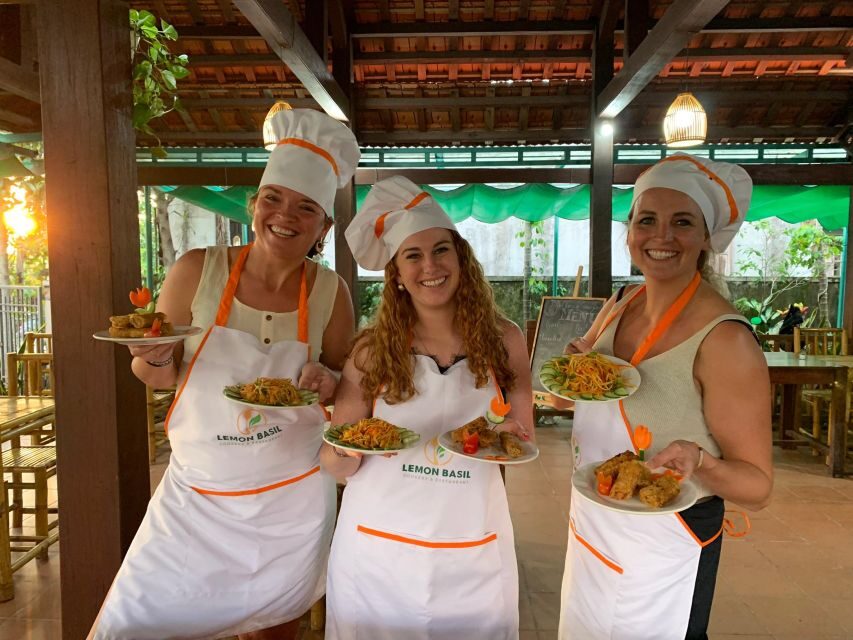
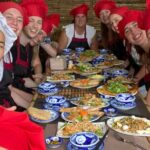
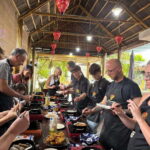
After the cooking lesson, you sit down to enjoy what you made. This isn’t a separate “show meal.” It’s built into the learning cycle: cook, then taste, then share.
There’s usually a chat moment where you can connect with the group and compare how your dishes turned out. That matters because Vietnamese cooking is sensitive to small choices: how long you cooked something, how thick your batter was, or how you adjusted the balance in the salad. Hearing other people’s results helps you calibrate your expectations for your next attempt at home.
You also get real-time feedback from the environment itself. When you taste your own spring roll next to someone else’s, you’ll notice what works. When your rice pancake differs slightly, you’ll start thinking about heat and timing in a more concrete way.
Dietary options and allergies: handled, but your message has to be clear
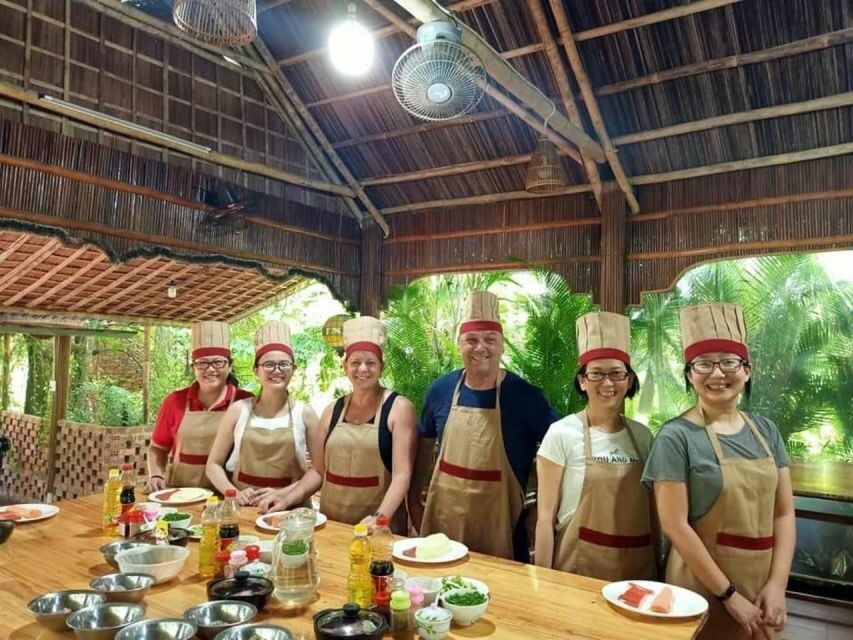
This class is set up with vegan/vegetarian options and flexible ingredient adaptations. The menu example for vegan/vegetarian swaps the clay-pot protein to tofu and still includes papaya salad, spring rolls, and rice pancake.
They also note that ingredients can be adapted for gluten-free preferences and allergies. That’s helpful, but here’s the practical advice: send your restrictions clearly before the day of class. Don’t rely on vague statements. The more specific you are, the smoother the cooking workflow can be for everyone.
If you’re allergy-prone, it’s worth thinking about what ingredients show up across dishes: sauces, herbs, and any flour-based elements. The class format can be accommodating, but it still depends on advance info.
Price and value: what $24 buys you in real terms
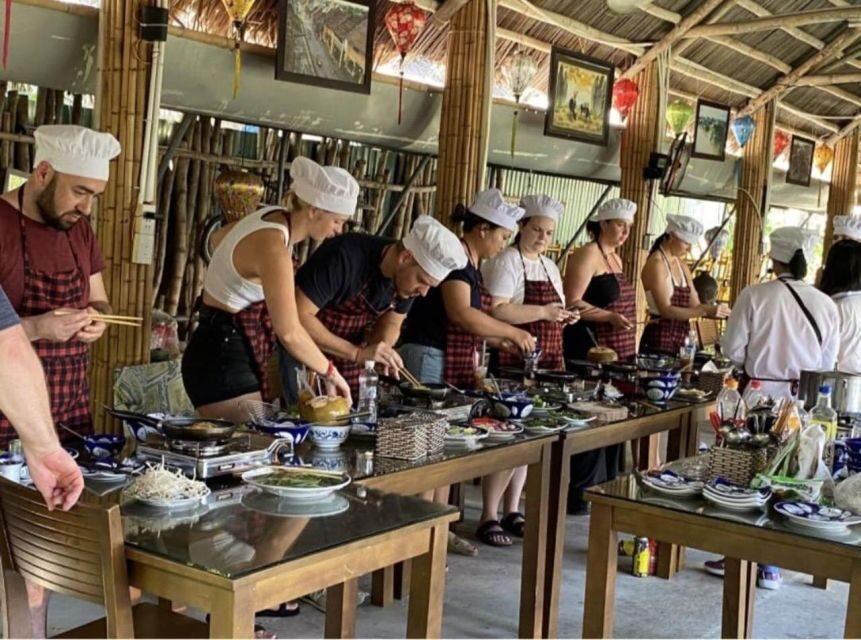
At $24 per person for a 3-hour (270-minute) experience, this is strong value in Hoi An. Here’s what you’re getting for that money:
- Hotel pickup and drop-off, so you’re not paying for transport or wasting time
- An English-speaking chef who teaches while you cook
- All ingredients for the class, including what you need to make four dishes
- A meal included (lunch for morning slots or dinner for afternoon slots)
Drinks are not included, but that’s normal for this type of class. Personal expenses are also on you.
The real value is less about the number $24 and more about the package: you’re paying for a full lesson plus the food. Cooking classes that only provide recipes or short demonstrations often feel expensive. Here, you get a complete cycle: learn, cook, eat, and go home with the skills to repeat it.
Timing that fits Hoi An plans: 3 hours that don’t steal your whole day
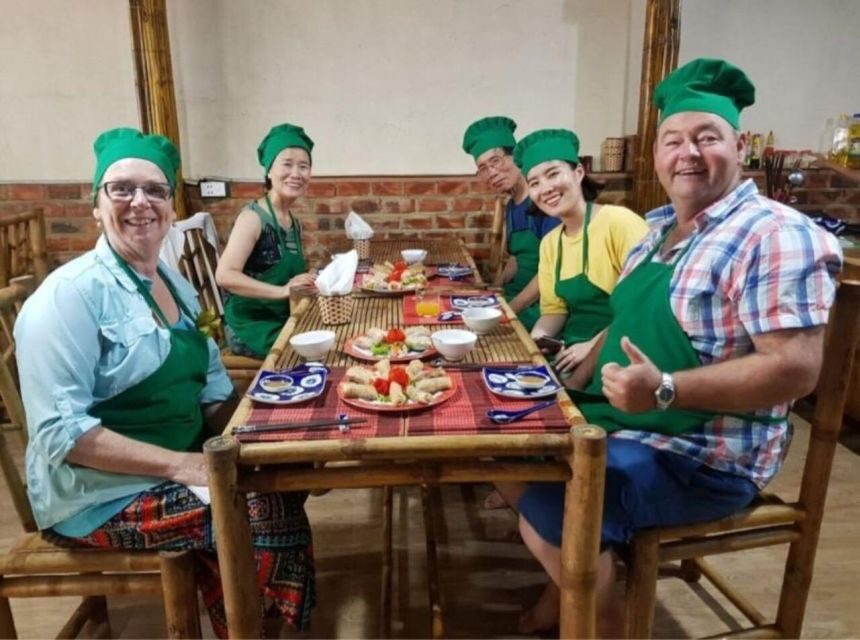
With a 3-hour block, you can fit this into a busy Hoi An itinerary without wrecking your schedule. You’ll typically be picked up from your hotel, transferred to the coconut village area, and returned after the class and meal.
That timing is also good because you’re not stuck waiting all day. You get a focused window that makes the day feel structured. If you prefer evenings, this also works well as a dinner-time activity, since dinner is included in the afternoon slot.
If you’re the type who likes to go early for less crowded sightseeing, you can treat the morning slot as a “food learning anchor” that balances out the day.
Who this cooking class is best for
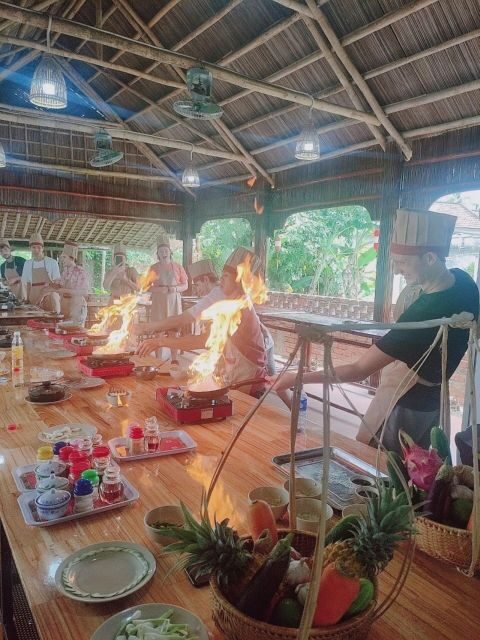
This experience makes the most sense if you want more than a restaurant meal. You’ll enjoy it if you like:
- Learning how food is built, not just eating it
- Cooking at home later and wanting a repeatable method
- A class with a friendly tone, not a strict culinary bootcamp
- Spending time in the Cam Thanh area for a more rural-feeling side of Hoi An
It’s also a good pick for couples. A number of people do it as a shared activity, and the meal afterward gives you time to slow down and talk.
If you’re traveling with young kids: children under 3 are free of charge and won’t join the cooking, but parents share the services. Plan accordingly, since the kids are not part of the active lesson portion.
Should you book the Vietnamese cooking class with a local family in Hoi An?
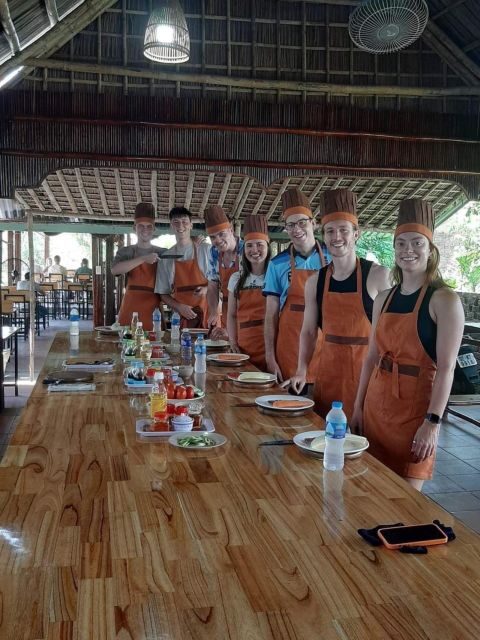
I think you should book it if you want a hands-on food experience that feels connected to everyday life in Central Vietnam. For $24, the hotel pickup, English coaching, and four-dish meal package is a solid deal, and the class format helps even beginners feel capable.
Book it especially if you care about learning technique: pancake texture, spring roll assembly, papaya salad balance, and clay-pot cooking logic. If you’re strict about allergies, send your needs early so the chef can adapt ingredients properly.
If you only want a quick taste with zero kitchen involvement, this might feel like more work than you expected. But if you’re open to chopping, mixing, and learning by doing, it’s one of the more rewarding ways to spend a few hours in Hoi An.
FAQ
What dishes will I learn in this Hoi An cooking class?
The class teaches four local dishes: Hoi An rice pancake, Hoi An spring rolls, papaya salad, and fish in clay pot with steam rice or cao lau.
Is there a vegan or vegetarian option?
Yes. A vegan/vegetarian option is available, including tofu in clay pot with steam rice as the substitute for the non-vegetarian clay-pot dish.
Can the chef adapt the ingredients for allergies or dietary needs?
Yes. The class notes that ingredients can be adapted depending on vegan or vegetarian preferences, gluten-free preferences, and allergies. You should let them know your restrictions in advance.
How long is the experience?
The duration is listed as 3 hours (270 minutes).
Is hotel pickup and drop-off included?
Yes. Hotel pickup and drop-off are included, and the pickup is optional in Hoi An city center.
Is lunch or dinner included?
Yes. Lunch is included for morning slots, and dinner is included for afternoon slots.
Are drinks included?
No. Drinks are not included.
What is the price per person?
The price is $24 per person.
Is there a child policy?
Children under 3 years old are free of charge. They will not join in the cooking but will share all service with parents.