REVIEW · HOI AN
HoiAnGO Experience Local Life: Countryside by Electric Car
Book on Viator →Operated by HoiAnGO · Bookable on Viator
Forget the highway. Take the back lanes. This Hoi An electric-car outing is a smart way to see countryside life without the chaos of bigger vehicles, and it includes close-up moments like market roaming and farm-country stops. I also like the people factor, with time at local homes for traditional snacks and drinks. One thing to consider: the experience needs good weather, so it may be shifted or refunded if conditions are poor.
You’ll cover rice fields, vegetable gardens, coconut and nipa palm areas, and end with a high viewpoint over Cua Dai Bridge. The tour runs about 3 hours, and it’s set up as a private experience for your group, with pickup offered and a mobile ticket. It’s practical, not overly long, and it fits well on days when you want more than just Old Town photos.
Here’s the vibe I’d aim for: you want easy transport, small-path access, and real context about how local farming and markets work. If you’re the type who likes understanding what you’re seeing, this tour is well matched.
In This Review
- Key highlights to know before you go
- Why an electric car makes Hoi An countryside feel real
- Ba Le Market: the quick hit of local food culture
- Thanh Dong Organic Farm: gardening life and hands-on learning
- Rice fields and traditional farming rhythm
- Bay Mau Coconut Forest: nipa palms, snacks, and a slow stroll
- Cua Dai Bridge: the panoramic payoff
- Price and value: what $153.59 buys you in real terms
- What kind of guide experience to expect
- Who this tour suits best (and who might want to skip it)
- Brief weather and day-of tips (so it runs smoothly)
- Should you book HoiAnGO’s Electric Car Countryside Tour?
- FAQ
- How long is the Hoi An countryside electric car experience?
- Where does the tour take place?
- What stops are included on the route?
- Is pickup included?
- How much does it cost?
- Is it a private tour or shared?
- Are any admission tickets included?
- Does the tour run in any weather?
- How far in advance should I book?
- Is the tour accessible for most people?
Key highlights to know before you go
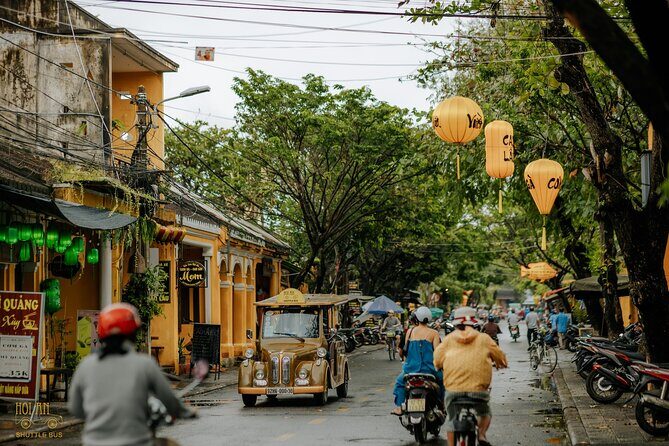
- Electric car access to smaller countryside paths that feel hard to reach by big-group transport
- Ba Le Market as a first stop, with guide-led orientation to produce and local food culture
- Thanh Dong Organic Farm stop with a hands-on basket boat and cooking class component
- Bay Mau Coconut Forest + nipa palm stroll, plus a local drink and traditional snack
- Cua Dai Bridge viewpoint with panoramic views toward Hoi An Old Town and the Cham Islands
- Private group only, so your pace and questions don’t get swallowed by a crowd
Why an electric car makes Hoi An countryside feel real
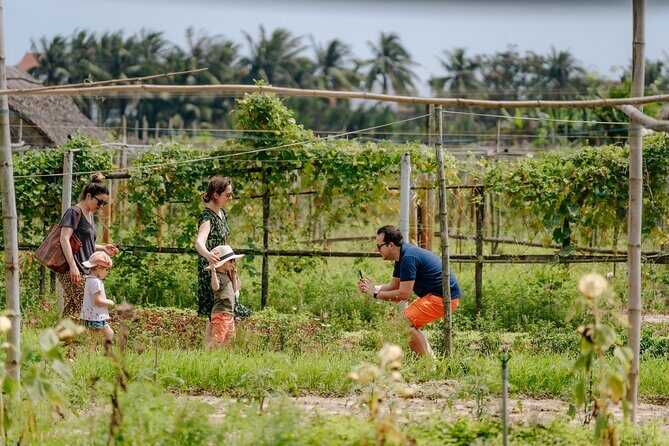
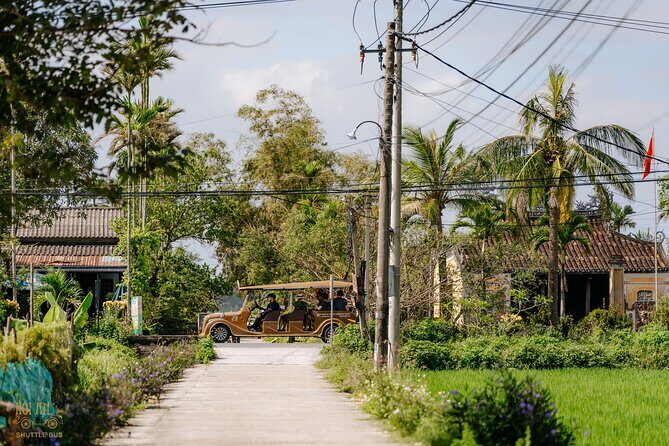
Hoi An is famous for its Old Town, but the area right outside it is where daily life happens. That’s where an electric car is genuinely useful. It keeps you moving comfortably while still giving you the chance to step into lanes and paths that don’t work well for larger vehicles.
I like the balance here: you get transportation that’s easy on your legs, but you’re still out in the open. You’re not stuck inside a vehicle the whole time, and the stops are built around looking, walking briefly, and talking with locals.
The other practical win: the pace suits a short trip. At about three hours, you can fit it between sightseeing blocks without feeling drained. For many visitors, that means you can return to the Old Town with energy for dinner.
You can also read our reviews of more tours and experiences in Hoi An.


Ba Le Market: the quick hit of local food culture
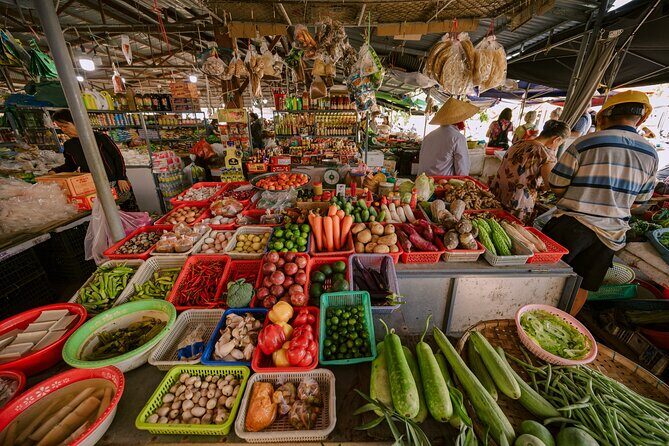
Your first stop is Ba Le Market, and it’s short on paper (about 20 minutes). In practice, that’s often perfect. Early in the route, you get a guide to orient you so you don’t just wander past produce without context.
This is the kind of stop that helps you connect dots: what’s growing locally, how it looks when it’s fresh, and why markets matter to the rhythm of the region. You’ll see the hustle and bustle up close, and your guide will introduce you to some of the weird-and-wonderful items that appear on Vietnamese market tables.
What to do with your time here:
- Ask about what you see. Even simple questions like what’s used for cooking can turn a quick stop into a learning moment.
- If you’re planning photos, take a wide shot first, then focus on specific foods and textures for the best results.
Thanh Dong Organic Farm: gardening life and hands-on learning
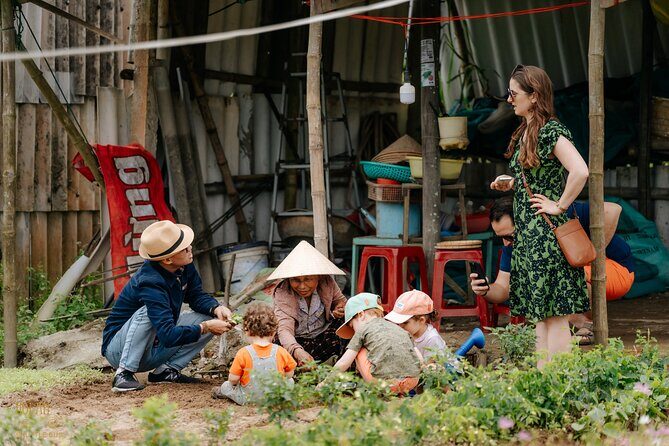
Next comes Thanh Dong Organic Garden (restaurant), where you spend about 30 minutes. The point isn’t just sightseeing. This stop is designed to put you closer to the farming traditions of the area, including time with friendly locals and activities tied to farm life.
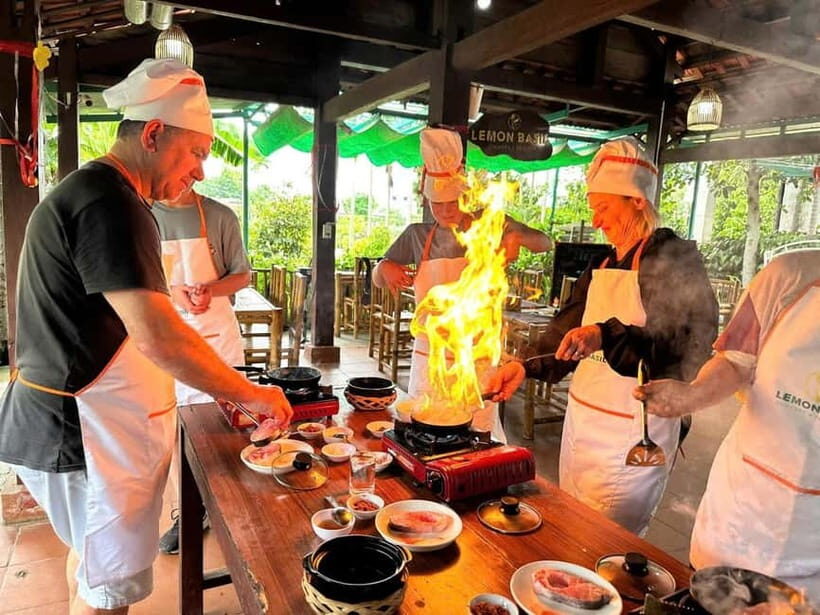
You’ll also get a component described as basket boat & cooking class. If you’ve never tried either, it’s a nice change of pace from standard walking tours. Cooking lessons can be short, but they tend to stick in your memory because you see ingredients get turned into food you can imagine eating later.
Even if you’re not a hands-on person, the structure works. You’re not required to do every step in an intense way; you’re there to learn, watch, and participate at a comfortable level. And since the tour is private, you can ask practical questions without feeling rushed.
A useful mindset: look at how the farm supports the whole day. From gardening routines to food preparation, it’s all part of the same local system.
Rice fields and traditional farming rhythm
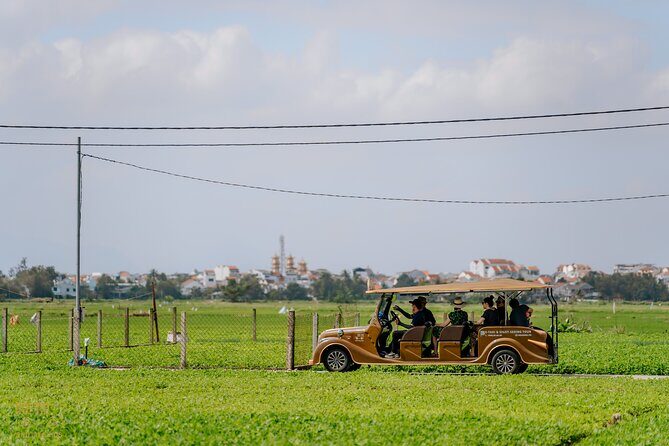
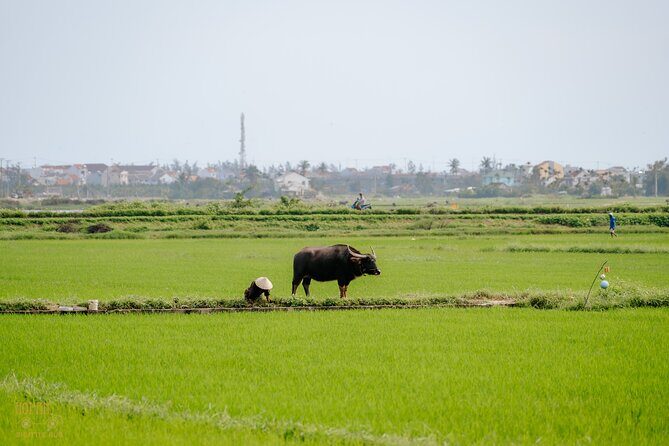
After the farm stop, you’ll visit the rice fields and learn about traditional rice cultivation and farming. This is one of those sections that’s easy to underestimate if you only think of rice as a side dish.
Here’s the value: you’ll get a clearer sense of what rice cultivation takes, what changes throughout the season, and why farmers treat the land with routine care. Even short explanations can give you better context when you later see fields from roads or bridges.
If you’re traveling with kids, this segment often lands well. Rice fields are visual and calm, and the farming story makes the landscape feel tied to real work rather than just scenery.
Bay Mau Coconut Forest: nipa palms, snacks, and a slow stroll
Then you head to Bay Mau Coconut Forest, including a stroll through the nipa palm forest. This is a change of texture from rice and vegetables—more shade, more greens, and a different kind of calm.
You’ll also stop at a local place for a refreshing drink and a traditional snack. This kind of break matters more than it sounds. After walking stretches, you’ll want a moment where you can reset, and it gives you a chance to talk informally with the people running the stop.
What I like about this portion is that it feels tied to local life rather than just a viewpoint. The coconut and nipa areas are part of how the region’s families manage food, materials, and daily routines.
Quick practical tip: bring a light layer. Even when it’s warm, shaded strolls can feel cooler, and you’ll be grateful if you run into breeze or a brief shower.





Cua Dai Bridge: the panoramic payoff
Your final stretch crosses Cua Dai Bridge, and the views are described as panoramic—toward Hoi An Old Town on one side and the Cham Islands on the other. This is a smart way to end because you get perspective.
Up close, you’re learning how locals farm and shop. Then from a bridge, you can connect where all that activity fits into the bigger geography of the region. It turns the trip into more than a collection of stops.
If you care about photos, this is usually where you’ll be happiest you saved your best angle. Take a few wide shots, then try a couple from different sides of the bridge for variety.
Price and value: what $153.59 buys you in real terms
At $153.59 per person for about 3 hours, you’re paying for more than transport. You’re paying for:
- a private format (your group only),
- guided stops that explain what you’re seeing (markets, farming, local food culture),
- time at multiple countryside settings, not just a single scenic pull-off,
- and the practical comfort of an electric car.
Is it cheap? No. But it also isn’t the kind of tour where you’re paying for a “bus and bracelet” experience. The value comes from the structure: short, meaningful stops, plus the chance to walk and talk rather than just sit through long drives.
If you’re splitting the cost among a small group, it can feel even more reasonable because you’re not competing with strangers for attention or time. If you’re traveling solo or as a couple, it’s still a fair trade if you want an intimate feel and don’t want to spend your day repeatedly coordinating your own transport.
What kind of guide experience to expect
The experience is guided, and the tone from past outings is consistently positive: guides described as fun and relaxed, with explanations that are easy to follow. In some cases, specific names show up in credits like Duy Thanh and Le Van Ngo, and on other related Hoi An guiding setups there are credits including Tran Van Tuan, plus a team dynamic featuring Vinh (guide), Hai (driver), and Hien (photographer).
That likely means you can expect more than basic directions. Look for guides who:
- explain how local ingredients and farming routines connect,
- help you understand what you’re looking at in markets and fields,
- and take practical photo moments so you don’t have to constantly ask strangers to snap shots.
A tip for getting the most out of your guide: ask one question in each area—market, farm, coconut forest. You’ll leave with a story you can repeat, not just memories of places.
Who this tour suits best (and who might want to skip it)
This fits best if you want:
- a countryside day without a full-day time commitment,
- easy transport via electric car,
- cultural context around farming, markets, and food,
- and a private-group pace where you can ask questions.
It may be less ideal if you’re only chasing quick photo spots. There’s walking and learning baked in, so you’ll enjoy it more if you like explanation and small stops.
Also, if you’re visiting during the period when weather can be unpredictable, plan buffer time. The experience requires good weather, and that can affect scheduling.
Brief weather and day-of tips (so it runs smoothly)
Because the tour needs good weather, check conditions the morning you go. If there’s rain in the forecast, expect the operator to be cautious about running routes.
Wear light shoes for short strolls on farm and forest paths. Bring water for the day, even though you’ll have a drink at the Bay Mau stop. And keep your phone charged—Cua Dai Bridge is a photo magnet.
Should you book HoiAnGO’s Electric Car Countryside Tour?
If your ideal Hoi An day includes real countryside life—markets, farm activity, coconut and nipa areas, and a final viewpoint—this is an easy yes. The private format, short overall duration, and electric-car comfort make it a standout option for visitors who don’t want to spend hours coordinating transport.
I’d especially recommend it if:
- you’re staying in/near Hoi An and want something beyond Old Town,
- you like learning what you’re seeing instead of rushing through stops,
- and you’re okay paying a bit more for an intimate, guided day.
I’d skip or reconsider if you only want a single scenic stop or you’re traveling on a tight schedule with little flexibility for weather.
FAQ
How long is the Hoi An countryside electric car experience?
It’s about 3 hours (approx.).
Where does the tour take place?
The tour is in Hoi An, Vietnam.
What stops are included on the route?
You’ll visit Ba Le Market, the Thanh Dong organic garden restaurant area (with basket boat & cooking class), rice fields, Bay Mau Coconut Forest (including a nipa palm stroll), and you’ll cross Cua Dai Bridge at the end.
Is pickup included?
Pickup is offered.
How much does it cost?
The price is $153.59 per person.
Is it a private tour or shared?
It’s private. Only your group participates.
Are any admission tickets included?
Admission is listed as free for Ba Le Market, and included for the Thanh Dong organic garden stop and the Bay Mau Coconut Forest stop.
Does the tour run in any weather?
It requires good weather. If it’s canceled due to poor weather, you’ll be offered a different date or a full refund.
How far in advance should I book?
On average, this is booked about 55 days in advance.
Is the tour accessible for most people?
Most travelers can participate, and it’s near public transportation.