REVIEW · HOI AN
Hoi An: Traditional Vietnamese Calligraphy Class in Oldtown
Book on GetYourGuide →Operated by Hoi An Eco Travel · Bookable on GetYourGuide
Hoi An’s Oldtown is perfect for slowing down. This small-group calligraphy class in the Museum of Folk area teaches you Vietnamese characters while you actually write with traditional tools. You also get cultural context on both ancient and modern calligraphy, plus a finished piece you can take home.
I really like the hands-on structure: you learn the history, then you practice strokes and characters with a fur pen, Chinese ink, and traditional Do rice paper. I also like that the teacher keeps it approachable in English and makes time for you to make your own souvenir. One consideration: there’s no hotel pickup, and it isn’t designed for wheelchair users or people with mobility impairments.
In This Review
- Key highlights worth your time
- Hoi An’s Museum of Folk area: why this starts in the right place
- The 2-hour workshop: what happens from start to finish
- The tools: fur pen, Chinese ink, and Do rice paper
- Learning to read and write Vietnamese characters with purpose
- The teacher and the small-group size: help without crowding
- Beyond calligraphy: folk painting and watercolor scenery practice
- Tea, pacing, and the included souvenir you’ll actually want to keep
- Price and value: is $296 per person fair?
- Practicalities: how to plan your day around it
- Who this calligraphy class fits best
- Should you book Hoi An traditional Vietnamese calligraphy?
- FAQ
- FAQ
- Where is the meeting point for the workshop?
- How long is the calligraphy class?
- How big is the group?
- Is the class taught in English?
- What materials are included for the calligraphy practice?
- Is there tea during the class?
- Do I take home something at the end?
- Is hotel pickup or drop-off included?
- Is this workshop suitable for wheelchair users?
- Are there specific dates the experience does not run?
Key highlights worth your time
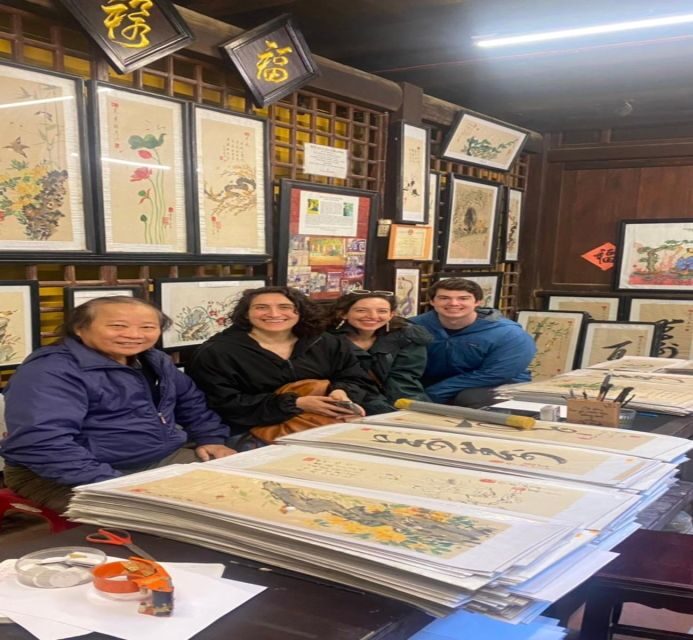
- Small group (8 max) means you get more help while you practice.
- Hands-on tools: fur pen, Chinese ink, and Do rice paper for real calligraphy results.
- More than writing: you also learn basic traditional folk painting skills and scenery scenes in watercolor.
- Take-home gift: your own calligraphy work on rice paper with your name or your idea.
- Relaxing pacing: traditional Vietnamese tea is included, so it feels like an experience, not a rushed class.
- English-speaking guide with a teacher praised for being patient and funny.
Hoi An’s Museum of Folk area: why this starts in the right place
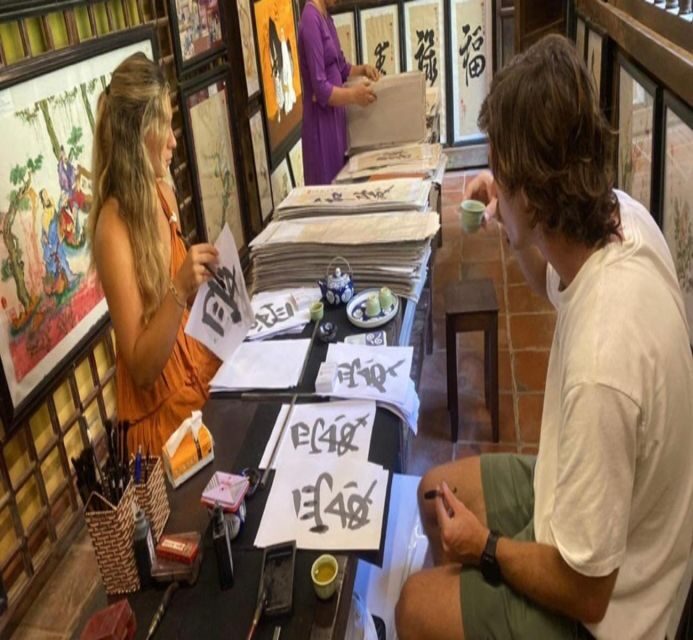
Hoi An has a way of turning your day into a series of sights, shops, and quick photo stops. This workshop is a nice counterweight. Starting at the Museum of Folk (33 Nguyen Thai Hoc street) puts you in a more culture-first zone, not out in the middle of traffic and crowds.
You’ll begin and end back at the same meeting point, which makes the logistics simpler than a lot of half-day tours. It also helps if you’re bouncing between Oldtown highlights later. Since the class runs about 2 hours, you can fit it into an itinerary without eating your whole afternoon or morning.
The setting also matters for the mood. The activity is built as a relaxing escape from the hustle and bustle of the city, and the included tea supports that slower pace.
You can also read our reviews of more tours and experiences in Hoi An



The 2-hour workshop: what happens from start to finish
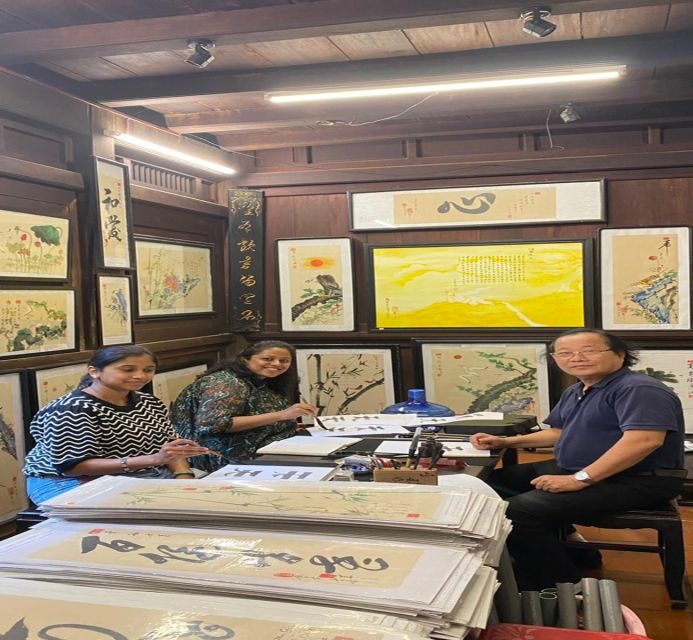
You’re signing up for a hands-on calligraphy lesson, not a lecture. The flow is built around three things: context (why the art matters), technique (how to use the tools), and outcome (your own work to take home).
Here’s what to expect during your time in the class:
You’ll meet the English-speaking guide at the Museum of Folk address. Then you’ll settle in with traditional Vietnamese tea. After that, the local calligrapher introduces you to the history of Vietnamese calligraphy, covering both ancient and modern styles.
Next comes the practical part. You’ll learn and practice using the calligraphy tools: fur pen, Chinese ink, and traditional Do rice paper. This is where you stop being a spectator and start making marks that look like Vietnamese calligraphy rather than random handwriting.
The class also includes drawing practice beyond calligraphy. You’ll learn basic traditional folk painting techniques, and you’ll work on scenery scenes in watercolor. Even if you think you’re not an artist, this portion is useful because it teaches you how artists think about composition and brush control.
Finally, you get the take-home piece. After the course, the calligrapher creates a calligraphy work on rice paper using your name or your idea. The experience lists this as a gift, and the practical effect is big: you don’t have to hope your final draft looks good enough to frame. You leave with something intended to be kept.
The tools: fur pen, Chinese ink, and Do rice paper
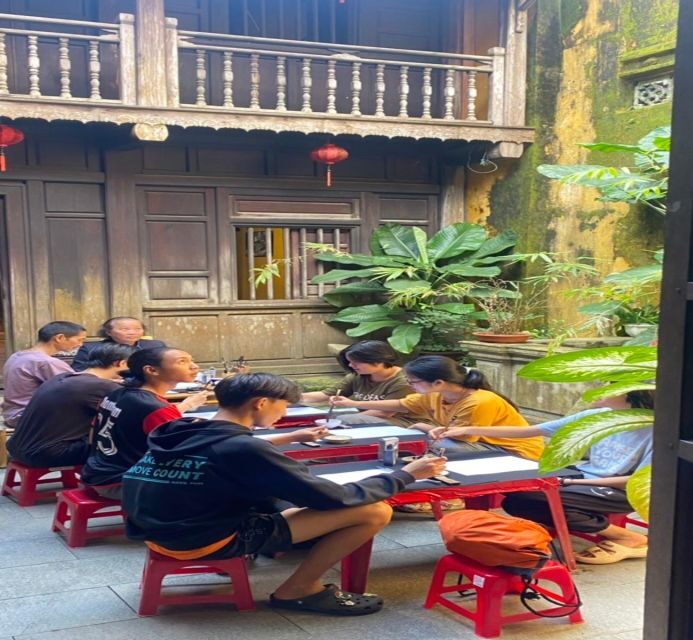
This class stands or falls on the tools, and here they’re the real deal. You’ll work with a fur pen, Chinese ink, and traditional Do rice paper. That combo changes the feel of writing immediately.
A fur pen needs control. The ink behavior matters too: Chinese ink isn’t like a ballpoint pen, so your line thickness and flow come from technique, not force. And Do rice paper has its own response—when ink hits it, you see why artists treat paper quality as part of the craft, not just a supply detail.
For you, this is the value. You’re not just copying characters. You’re learning how tools shape the final look. One of the strongest pieces of feedback from the class is that people learned more than strokes—they learned how characters are designed, and they practiced writing characters themselves. That’s exactly the kind of lesson where the tools do the teaching for you.
Learning to read and write Vietnamese characters with purpose
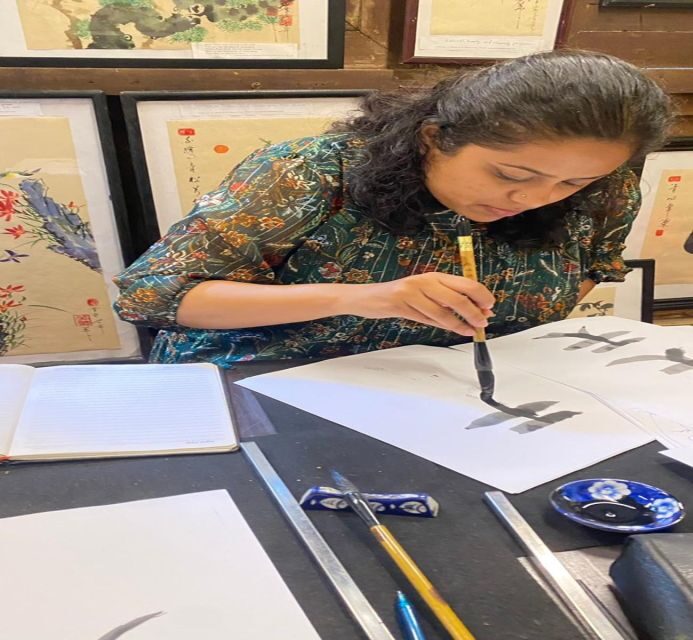
This workshop doesn’t treat calligraphy as decoration only. It frames Vietnamese calligraphy as a way of communicating—like a visual language you can learn to understand.
From the feedback people shared after the class, the teaching approach includes learning about character forms and design. You’ll also get the history context: both ancient and modern Vietnamese calligraphy. Then you’ll practice writing basic characters, which helps you start recognizing patterns instead of starting from scratch every minute.
If your goal is cultural understanding, this part helps. You begin to see calligraphy as more than “pretty writing.” You’re learning how artists translate meaning into form.
And if your goal is a souvenir, this helps too. A calligraphy piece looks better when you understand at least a little about what you’re drawing and why it’s structured the way it is.
The teacher and the small-group size: help without crowding
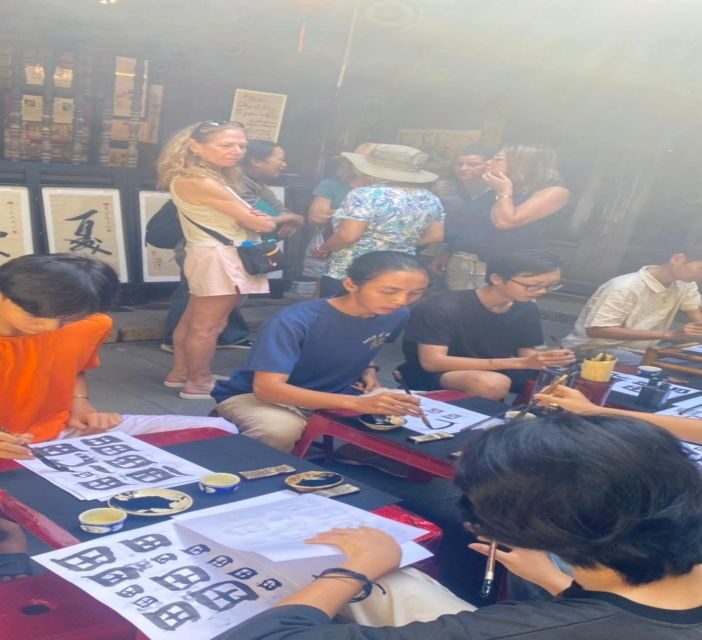
This is a small group class, limited to 8 participants. That’s not just a nice-to-have. In practice, it’s what allows the teacher to correct technique and keep you from getting lost.
The reviews attached to this experience highlight a teacher who’s patient and funny, and also genuine, interesting, and fun. People also noted strong English. That matters because calligraphy has lots of tiny technique details, and you need clear explanations to make progress fast.
In a group of eight, you’re more likely to get individualized attention when you struggle with stroke order or pressure. You’re also more likely to feel comfortable asking questions rather than waiting your turn behind a larger crowd.





Beyond calligraphy: folk painting and watercolor scenery practice
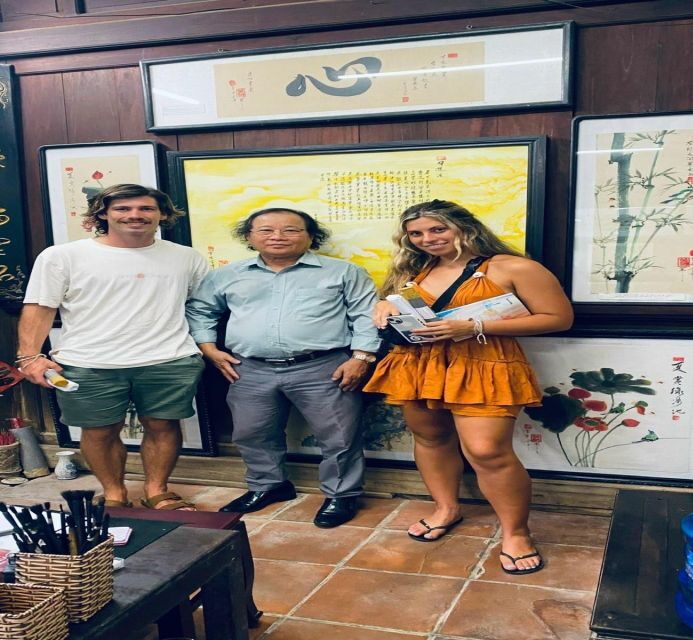
One of the surprises here is that the class isn’t only letters. You’ll also learn traditional folk painting basics and create scenery scenes in watercolor.
This matters for a few reasons:
- It gives your brain a break from strict stroke practice while still keeping you in “traditional art” mode.
- It helps you see how brush skills transfer between writing and painting.
- It gives you extra creative output during the short 2-hour window.
If you’re traveling with family or friends, this can be a real win. Not everyone wants to focus solely on characters. The extra art component makes the session feel more like a guided workshop than a single-skill class.
And yes, even if you mainly care about Vietnamese calligraphy, this bonus keeps the experience from feeling repetitive. It adds texture and variety to what could otherwise be a very one-note activity.
Tea, pacing, and the included souvenir you’ll actually want to keep
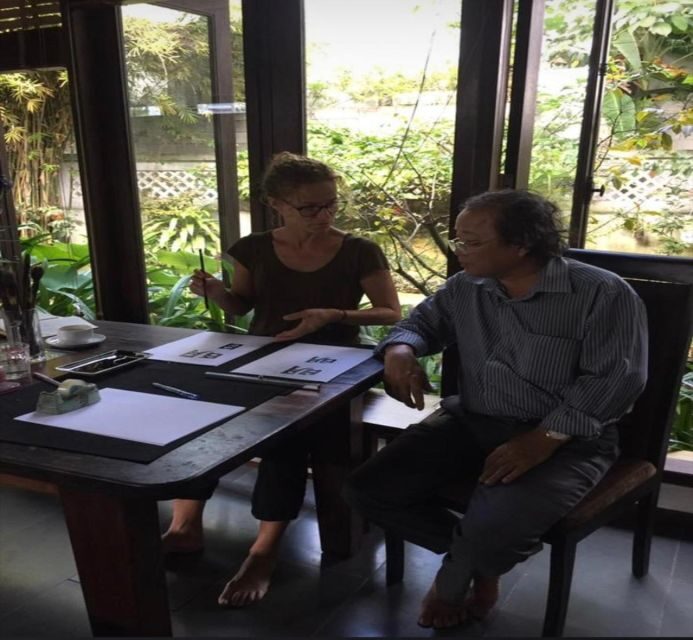
The class includes traditional Vietnamese tea. That may sound small, but it changes how the experience feels. It supports a calmer pace and makes the workshop feel like a real cultural stop rather than a rushed activity.
Then there’s the take-home gift. After the course, the calligrapher makes a calligraphy work on rice paper using your name or your idea. So you’re not just leaving with a lesson—you’re leaving with something that’s meant to be personal.
The reviews back this up. People described the souvenir as a meaningful take-home piece, tied to what they learned. And because the calligrapher creates the final rice paper work for you, you’re more likely to end up with a result that looks like a finished artwork, not a practice sheet.
Price and value: is $296 per person fair?
At $296 per person, this isn’t a budget workshop. So the real question is what you’re paying for.
Here’s what the price covers based on the included items:
- English-speaking guide
- Art materials and tools (fur pen, Chinese ink, Do rice paper, and supplies used in the class)
- Traditional Vietnamese tea
- A special gift (your calligraphy work on rice paper with your name or your idea)
So you’re not paying only for instruction. You’re also paying for the materials and the take-home artwork. Plus, the group size is capped at 8, which usually means more hands-on coaching time compared to bigger classes.
What’s not included:
- Hotel pickup and drop-off
- Food and drink
- Any other expenses not mentioned
If you’re the kind of traveler who values “make it yourself” experiences and wants a souvenir that reflects your time in Hoi An, this can feel worth it. If you’re mainly looking for casual sightseeing or you’re trying to keep costs low, this may feel steep.
In other words: it’s good value if you treat it as a workshop and souvenir package. It’s less good value if you want a quick photo-and-leave stop.
Practicalities: how to plan your day around it
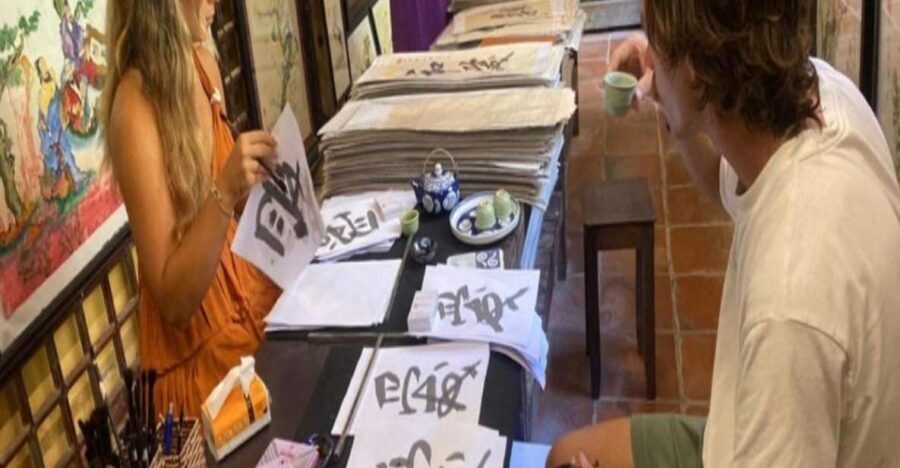
This workshop runs about 2 hours. Starting times vary, so you’ll want to check availability for the day you plan to go.
There’s no hotel pickup or drop-off. You meet at the Museum of Folk on Nguyen Thai Hoc street and you return there at the end. Plan to arrive with enough time to find the exact meeting spot and settle in.
A couple of limits are spelled out clearly:
- Not suitable for people with mobility impairments
- Not suitable for wheelchair users
- Pets aren’t allowed
Also, the class isn’t available on the 13th and 28th monthly. If you’re visiting around those dates, you’ll need a backup plan in Oldtown.
One more practical note: the experience includes skipping the ticket line. That suggests there’s some entry or check-in flow tied to the meeting place, and you’ll have an easier start once you arrive.
Who this calligraphy class fits best
This is a strong match for:
- Families and friends who want a shared activity with a finished result
- Travelers who like hands-on cultural learning rather than watching from the sidelines
- People who want a personalized souvenir tied to their name or an idea
You may want to skip or reconsider if:
- You need wheelchair accessibility or have mobility constraints that make classroom seating difficult
- You’re only interested in quick sightseeing and don’t want a structured 2-hour session
- You’re traveling with pets (they’re not allowed)
Should you book Hoi An traditional Vietnamese calligraphy?
If you want something different from the usual Oldtown routine, I’d say this is a solid yes. The combination of Vietnamese calligraphy practice, English guidance, included tea, and a real take-home gift makes it more complete than many “try an activity” tours.
Book it if you:
- Care about doing the craft, not just hearing about it
- Want a personalized rice-paper artwork to keep
- Like small-group settings where you get attention while you learn
Hold off if:
- The price feels out of reach for your trip
- Accessibility is a concern for your group
- You’re only looking for a short, low-commitment stop
FAQ
FAQ
Where is the meeting point for the workshop?
The meeting point is the Museum of Folk at 33 Nguyen Thai Hoc street, Hoi An. The activity also ends back at the same meeting point.
How long is the calligraphy class?
The duration is 2 hours.
How big is the group?
It’s a small group limited to 8 participants.
Is the class taught in English?
Yes. The guide is English-speaking, and the experience language is listed as English.
What materials are included for the calligraphy practice?
Art materials and tools are included, including a fur pen, Chinese ink, and traditional Vietnamese Do rice paper.
Is there tea during the class?
Yes. Traditional Vietnamese tea is included.
Do I take home something at the end?
Yes. After the course, the calligrapher creates a calligraphy work on rice paper with your name or your idea, listed as a special gift.
Is hotel pickup or drop-off included?
No. Hotel pickup and drop-off are not included.
Is this workshop suitable for wheelchair users?
No. It is not suitable for wheelchair users, and it is also not suitable for people with mobility impairments.
Are there specific dates the experience does not run?
Yes. The experience is not available on the 13th and 28th monthly.