REVIEW · HOI AN
Hoi An Street Food Tour with a Real Foodie – Private Tour
Book on Viator →Operated by Local Life Hoi An · Bookable on Viator
Street food tours can be hit or miss, but this one has a clear plan. You start in the late afternoon, when stalls are turning on and the lanes of Hoi An feel like real life. I like that it mixes food tasting with small-street exploring, so you’re not just eating blind.
Two things I especially like: the route is built around Hoi An favorites you can recognize (from rice pancakes to Cau Lau noodles), and it includes stops tied to how the food is made, not only where to buy it. You’ll also get an English-speaking guide, often with names like Hai or Hoa (Flower), who adds local stories and keeps things light.
One consideration: you’ll likely get quite full. Several spots stack up in a short window, and the tour ends with free time to wander by night, not a sit-down meal right after.
In This Review
- Key Points You’ll Care About
- Late-Afternoon Food, Not Midday Heat: When This 4:00 PM Start Makes Sense
- Your Guide Can Make or Break a Street Tour (Hai, Hoa, and the Friendly Human Touch)
- What You’ll Actually Eat: A Route Built Around Hoi An Staples
- Water-fern Cake: Starting Light Before You Get Serious
- White Rose, Wonton, and Pound Cake Workshops: Watching Food Take Shape
- Learning About Everyday Objects and Ancient Life
- Rice Pancake: A Standout Stop That Helps You Taste the Region
- Cau Lau Noodles: The Heavier Bite That Makes the Tour Feel Like a Real Meal
- Banh Mi and Grilled Pork: Classic Convenience, Made Local
- Vietnamese Coffee in the Middle of Town: The Reset Before the End
- Why the Walking Route and Workshops Add Real Value
- How Food-Allergy Adjustments Work (Tell Them Early)
- Price and Value: What $33.55 Gets You for a Private 3-Hour Food Walk
- Pace, Fullness, and the One Thing to Plan For
- Who Should Book This Tour, and Who Might Want a Different Style
- After the Coffee: Making the Most of Your Free Night in Hoi An
- Should You Book This Private Street Food Tour?
- FAQ
- How long is the Hoi An Street Food Tour with a Real Foodie?
- What time is pickup, and where do we meet?
- Is this a private tour?
- What food is included in the tasting?
- Does the tour include dinner?
- Do you get an English-speaking guide?
- Can the tour adjust for allergies or dietary restrictions?
- What happens after the coffee stop?
- Is there a mobile ticket?
- What if weather is bad or I need to cancel?
Key Points You’ll Care About
- Late-afternoon timing: 4:00 PM pickup lines up with when street vendors start cooking
- Private group experience: only your group joins, so it feels personal and flexible
- Hands-on food stops: you’ll see places that make White Rose, wonton, and pound cake
- Iconic Hoi An dishes in sequence: Water-fern cake, rice pancake, Cau Lau, Banh Mi, grilled pork
- Vietnamese coffee break: a mid-route pause in the middle of town
- You’ll leave with confidence: the goal is to help you try street food on your own later
Late-Afternoon Food, Not Midday Heat: When This 4:00 PM Start Makes Sense
This tour runs for about 2.5 to 3 hours on paper, but in real life you may find it runs closer to 4 depending on pacing and how long you spend at each stop. Either way, the big win is the late-afternoon start. In Hoi An, that timing matters because vendors start setting up and cooking as the day cools.
Pickup is at the gate of EMM hotel, 187 Lý Thường Kiệt, Hoi An, with pickup time listed as 4h00. That’s convenient if you’re staying near the center and it also means you’re not burning your whole day waiting around.
You’ll spend the tour walking through small streets. That’s part of the value: street food is best when you can see the rhythms of the neighborhood—who’s buying, what’s being cooked fresh, and how locals place their orders.
You can also read our reviews of more food & drink experiences in Hoi An


Your Guide Can Make or Break a Street Tour (Hai, Hoa, and the Friendly Human Touch)
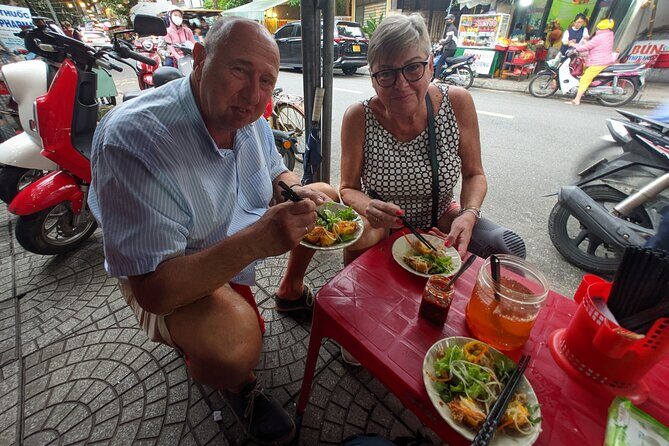
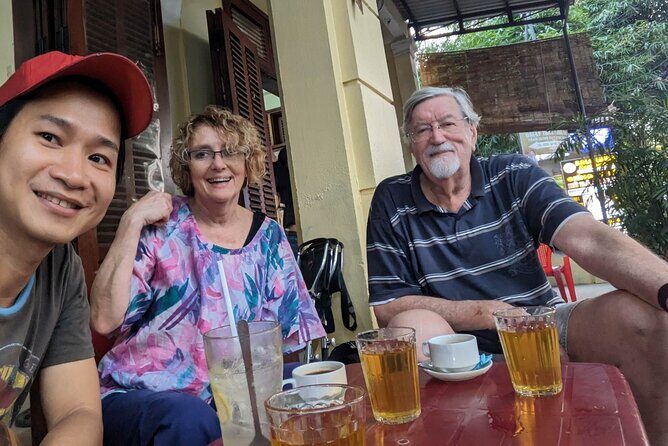
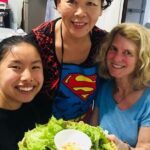
This is an English-speaking guide experience, and the standout theme is personality plus local know-how. Guides with names like Hai show up in multiple stories as funny, upbeat, and genuinely proud of their hometown.
The effect is practical. When a guide explains what you’re eating and why locals like it, you’re more likely to enjoy the flavors instead of just tolerating something foreign. It also helps with ordering and confidence later, since the whole point is to make you feel comfortable enough to try street food on your own after the tour.
Another plus: it’s private. You won’t be mixed into a giant group. That usually makes the walking pace easier and the food choices more responsive—especially if you have preferences.
What You’ll Actually Eat: A Route Built Around Hoi An Staples
The tasting list is where this tour earns its name. You’re not sampling random bites. You’re working through foods that show up in Hoi An for a reason: they’re local, recognizable, and you can find similar stalls afterward once you know what to look for.
Here’s how the route plays out.
Water-fern Cake: Starting Light Before You Get Serious
The first stop is water-fern cake. It’s a good opening bite because it sets the tone for the tour. You get a local specialty early, when you’re still hungry and your expectations are fresh.
This also helps you learn how Hoi An street vendors present food—portion sizes, textures, and what you should expect from the first taste compared to the heavier dishes later.
White Rose, Wonton, and Pound Cake Workshops: Watching Food Take Shape
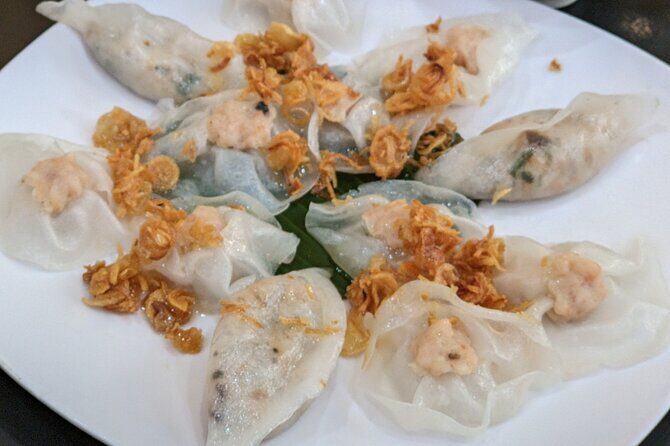
After that, you visit a workshop area where food is made, including White Rose and wonton, plus pound cake. Seeing food being assembled adds context fast. Even if you’ve never tried these items before, you start to understand what makes them distinct instead of treating them like a surprise.
White Rose is often delicate and visually distinctive, and wonton can be a comforting counterpoint. Pound cake adds something different in texture and sweetness, which can be a relief after more savory bites.
These workshop stops are valuable because they go beyond eating. You’re learning the logic of the food—what goes in, how it’s handled, and how vendors keep it consistent enough to sell day after day.
You can also read our reviews of more tours and experiences in Hoi An



Learning About Everyday Objects and Ancient Life
Along the way, there’s time for background about ancient Hoi An life and other everyday objects. This isn’t academic lecturing. The idea is simple: when you connect food to daily routines, it feels less like tourism and more like culture.
In a place like Hoi An, that matters because so much of what you see in the old town came from practical living—trade, crafts, and the foods that supported it.
Rice Pancake: A Standout Stop That Helps You Taste the Region
Next up is rice pancake. This is another smart choice mid-tour because it’s common enough to be memorable, but different enough in Hoi An that it won’t feel like a generic snack.
Rice pancake is also a reminder that street food isn’t only skewers and buns. It’s often comfort food made with local staples, cooked quickly, and eaten while it’s hot.
Cau Lau Noodles: The Heavier Bite That Makes the Tour Feel Like a Real Meal
Cau Lau noodles are a major part of the experience. This dish tends to be filling, so it’s the point where you should start paying attention to how full you’re getting.
If you’re the type who wants to try everything, pace yourself from here. If you’re with a group, you’ll be tempted to compare bites and move fast, but Cau Lau is the kind of food that can slow you down in a good way.
Banh Mi and Grilled Pork: Classic Convenience, Made Local
Then the tour brings you to Banh Mi and grilled pork. These are familiar categories, but the reason they work here is that you’re getting the Hoi An version in a way that feels connected to the rest of the route.
By this stage, you’re not just sampling foods; you’re tasting contrast—fresh bread versus grilled meat, different seasoning profiles, and how each stall handles flavor.
Vietnamese Coffee in the Middle of Town: The Reset Before the End
There’s a Vietnamese coffee stop in the middle of town. That pause helps you reset before the tour ends and you head out on your own.
Coffee also matters in a street food tour because it changes the pacing. It gives you a moment to breathe, sip something local, and think about what you liked most so you can order it again later.
Why the Walking Route and Workshops Add Real Value
A street food tour can either be a food chase or a guided introduction. This one is closer to the second option because of two design choices: walking through small streets and adding workshop-style stops.
Walking through the lanes helps you learn the layout of the area and how vendors set up. You start to notice patterns—where you can find similar dishes, how stalls group by type, and what the ordering process looks like.
The workshop element (White Rose and wonton, plus pound cake) turns the food into something you understand. You’re not only trying flavor. You’re also seeing the process behind it, which makes the food feel more intentional.
And the guide adds another layer by talking about ancient Hoi An life and everyday objects. Even if you’re not a history person, that kind of context helps explain why certain dishes matter locally.
How Food-Allergy Adjustments Work (Tell Them Early)
The tour information specifically says you can tell the guide about allergies or food issues so they can adjust accordingly. That’s the right approach for street food, where ingredients and preparation methods can vary.
If you have a serious allergy, you should plan to share details before the tour starts, not during the first stop. This lets the guide make real adjustments instead of improvising on the spot.
Price and Value: What $33.55 Gets You for a Private 3-Hour Food Walk
At $33.55 per person for a private street food tour, the value comes from what’s included, not the sticker price. You get pickup, an English-speaking guide, food tastings, a drink, and dinner included.
Street food can be inexpensive when you’re buying on your own, but the tradeoff is confidence. You spend time figuring out what’s good, whether a stall is clean enough, and what you should order. This tour compresses that decision-making into one guided route.
Private format is another part of the value story. You’re paying for a guide who adapts to your group and pacing, rather than a large shared schedule.
Also, late-afternoon timing helps: you’re sampling when vendors are actively cooking, not when half the stalls are still waking up. That alone can improve the quality of what you eat.
Pace, Fullness, and the One Thing to Plan For
Most tours like this end with you satisfied and a little slower on your feet. This one can be that way fast. There’s a lot in about 2.5 to 3 hours, and even if you only take normal portions, the sequence stacks up.
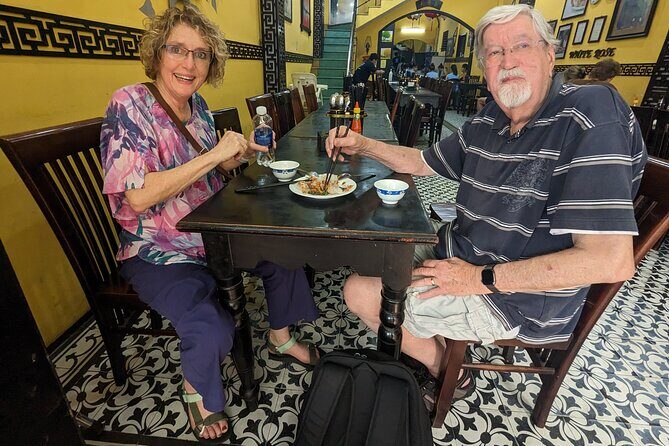
One review note that the tour was about 4 hours and that it can be hard to eat at the final stop because you’re too full. I’d take that as a practical heads-up: go hungry, and don’t plan an extra big meal right after.
The other pacing factor is the ending. After Vietnamese coffee, the tour ends and you get free visiting time in Hoi An town by night. You then head back to your hotel on your own.
Who Should Book This Tour, and Who Might Want a Different Style
This is a great match if you want street food with structure. It’s also designed so most people can participate, and it’s suitable for diet or allergy needs with adjustments requested.
Book it if you:
- want to learn what to order in Hoi An street stalls
- like tasting a variety of dishes instead of repeating one favorite
- appreciate guides who mix food with practical local context
- prefer a private setting rather than sharing a route with strangers
You might choose a different option if:
- you eat small portions and worry you’ll feel stuffed quickly
- you want the tour to end with a fully planned return transport
- you dislike walking through small streets for an extended stretch
After the Coffee: Making the Most of Your Free Night in Hoi An
Once the tour ends, you’re free to explore Hoi An town at night. That timing is smart because the old town atmosphere tends to feel different after dark, and you’ll be carrying a mental map of where the best street foods are.
Since you return to your hotel on your own, it helps to know your route back or have a simple plan. If you’re staying nearby, it’s usually easy. If not, consider how you’ll get back before you start the walk.
Should You Book This Private Street Food Tour?
If you want street food in Hoi An with less guesswork, this is an easy yes. The private format, pickup, and clear food sequence add up. The workshop stops (White Rose, wonton, pound cake) and the coffee break make it more than just a snack run.
I’d book it if you’re hungry and curious and you want to leave feeling confident ordering on your own later. Go into it expecting you’ll eat a lot, and you’ll have a much better time.
FAQ
How long is the Hoi An Street Food Tour with a Real Foodie?
The tour is listed at about 2.5 to 3 hours.
What time is pickup, and where do we meet?
Pickup time is listed as 4h00, and the meeting point is at the gate of EMM hotel, 187 Lý Thường Kiệt, Hoi An.
Is this a private tour?
Yes. It’s a private tour/activity, and only your group participates.
What food is included in the tasting?
You’ll taste water-fern cake, items made in workshops including White Rose and wonton (plus pound cake), and you’ll also stop for rice pancake, Cau Lau noodles, Banh Mi, grilled pork, and Vietnamese coffee.
Does the tour include dinner?
Yes. Dinner is listed as included, along with food tastings and a drink.
Do you get an English-speaking guide?
Yes. An English-speaking guide is included.
Can the tour adjust for allergies or dietary restrictions?
Yes. The information says to tell the provider about allergies or any food problems so they can adjust accordingly.
What happens after the coffee stop?
After Vietnamese coffee, the tour ends with free visiting in Hoi An town by night, and you return to your hotel on your own.
Is there a mobile ticket?
Yes. A mobile ticket is listed as part of the experience.
What if weather is bad or I need to cancel?
The experience requires good weather. If it’s canceled due to poor weather, you’ll be offered a different date or a full refund. Free cancellation is allowed up to 24 hours in advance for a full refund.
If you tell me where you’re staying (nearby landmark is fine) and whether you have any allergies, I can help you sanity-check if the route timing and food density will feel right for you.