REVIEW · HOI AN
Hoi An City Tour (Private Tour)
Book on Viator →Operated by Fingo Private Tours · Bookable on Viator
A few hours in Hoi An can feel like a whole storyline. This private half-day tour walks you through Ancient Town highlights and includes timed entry tickets for major sites, plus a traditional performance stop to cool down. I especially like how the day is paced with short, focused visits, and how the route hits the classic “layers” of Hoi An—Japanese, Chinese, and Vietnamese influences—without turning it into a tiring marathon.
The one possible drawback: you’ll be walking and stopping often, so it’s not the easiest choice if you want a fully slow, no-rush day.
In This Review
- Key things I’d plan around
- Entering Hoi An with a tight 4-hour plan (and a guide who sets the tempo)
- Japanese Covered Bridge: more than a picture, with carvings and a temple link
- Phuc Kien (Fujian) Assembly Hall: the sea-goddess story you’ll actually remember
- Tan Ky Old House: the “three cultures in one place” feeling
- Traditional Art Performance Theatre: an air-conditioned reset in the middle of the day
- Hoi An Cloth Market: souvenirs, silk and leather, plus the practical local-food side
- Price and value: what $50 gets you (and where to budget extra)
- The guide makes the day: Fin and Theim’s style of friendly, clear storytelling
- Practical planning: what to wear, how to time photos, and what to carry
- Should you book this Hoi An City Tour (Private Tour)?
- FAQ
- How long is the Hoi An City Tour (Private Tour)?
- What is included in the $50 tour price?
- Where does the tour start and where does it end?
- How big is the group?
- What should I pay for separately?
- What happens if the weather is poor or there aren’t enough travelers?
Key things I’d plan around
- Small group size (max 15) keeps things friendly while still moving at a steady pace
- Entrance tickets included for Old Town stops means fewer hassles once you’re there
- Air-conditioned traditional performance gives you a real break from the heat
- Ends outside Hoi An market so you can keep exploring on your own right after the tour
- English-speaking guide helps you connect what you see to the stories behind it
Entering Hoi An with a tight 4-hour plan (and a guide who sets the tempo)
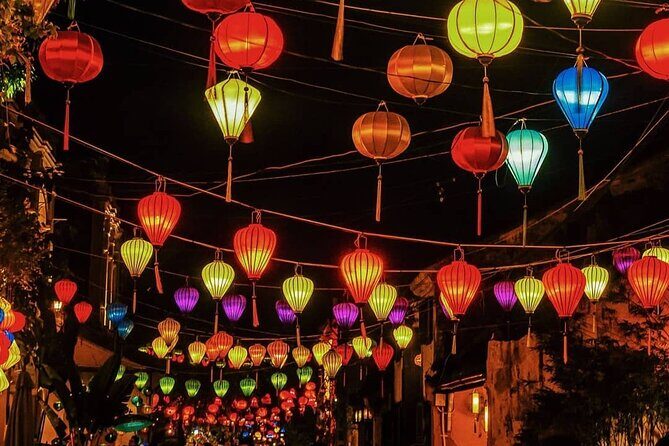
Hoi An is the kind of place where the details matter. If you’ve got limited time—maybe you’re between beaches, or you’re juggling other stops in Central Vietnam—a half-day private city tour is a practical way to get your bearings fast and still see the “must-see” spots.
This is built as a ~4-hour experience with a small group capped at 15 people, so you’re not stuck in a huge crowd shuffle. You’ll also get a mobile ticket, which makes it easier on arrival. The tour starts at Chùa Pháp Bảo (near Phan Chu Trinh, Minh An) and finishes near 21 Hoàng Diệu, with drop-off outside Hoi An market. That end point is handy: you can continue browsing or head back to your hotel when you’re ready.
I also like that the itinerary mixes sightseeing with a “sit and recharge” moment—the traditional performance in an air-conditioned theatre. In Hoi An, that break isn’t a luxury. It’s how you keep the afternoon from turning into heat fatigue.
One more practical note: bottled water is included, but street food and drinks are payable locally, so bring some cash or be ready to use a simple payment method your guide can point out.
You can also read our reviews of more city tours in Hoi An



Japanese Covered Bridge: more than a picture, with carvings and a temple link
Your first stop is the Japanese Covered Bridge, a landmark many people recognize instantly—even if they don’t know what they’re looking at.
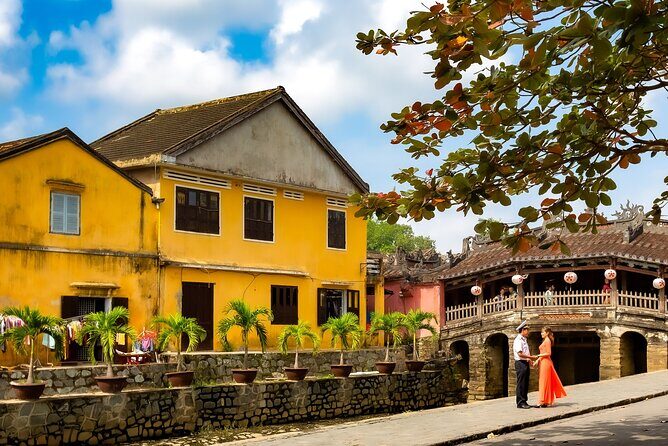
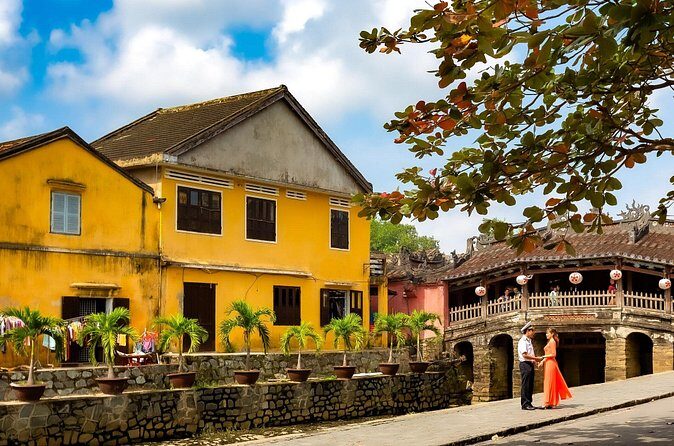
Built by Japanese residents in the 17th century, the bridge isn’t just a crossing. It includes a small temple and is known as a symbol of Hoi An. Here, you’ll get about 20 minutes, and the admission ticket is included. Expect time to walk through the covered section, take photos, and notice the intricate carvings and the roofed walkway meant for shelter.
What to do with your time there:
- Look closely at the decorative details on the sides and near the temple area. Even if you’re not an art-history person, the workmanship is the point.
- Use the covered walkway for photos. The roof gives you more even light, and you avoid some harsh sun.
Potential drawback to keep in mind: since it’s an icon, this bridge can be a magnet for crowds. You’ll have a short window, so go in with a quick plan—get the “classic view,” then spend a few extra minutes on details.
Phuc Kien (Fujian) Assembly Hall: the sea-goddess story you’ll actually remember

Next up is Fukian Assembly Hall, also known as Phuc Kien Assembly Hall. This stop is about meaning, not just architecture.
It was originally built by Chinese merchants from Fujian in the late 17th century. The hall is dedicated to Thien Hau, the goddess of the sea, who is tied to protecting sailors. You’ll also see ornate gate features that help explain how communities expressed beliefs through public buildings.
You’ll get about 30 minutes here, with the admission ticket included.
Why this stop matters for your understanding of Hoi An:
- It shows you how trade and water routes shaped the town’s identity.
- Even if you only catch the highlights, the idea of a seafaring community leaving visible marks is easier to understand in person than from a quick read.
Practical tip: take a few seconds to pause and look at the entrance before rushing inside. Assembly halls are designed with ceremony in mind, and that front area sets the mood for the rest of the visit.
Tan Ky Old House: the “three cultures in one place” feeling
Tan Ky Old House is one of those sites where you’ll probably notice something in the first few minutes—maybe the layout, maybe the woodwork, maybe the way the home reflects outside influences.
This house was built over 200 years ago by a Vietnamese merchant family, and it blends Vietnamese, Chinese, and Japanese architectural styles. You’ll spend around 30 minutes and the admission ticket is included. Inside, you can admire carved wooden beams and antique elements.
This stop is valuable because it’s not only about a landmark name. A merchant house shows how wealth, family life, and local trade came together in daily space. It turns the history talk into something you can picture.
The only consideration: 30 minutes goes quickly when you’re trying to look at everything. If you want the best experience, pick your focus—wood carvings one moment, room layout the next—rather than trying to study every corner.
Traditional Art Performance Theatre: an air-conditioned reset in the middle of the day
After the walk-and-look stops, your schedule shifts into performance mode at the Hoi An Traditional Art Performance Theatre.
This is scheduled for about 45 minutes, and it’s described as an air-conditioned hall with restrooms available. That alone is worth planning for. In Hoi An, this kind of break can keep your energy level steady for the final stop at the market.
The show includes traditional performances such as dances, plays, songs, and folk games. If you’re lucky in the games, you may get a chance to participate. Even if you’re just there to watch, it’s a chance to experience culture in motion, not only preserved in buildings.
One practical drawback: it’s a theatre stop, so you won’t be exploring outside during that time. If it’s raining or too hot, that’s a plus. If you’re hoping to maximize outdoor strolling in every minute, you might feel the trade-off. For most people, though, it’s the exact mid-tour recharge you need.
You can also read our reviews of more private tours in Hoi An






Hoi An Cloth Market: souvenirs, silk and leather, plus the practical local-food side
Your last scheduled stop is Hoi An Cloth Market. You’ll spend around 30 minutes here, and you’ll start with a short walk to get oriented—your guide will point out the different stall areas and how the market is organized.
The market is known for sections that include:
- food and vegetables
- souvenirs
- silk
- leather goods
This is also where you’ll get dropped off outside the market area at the end of the tour, which is a smart move. Instead of ending far from your next activity, the tour hands you the keys to your next hour. You can browse a bit more, grab a snack, or head back to your hotel when it suits you.
How to shop without losing your mood:
- Decide what you want before you arrive. If your goal is a small memory item, you’ll make better choices than if you wander with an open-ended budget.
- Keep in mind that you can also use the free time after the tour to compare. You don’t have to buy in that 30-minute window.
Price and value: what $50 gets you (and where to budget extra)
At $50.00 per person for a private half-day, the value comes down to what’s included.
In this tour, your entrance fees for the Old Town stops in the itinerary are included. You also get a professional English-speaking guide and bottled water. Because the route includes both landmark sites and a performance stop with ticket admission, you’re not paying separately for each entry point.
What you should budget for separately:
- personal expenses
- food and drinks you choose during the day (not included; payable locally)
One more detail: this tour is reportedly booked about 20 days in advance on average. That doesn’t mean you can’t book later, but it does suggest the experience stays in demand, especially during busy seasons. If your dates are fixed, earlier booking usually reduces stress.
The guide makes the day: Fin and Theim’s style of friendly, clear storytelling

A big reason private tours feel worth it is that the guide turns buildings into stories. Here, the operator highlights English-speaking guides, and the experiences you can expect are closely tied to guide personality.
The name Fin shows up as a real point of contact, including support beyond the tour itself. One review mentions help with train ticket issues, and another mentions a guide named Theim as engaging, friendly, and very strong on history details, with fluent English. Both themes matter if you want more than a checklist. You want context that helps you “see” what you’re looking at.
What I recommend you do with that:
- Ask one good question at each stop. For example, what a building was used for, or why the sea-goddess matters to the Chinese community here.
- If you have an issue on the same day (transport confusion, ticket questions), ask your guide. Even when it’s not part of the itinerary, the operator’s support approach can make the difference between a minor headache and a full stop.
Practical planning: what to wear, how to time photos, and what to carry
Hoi An’s Ancient Town is a walking experience. Plan for your body first, photos second.
For comfort:
- Wear shoes that work on uneven sidewalks and short indoor/outdoor changes.
- Bring something light for sun if you’re going in warm weather. The itinerary includes a theatre break, but your first half is still outdoors.
For spending:
- Set aside money for street food and drinks you want to try during the walk. Since those are payable locally, you’ll want a simple way to pay and be ready to decide on the spot.
- Keep some small bills handy for market browsing. Even if you don’t buy much, having flexibility helps.
For timing:
- The stops are fairly timed (about 20–45 minutes each). If you see something you want to photograph, do it early in the window so you don’t rush at the end.
- Don’t overpack your shopping goals into the market stop. Use it for browsing and then decide later when you’ve had a moment to think.
For transport around the area:
- The tour notes that it’s near public transportation, which can make it easier to reach the start point if you’re not using a private car.
Should you book this Hoi An City Tour (Private Tour)?
Book it if you want a structured half-day that hits the central icons of Hoi An Ancient Town, includes tickets for the key stops, and keeps you comfortable with an air-conditioned theatre break. I think it’s a particularly solid fit if you’re short on time but want more than a quick wander.
You might skip it if you want a long, slow meander with no scheduled performance stop, or if you prefer to build your own route based only on personal interests. The itinerary here is clear, and the time windows are tight by design.
Also consider booking if your plan involves exploring the market area afterward. Since you finish right outside Hoi An market, it’s easy to stretch the day without losing time.
FAQ
How long is the Hoi An City Tour (Private Tour)?
The tour lasts about 4 hours.
What is included in the $50 tour price?
Entrance fees for the Old Town stops in the itinerary are included, along with bottled water and an English-speaking tour guide.
Where does the tour start and where does it end?
The tour starts at Chùa Pháp Bảo (V8HG+CPQ, Đ. Phan Chu Trinh, Phường Minh An, Hội An). It ends with drop-off outside Hoi An market at 21 Hoàng Diệu, Cẩm Châu, Hội An.
How big is the group?
The tour has a maximum of 15 travelers.
What should I pay for separately?
Personal expenses and any services not mentioned are not included. Food and drinks during the tour are payable locally.
What happens if the weather is poor or there aren’t enough travelers?
The experience requires good weather. If it’s canceled due to poor weather, you’ll be offered a different date or a full refund. If it’s canceled because the minimum number of travelers isn’t met, you’ll be offered a different date or a full refund.