REVIEW · HOI AN
Full Experience Tour: Cooking Class & Basket Boat at Eco-Village
Book on Viator →Operated by Tra Que Water Wheel · Bookable on Viator
You’ll get a real sense of how people grow and cook in Vietnam, not just watch it. I love how the day moves from welcome drinks to active farm time, and then ends with you eating what you helped make.
The cooking class with the Hoang family is the main event, and I also really like the small, friendly group energy (max 20). One thing to consider: the start can involve busy road riding, and if you’re sensitive to traffic or prefer zero cycling, you may want to manage expectations.
In This Review
- Key Points to Know Before You Go
- What This Hoi An Tour Feels Like (and Why It’s Different)
- Price and Value: Is $52 a Good Deal?
- Getting Started in Hoi An: Pickup, Roads, and First Impressions
- Tra Que Vegetable Village: Welcome Drinks and Farm-First Energy
- The Hands-On Farming Part: Buffalo, Planting, and Work You Can Feel
- Rice Paper Making: Where the Cooking Begins Before You Cook
- Basket Boat Rowing: The Slow-Country Perspective
- The Vietnamese Cooking Class With the Hoang Family
- The Sit-Down Meal at Tra Que Water Wheel: Real Food, Not a Token Bite
- Timing, Duration, and What to Plan Around
- Who Should Book This Cooking Class and Basket Boat Tour?
- Should You Book It? My Practical Take
- FAQ
- How long is the cooking class and basket boat experience?
- Is hotel pickup in Hoi An included?
- How many people are in the group?
- What activities are included during the day?
- Is the tour dependent on weather?
- What is the cancellation policy?
Key Points to Know Before You Go
- Hotel pickup included in Hoi An so you’re not figuring out transport after a full farm day
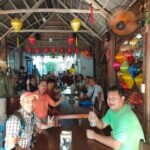
- Small group size (max 20) keeps it personal with the Hoang family
- Hands-on rice paper making and cooking rather than a demo-only experience
- Basket boat rowing and buffalo time give you the Tra Que countryside feel fast
- Sit-down Vietnamese meal at Tra Que Water Wheel ties the day together with real food
What This Hoi An Tour Feels Like (and Why It’s Different)
This is the kind of day that makes Hoi An feel more lived-in and less staged. You start with a welcome drink, then you step into Tra Que’s vegetable village rhythm: walk, bike, farm, and learn.
What makes it click is that you’re not just learning recipes. You’re learning the day that leads to the meal—how fields look, how farming works, and how ingredients become lunch. By the time you sit down to eat, you’re not thinking about what to order. You’re thinking about what you did, what you learned, and how the flavors got there.
You’ll also notice the tone. Guides like Trang, Kun, and Sun show up with a lot of energy and local knowledge, and it comes through in how they explain the work and the food. If you like getting answers to real questions (not just listening to a script), this kind of family-led setup is a big plus.
You can also read our reviews of more boat tours in Hoi An
Price and Value: Is $52 a Good Deal?
At $52 per person for about 6 hours, this tour isn’t the cheapest thing in town—but it’s the kind that often feels fair once you add up what’s included.
You’re getting:
- Round-trip transportation from your Hoi An hotel
- Multiple hands-on activities (rice paper making, cooking class, basket boat)
- A sit-down Vietnamese meal
- A whole farm-style day with bike time and buffalo experience
In other words, you’re not paying just for a cooking lesson. You’re paying for a full cultural block where meal + activities are bundled. For food lovers, the value is strongest because you leave with both skills (how to cook) and context (where ingredients come from).
If you only want one activity—say, just the cooking class—you might compare prices. But if you want a full day that mixes food, countryside, and a real family vibe, this price usually lands in the “worth it” category.
Getting Started in Hoi An: Pickup, Roads, and First Impressions
Pickup is part of the deal. You’ll be collected from your Hoi An hotel, which immediately saves you from the usual stress of getting to the countryside with enough time.
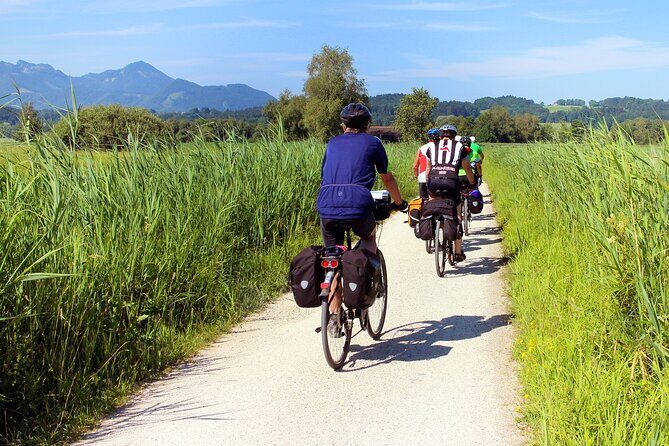
That said, the start can surprise you. Some groups are picked up and guided by bicycle, which means you may ride through busy roads at the beginning. If you’re cautious on bikes or anxious in traffic, plan to take a deep breath and focus on the fact that it’s usually just the transfer portion—then the day calms way down once you’re in the village area.
The practical upside: once you’re in the swing of it, you’ll spend the rest of the time moving through farmland instead of navigating.
Tra Que Vegetable Village: Welcome Drinks and Farm-First Energy
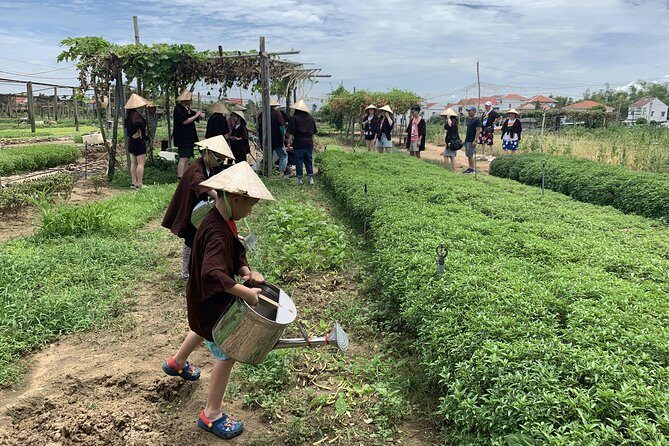
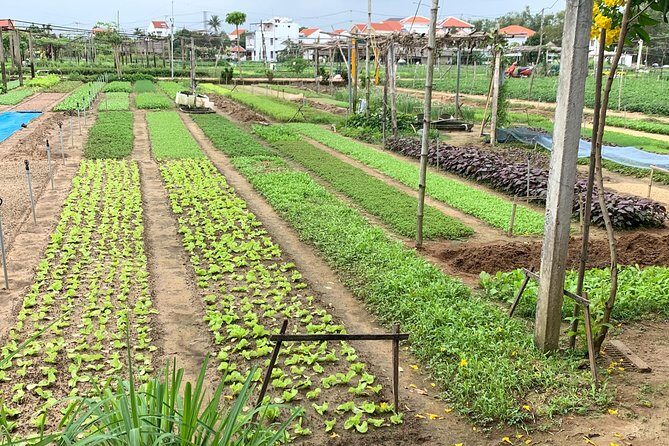
Your day begins in the Tra Que Vegetable Village area, where the pace shifts quickly from city motion to farm walking and open-air time. The welcome drinks are more than a nice touch—they help you reset right at the start.
After that, you’ll explore the family grounds. Expect a mix of:
- walking through the farm area
- cycling through the fields
- learning from the Hoang family’s approach to growing and using vegetables
This part is especially good if you like visuals: rows of crops, rural scenery, and the everyday tools and routines that make farming real.
One drawback? Farm days can be dusty and sunny. Bring what you’d bring for outdoor time in Hoi An: sun protection, water, and comfortable shoes. You’ll be happier when you treat this like an active afternoon, not a “quick tour.”
The Hands-On Farming Part: Buffalo, Planting, and Work You Can Feel
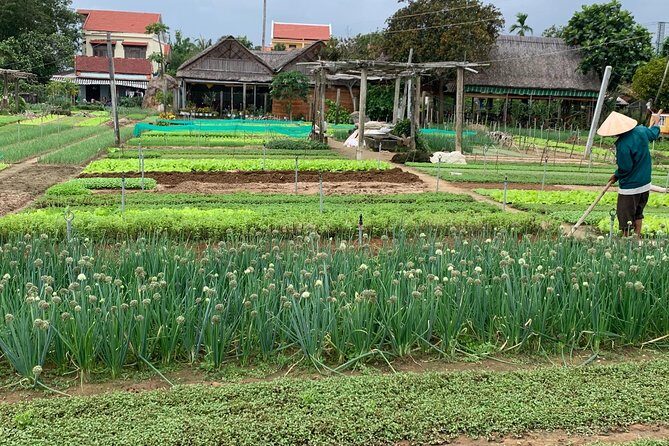
One of the most memorable sections is the chance to experience farming tools and rhythms up close. You’ll do more than look—you’ll take part.
Depending on timing and the day’s flow, you can expect:
- a buffalo ride (a classic Tra Que moment)
- opportunities to help with farm tasks such as planting or garden activities
- learning how farmers think about vegetables and daily work
People tend to love this portion because it changes your role. Instead of being a spectator, you’re an assistant for a bit. You’ll ask questions. You’ll watch how others handle the work. And you’ll understand that the countryside isn’t just scenery—it’s labor, planning, and care.
Animal experiences can be emotional for some visitors. Keep it respectful, and remember this is part of how local farm life works here. If you don’t enjoy animal interactions at all, this may not be your favorite section.
You can also read our reviews of more cooking classes in Hoi An

Rice Paper Making: Where the Cooking Begins Before You Cook
Rice paper making is one of those activities that sounds simple until you do it. You get to try it with guidance, and it’s a great bridge between farming and food.
Why I like this part: it shows you that cooking skill isn’t only about heat and seasoning. It’s about process. Making rice paper gives you a tangible step in the chain from field ingredients to what lands on your plate.
It also keeps the day playful. You’re standing there doing hands-on work, not just sitting through explanations. Even if you don’t consider yourself “good at cooking,” you’ll have something you can genuinely participate in and learn from.
Basket Boat Rowing: The Slow-Country Perspective
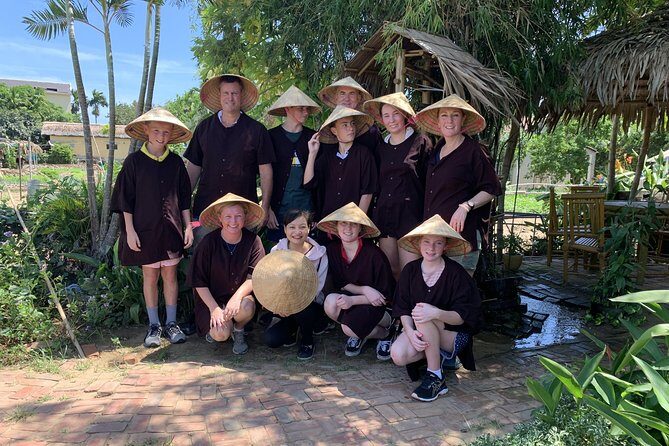
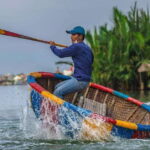
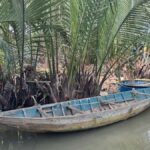
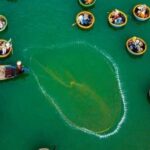
Then comes one of the most calming shifts of the day: basket boat rowing. You’ll row a bamboo basket boat, which is a very different experience from biking fields or kneeling to make rice paper.
This portion tends to feel almost meditative. You’re moving through water at a slower pace, looking at the surroundings without needing to “power through” like you do in busy places.
In at least some runs, the experience is paired with small tasty moments—one group notes fresh coconut during the basket boat portion. Even if it varies by day, expect a relaxed, rural-food-culture vibe.
Practical tip: wear something that dries. You might not get soaked, but water travel always comes with a chance of splashes.
The Vietnamese Cooking Class With the Hoang Family
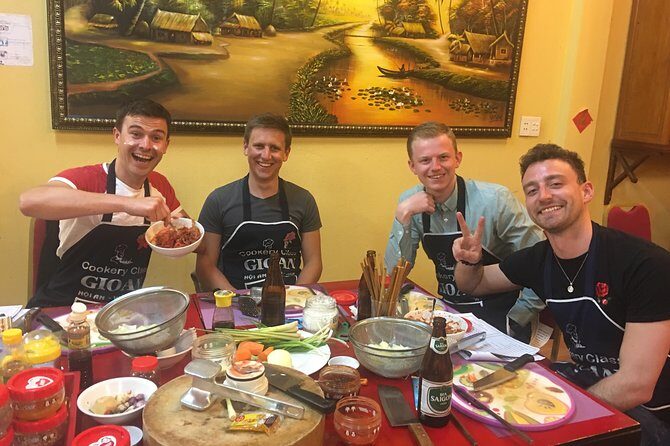
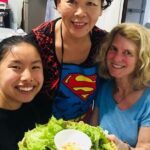
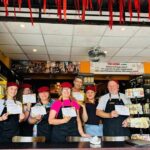
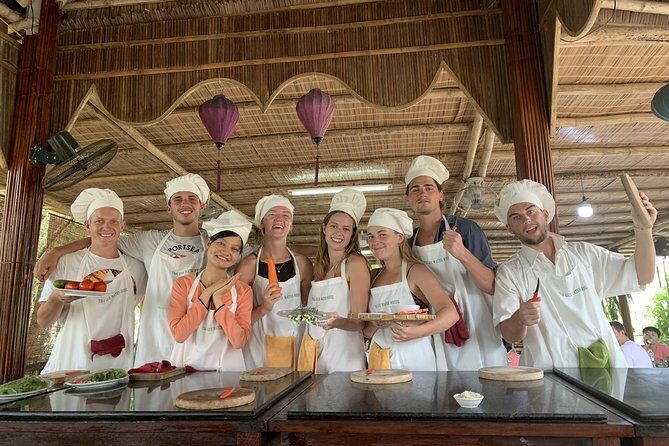
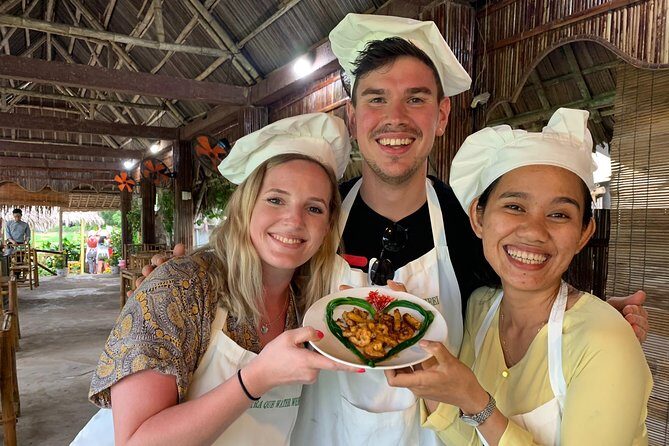
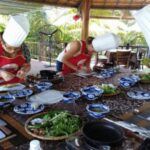
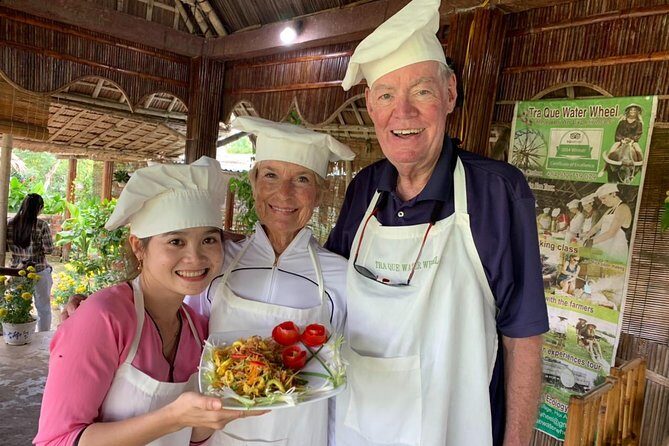
The cooking class is where you’ll feel the family influence most clearly. You’ll learn Vietnamese cooking skills with the Hoang family, and you’re guided through the steps in a way that doesn’t feel like a lecture.
The best part is that it’s a “learn and eat” setup. The class ties into everything you did earlier: the farm context makes the ingredients and techniques feel less random.
From the way guides like Kun and Sun explain it, you should expect energetic teaching and clear local context—why certain ingredients are used, how flavors are built, and what to do if you don’t nail a step the first time.
If you like taking a skill home, this is a strong choice. When you cook later, you’ll remember not just the recipe, but the farm day behind it.
The Sit-Down Meal at Tra Que Water Wheel: Real Food, Not a Token Bite
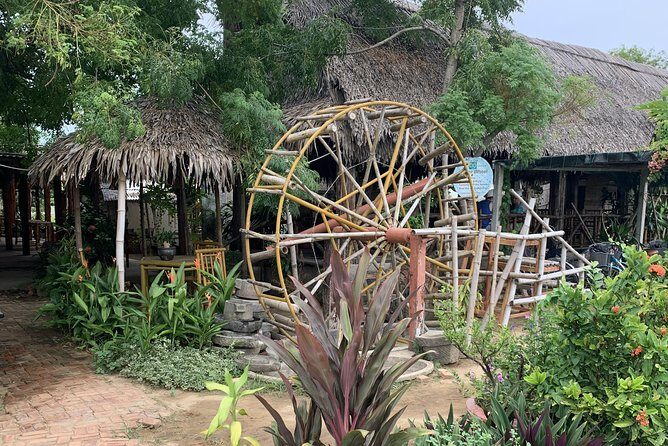
You’ll finish with a sit-down authentic Vietnamese meal at Tra Que Water Wheel restaurant. This part matters because it’s not an afterthought. It’s the payoff for the morning’s effort.
Think of it like this:
- You learn the work that creates ingredients
- You learn a cooking process
- Then you eat the results in a proper meal setting
That makes the food feel earned. Also, a restaurant meal gives you a break from activity without turning the day into a passive bus ride.
If you’re a “food first” traveler, this is one of the best places to spend money on in Hoi An, because the meal isn’t just included—it’s framed as part of the cultural experience.
Timing, Duration, and What to Plan Around
The tour runs about 6 hours. That’s enough time to do multiple activities without feeling like you’re trapped all day.
Because you’re cycling and doing hands-on tasks, plan your energy like it’s an active half-day. Eat a solid breakfast before you go, wear breathable clothes, and keep some flexibility for weather changes.
Also, keep your evening open. After a farm day plus cooking plus food, you’ll probably want an easy dinner back in town rather than a long, complicated plan.
Who Should Book This Cooking Class and Basket Boat Tour?
This is a good fit if you:
- want a family-led experience instead of a factory-style tour
- care about food and want to learn practical skills
- like active travel—biking, walking, and trying things
- want the countryside feel without a full-day trek
It’s also great if you’re traveling with friends or as a couple and you want shared moments: the buffalo experience, the basket boat, and the cooking class.
You might want to think twice if you:
- dislike biking or crowded-road transfers at the start
- don’t want any animal interaction
- prefer purely urban sightseeing and don’t care about farming
Should You Book It? My Practical Take
I’d book this when you want more than a cooking demo. The combination of Tra Que farm time + basket boat rowing + rice paper making + a real sit-down meal is exactly the kind of day that makes a place feel specific.
The small-group size (max 20) is a quiet advantage too. It supports better attention from guides and makes hands-on moments feel less rushed.
If you’re the type who likes authentic culture with food at the center, this one’s a strong yes. If you’re mainly chasing landmarks, you’ll still enjoy it—but it may not match your priorities.
One final note: it’s popular, so it’s smart to book ahead rather than waiting until the last minute.
FAQ
How long is the cooking class and basket boat experience?
It lasts about 6 hours.
Is hotel pickup in Hoi An included?
Yes. Transportation to and from your Hoi An hotel is included.
How many people are in the group?
The tour has a maximum of 20 travelers.
What activities are included during the day?
You can expect a farm walk and biking, buffalo experience, rice paper making, a Vietnamese cooking class, and bamboo basket boat rowing, followed by an authentic Vietnamese meal.
Is the tour dependent on weather?
Yes. The experience requires good weather. If it’s canceled due to poor weather, you’ll be offered a different date or a full refund.
What is the cancellation policy?
You can cancel for a full refund up to 24 hours before the experience starts. If you cancel less than 24 hours before, the amount paid is not refunded.