A morning bike ride beats sightseeing boxes, and this one lands you in working villages fast. You pedal flat roads for about 3 hours, passing rice fields, rivers, and local workshops, then roll into hands-on craft time at places like Kim Bóng Carpentry Village. It’s a calm, culture-focused way to see life outside Old Town without the usual crowd stress.
What I like most is the practical, do-it-yourself side. You don’t just watch woodwork—you try carving your own name and walk away with a personal wooden souvenir. Second, the food workshop feels hands-on and memorable, with rice paper noodle making (and other small craft activities like sleeping mat weaving).
One thing to consider: this tour is outdoors and depends on good weather. If skies go gray, you may need to reschedule, so plan to be flexible with your mornings.
In This Review
- Key highlights that matter before you book
- Why This Countryside Ride Feels Different From Old Town Tours
- Price and what you truly get for $18
- 08:30 start, 9 km on flat roads, and why the pace is beginner-friendly
- Where you start: 124 Trần Hưng Đạo and what to expect at the meeting point
- The first ride toward rural Hoi An: calm fields and quick local encounters
- Huynh Ry’s handicraft workshop: carving your name like you mean it
- Kim Bóng Carpentry Village: seeing woodwork as a craft system
- A fish village side stop: everyday work life, not a show
- Rice paper noodle making and sleeping mat weaving: hands-on skills you’ll remember
- Guide time: why a good English-speaking host makes a craft tour work
- What to bring (and what to wear) for a comfortable morning ride
- Who should book this bike tour of Hoi An’s countryside?
- Should you book this Hoi An countryside bike tour?
- FAQ
- What time does the tour run?
- How long is the experience and how far do you bike?
- How much does the tour cost?
- What’s included in the ticket price?
- Is a meal included?
- Will I have to pay for the bike rental separately?
- What group size should I expect?
- Where do we meet and where does the tour end?
- What happens if weather is bad or plans change?
Key highlights that matter before you book

- Small groups (up to 9) keep the ride relaxed and the workshop time more personal
- Carpentry village visits go beyond photos, with hands-on practice and take-home items
- Rice paper noodle making turns a meal topic into a real skill you can try
- Weaving/sleeping mat making adds a second craft lane, not just wood
- Flat cycling (about 9 km total) makes it beginner-friendly and family-friendly
- Guide experience is a standout, with Tommy specifically noted for guiding kids and crafts well
Why This Countryside Ride Feels Different From Old Town Tours
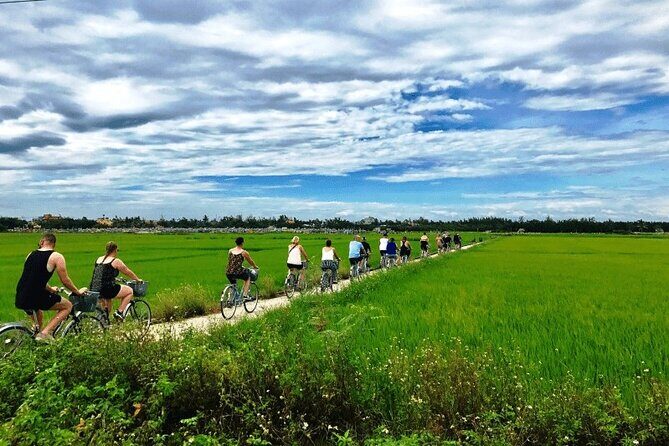
Hoi An can be wonderfully photogenic, but some days you want something quieter than shopfronts and souvenir rows. This tour sends you out into the farmland around the city—where the scenery is real working countryside, not staged views.
You get a balanced mix: you ride first, then you slow down for crafts, and you finish with the sense that you’ve actually met people behind the goods you see in markets. The small group size helps a lot. You’re not stuck waiting behind a line of bikes every time the guide wants to explain something.
You can also read our reviews of more cycling tours in Hoi An

Price and what you truly get for $18
At $18 per person for roughly 3 hours, this is priced like a budget activity, but it includes more than you’d expect for the time. Your ticket covers a professional English-speaking guide, entrance/admission, a bicycle at the meeting point, and bottled mineral water.
That matters because bike rentals and guided time can add up fast in Hoi An. Here, the core value is that you’re paying for guided access to working places plus structured hands-on tasks—not just a ride through fields where you’re left to figure out everything on your own.
You’ll still want to plan for your own expenses where the tour doesn’t include them:
- Meals aren’t included
- There’s no insurance included in the listed package
- You may want to bring a little cash for small extras (only if the workshop staff offers them)
08:30 start, 9 km on flat roads, and why the pace is beginner-friendly
The tour runs 08:30 to about 11:30. That timing is ideal if you want morning light for photos and cooler riding conditions before the heat climbs. The distance is about 9 kilometers, and the roads are described as flat, which keeps the effort reasonable.
It’s also structured for different comfort levels. The bike riding is easy enough that most people can participate, and the group is capped at 9 travelers so the guide can manage pace and safety without rushing. If you’re traveling with kids, there’s a strong practical advantage here: kid bicycles are available, which helps families avoid the classic problem of adults getting the “real experience” while kids trail behind.
Where you start: 124 Trần Hưng Đạo and what to expect at the meeting point
You meet at 124 Trần Hưng Đạo, Phường Cẩm Phổ, Hội An. It’s convenient because the meeting point is noted as being near public transportation, so you’re not stuck coordinating a private transfer just to begin the day.
The tour ends back at the same meeting point. That simple loop matters: you can plan your morning around it, then head back toward lunch or a nap without worrying about complicated return logistics. Also, the bicycle is handled at the start, so you don’t lose time hunting for a rental before your guided session starts.
The first ride toward rural Hoi An: calm fields and quick local encounters
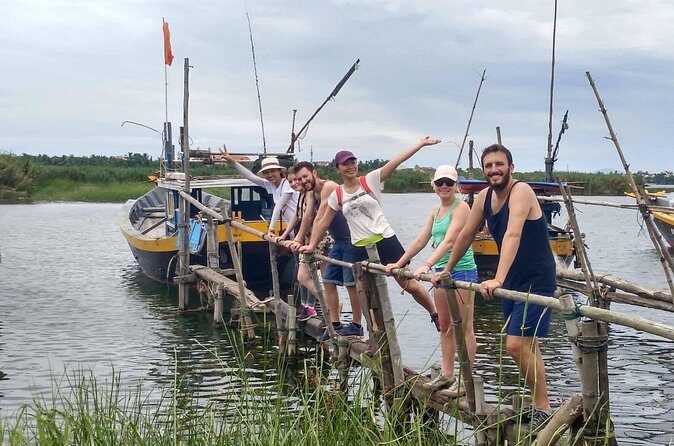
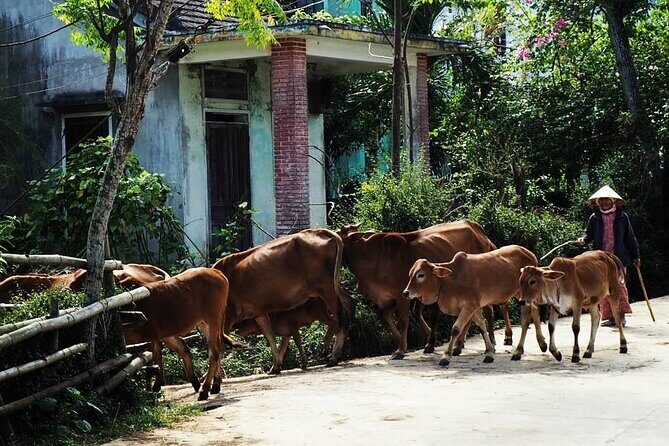
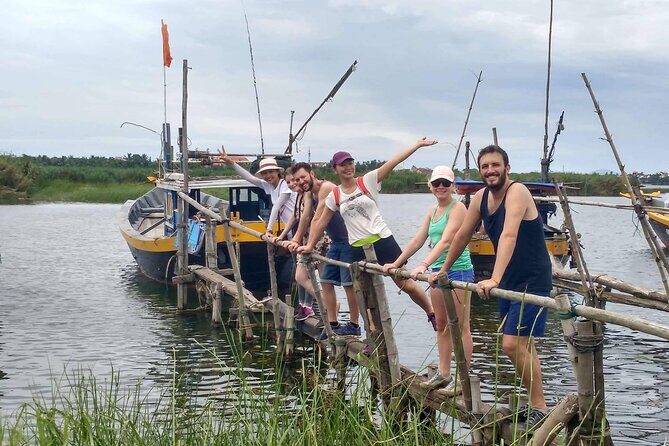
Right away, you’re on the bike with the guide for about a 20-minute push from the city center toward the countryside. This segment sets the tone. One moment you’re in the urban flow; the next you’re moving through a landscape of rice fields, buffaloes, cows, and rivers—the kind of scenery you can’t fully get from Old Town streets.
What I find useful here is the rhythm. The ride is long enough to feel like you’ve actually escaped, but short enough that you arrive at the first stop still fresh and ready to learn. And the guide context matters: you’re not only looking at scenery—you get explanations while you pass smiling local residents and everyday farm activity.





Huynh Ry’s handicraft workshop: carving your name like you mean it
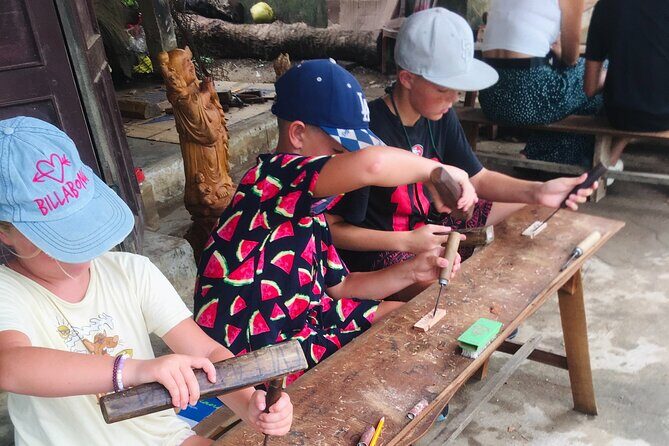
Your first major cultural stop is a local handicraft workshop connected with wood carving (Huynh Ry’s workshop is specifically mentioned). This is where the tour shifts from “watching” to “doing.”
Here’s why it works: the activity is friendly and personal. You get the chance to try wood carving, including sculpting your own name. That turns the crafts into something more than a demo. Instead of leaving with a postcard and a vague memory, you’ll have a tangible object you made—something you can keep and later explain to friends.
The shop also gives you a window into how craftsmen work with simple materials and careful technique to produce small souvenirs and furniture-style pieces. Even if your carving skills are beginner-level (normal!), the goal is progress, not perfection.
Kim Bóng Carpentry Village: seeing woodwork as a craft system
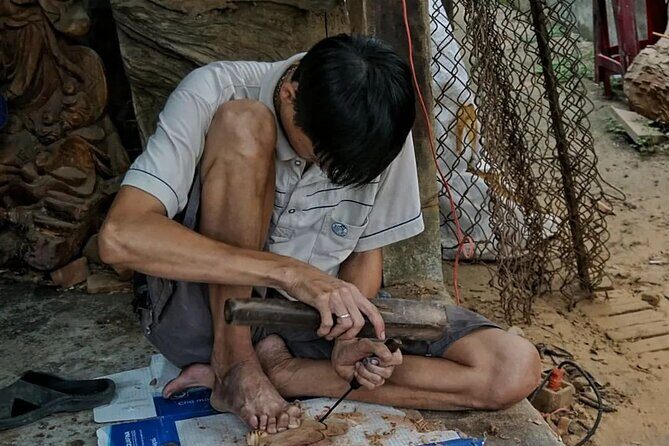
After the workshop introduction, the tour continues into the wider carpentry area associated with Kim Bóng Carpentry Village. This is a classic “slow down and look” kind of place. Wood doesn’t just appear as a product here—it moves through stages, from raw shaping to finishing details.
This part of the experience is valuable because it helps you understand what you often miss when you shop for wooden goods in town. You start noticing differences in workmanship, how tools shape the final look, and how the craft gets adapted into souvenirs people can take home.
The most practical benefit for you: you’ll walk away with a clearer idea of what you’re paying for when you buy handcrafted items. Not in a “hard sell” way—more like you now have a better map in your head.
A fish village side stop: everyday work life, not a show
One thing people specifically mention is that you also get a side stop connected to a fish village. That’s important because Hoi An’s countryside is not only about farms—water life is part of the daily rhythm too.
You’ll likely see the atmosphere change as the tour moves closer to water activity. Even without heavy explanation, there’s something grounding about watching people work with the resources around them. It turns the day from “craft shopping” into “learning how communities earn a living.”
Rice paper noodle making and sleeping mat weaving: hands-on skills you’ll remember
The best part of this tour is that it doesn’t stop at woodworking. You also get hands-on experiences related to food and everyday craft life.
Rice paper noodle making is one of the featured activities. If you’ve ever eaten Vietnamese noodles and wondered how the texture and shape come together, this is your chance to see the process up close and try it yourself. It’s also a great way to understand why these foods feel different—because you experience the steps rather than just consuming the result.
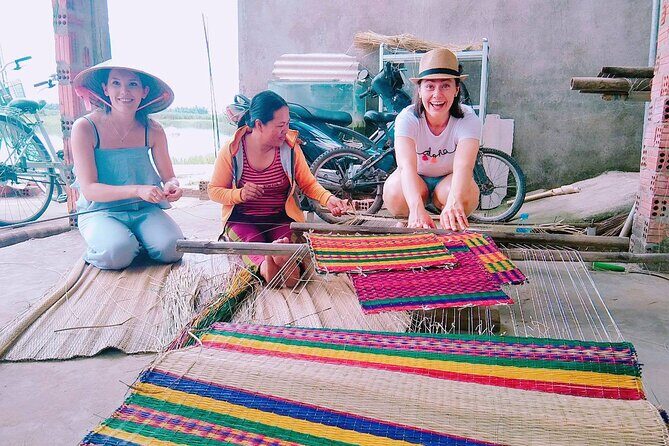
Then there’s the sleeping mat craft element. You’ll have the chance to work on weaving/sleeping mat making, which adds a second craft that uses different skills and materials than carving. For kids, that variety helps a lot. They get more than one “wow” moment: wood carving one part, weaving another.
If you’re traveling as a couple or small group, this variety keeps the energy from dipping. You’re constantly shifting tasks, which makes the 3 hours feel like good value instead of a long sitting session.
Guide time: why a good English-speaking host makes a craft tour work
This is listed as a professional English-speaking guide experience, and that’s exactly the difference between a craft tour you enjoy and one that feels like you’re watching instructions you can’t follow.
A guide also keeps the flow moving—when to pause, where to look, what the next step is, and how to get your hands involved without turning it into chaos. One name that comes up strongly is Tommy, and the notes specifically highlight that he guided kids well through both weaving and wood carving.
If you want a tour that’s calm and easy to understand, that guide component is a major reason this one stays highly rated.
What to bring (and what to wear) for a comfortable morning ride
You’ll be riding and then spending time in workshops. Keep it practical:
- Wear comfortable shoes you can stand in
- Bring sunscreen and consider a hat (the tour is in the morning, but it’s still Vietnam)
- Bring a small snack if you tend to get hungry before lunch (meals aren’t included)
- Bring a light layer in case workshop areas feel cooler
Also, because this depends on good weather, plan for the fact that rain and too much humidity can make outdoor time less pleasant. If you’re a “one and done” traveler with no flexibility, that’s the only real risk.
Who should book this bike tour of Hoi An’s countryside?
This tour fits best if you like:
- Hands-on learning, not just sightseeing
- Small groups and an easy bike pace
- Culture that shows how everyday products get made—woodwork, food prep, and weaving
- A morning plan that ends early and leaves you energy for the rest of your day
It’s especially good for families because kid bicycles are available and the crafts include activities kids can actually do. If you’re an active solo traveler, you’ll like the short ride plus the meaningful workshop stops. If you’re a slower-paced traveler, the flat route and workshop focus can still work as long as you’re comfortable being outside for a few hours.
Should you book this Hoi An countryside bike tour?
If you want a morning that combines easy cycling with real craft practice, I’d book it. For $18, you’re getting a guided experience built around access plus hands-on steps, and that’s where the value sits. The small group cap keeps it personal, and the craft variety—wood carving, rice paper noodle making, and weaving—helps the time feel full instead of repetitive.
Skip it only if you strongly prefer indoor activities, or if you can’t handle a possible weather-based change. Otherwise, this is the kind of tour that leaves you with both a story and an object you made, which is hard to beat.
FAQ
What time does the tour run?
The tour runs from 08:30 AM to 11:30 AM.
How long is the experience and how far do you bike?
It lasts about 3 hours and covers around 9 kilometers on flat roads.
How much does the tour cost?
The price is $18.00 per person.
What’s included in the ticket price?
Included are a professional English-speaking guide, an entrance ticket (including admission to Kim Bóng Carpentry Village), a bicycle at the meeting point, and bottled mineral water.
Is a meal included?
No. Meals are not included.
Will I have to pay for the bike rental separately?
No. A bicycle is provided at the meeting point, and bicycle rentals are available on-site.
What group size should I expect?
The tour has a maximum of 9 travelers, which keeps things small and more personalized.
Where do we meet and where does the tour end?
You meet at 124 Trần Hưng Đạo, Phường Cẩm Phổ, Hội An, Quảng Nam, Vietnam and the tour ends back at the meeting point.
What happens if weather is bad or plans change?
The experience requires good weather. If it’s canceled due to poor weather, you’ll be offered another date or a full refund. If you cancel, there is free cancellation up to 24 hours in advance for a full refund.