REVIEW · HOI AN
Da Nang/ Hoi An: My Son Holyland & Rice Paper Making Tour
Book on GetYourGuide →Operated by Hiep Hoi An Travel · Bookable on GetYourGuide
My Son has a way of grabbing you fast. You’ll go from Champa temple ruins to a hands-on rice paper workshop, then float into Hoi An on the Thu Bon River. It’s a smart half-day mix of big-ticket sights and everyday life in central Vietnam.
What I like most is the pace. You get a guided walk with a local English-speaking guide, plus enough time inside My Son to look around and reset your brain between explanations. I also love the family-house parts: you’ll learn rice paper making, eat lunch at a local home, and even pause with cold herbal tea afterward.
One thing to plan for: there’s real walking—about 2 km at My Son—and the tour runs rain or shine. If your back is cranky, or you manage a medical condition that doesn’t love uneven ground, you’ll want to think twice.
In This Review
- Key Things I’d Bet You’ll Remember
- A Smooth Half-Day Loop From Hoi An to My Son
- My Son Holyland: Champa Temples and the Right Kind of Mystery
- Watch for the performance moment
- The only real drawback: uneven walking
- Rice Paper Making at a Local House: Get Your Hands Dirty
- Why this is worth it (even if you’re not a foodie)
- Lunch in a Local Home: Vietnamese Food, Cold Herbal Tea, Fresh Air
- Thu Bon River Boat Trip: A Cooler Pace Back Toward Hoi An
- Price and Logistics: Why $27 Can Be a Good Deal
- What the Day Feels Like in Real Life
- Who Should Book This Tour (and Who Should Skip It)
- Practical Tips to Make It Easier on You
- Should You Book This My Son and Rice Paper Making Tour?
- FAQ
- What is the duration of the My Son Holyland & Rice Paper Making Tour?
- What time does the pickup usually happen?
- Is hotel pickup and drop-off included?
- Is the My Son entrance fee included?
- What activities are included besides My Son?
- Is lunch included?
- What about drinks during the tour?
- Does the tour include an Apsara dance or performance?
- Is there a lot of walking at My Son?
- What should I bring for the tour?
Key Things I’d Bet You’ll Remember
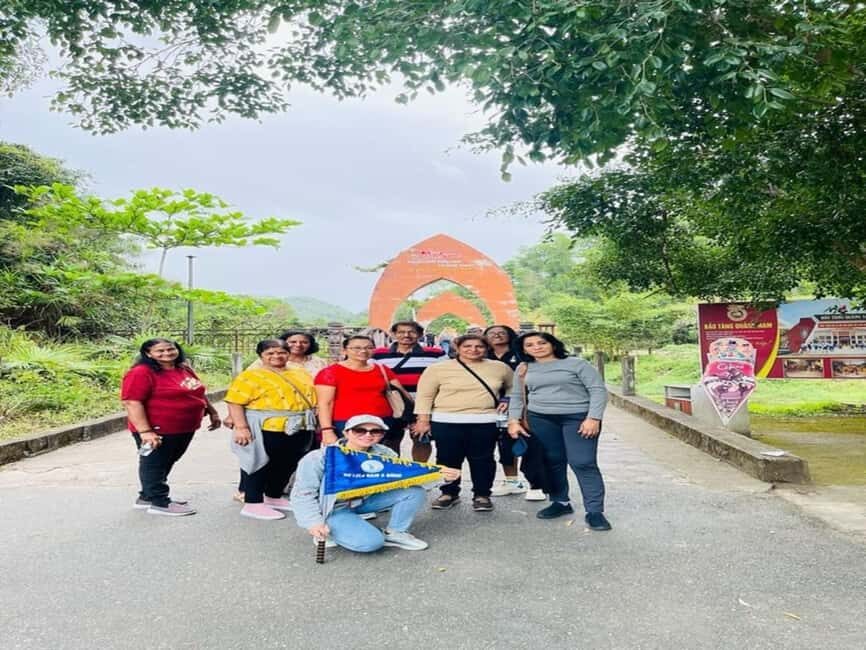
- My Son’s Champa temples: you’ll see how this kingdom left its mark in a very specific way
- Apsara dance: a performance timed to the mood of the sanctuary space
- Hands-on rice paper making: you get to make your own product, not just watch
- Lunch at a local house: Vietnamese traditional foods in a home setting, plus cold herbal tea
- Thu Bon River boat ride: a breezy transfer into Hoi An with real river views
- Good “getting there” setup: hotel pickup and return that actually removes stress
A Smooth Half-Day Loop From Hoi An to My Son
This tour is built like a practical day plan: pick-up early, one main destination, one creative activity, then a relaxing boat ride back into Hoi An. The total time runs about 330 to 390 minutes, and the schedule is structured so you’re not spending hours sitting around.
Pickup typically starts 7:00 to 7:30. You’ll be collected from a range of pick-up points around Hoi An and nearby areas (and Da Nang options exist too, with an extra charge). Then it’s off to My Son Holyland, the UNESCO World Cultural Heritage site tied to the Champa Kingdom.
Why this matters: if you’ve been in Vietnam already, you know that transport can make or break a tour. This one’s set up with a round-trip hotel transfer (100 km round trip distance) and a live English-speaking guide, so you’re not left guessing routes, timings, or which ticket line to use.
Tip: bring cash. My Son entrance fees are not included, so you’ll need to pay the 150,000 VND entrance fee on the spot.
You can also read our reviews of more tours and experiences in Hoi An.
My Son Holyland: Champa Temples and the Right Kind of Mystery
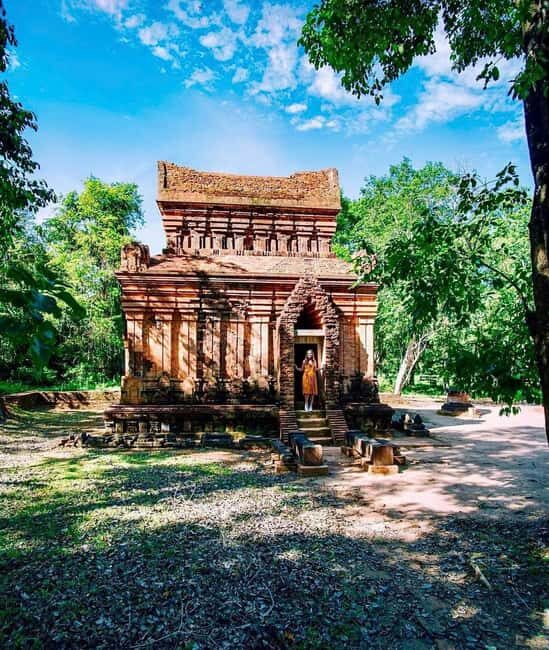
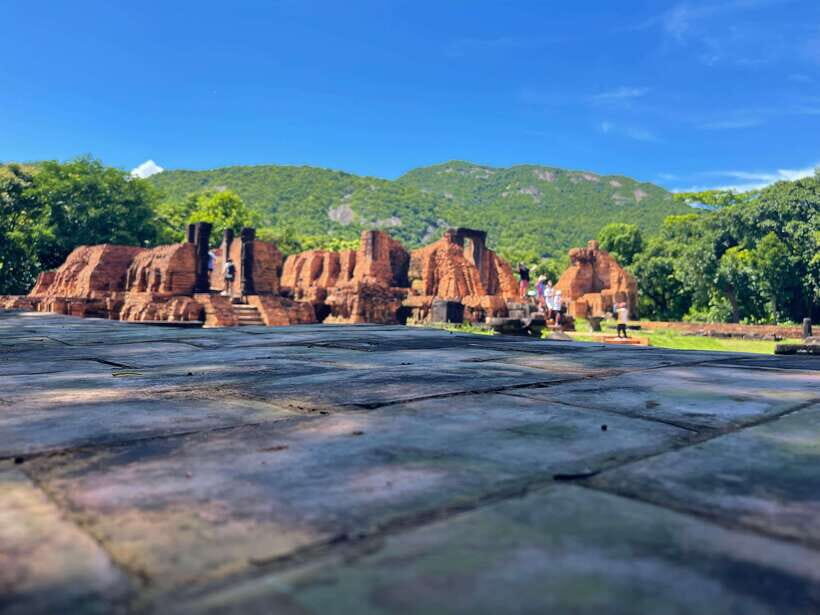
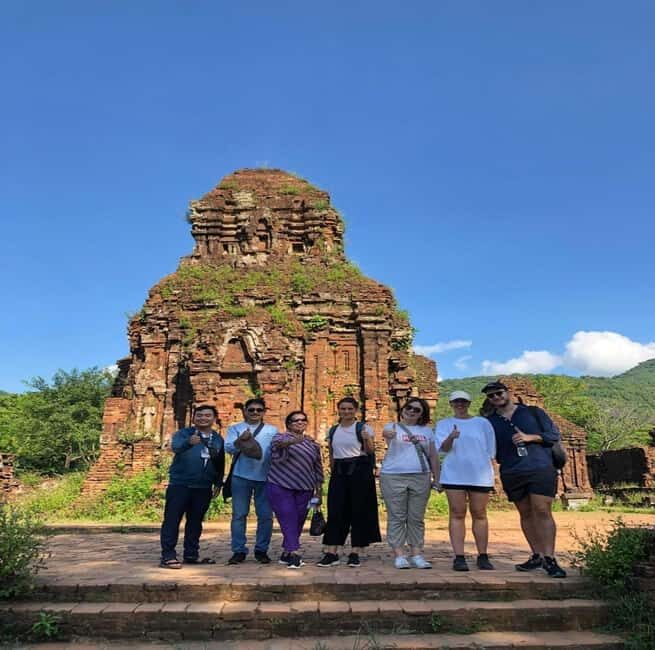
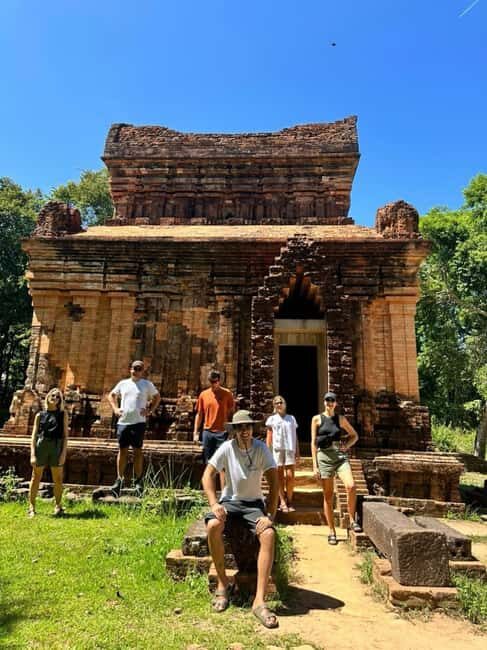
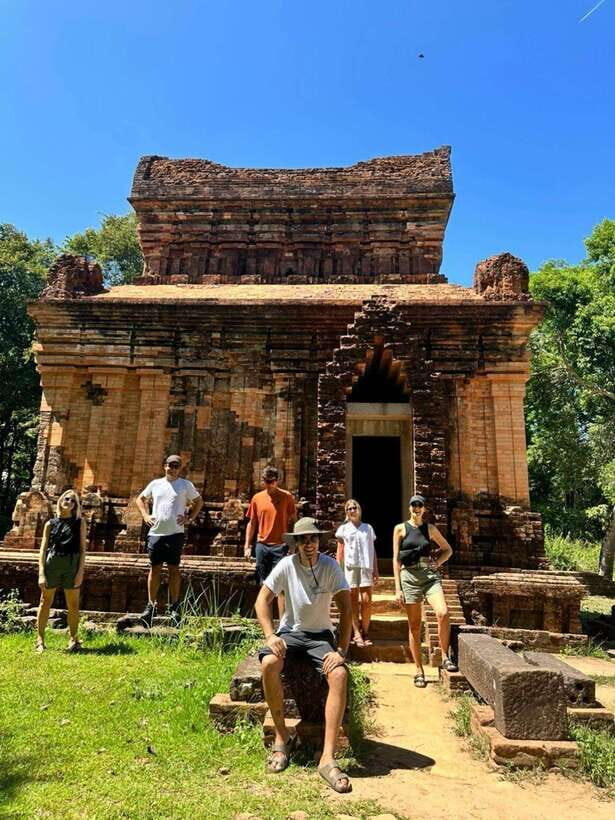
My Son Sanctuary is the star. You’ll arrive around 9:00 and have about 2 hours to explore. That two-hour window is key because it gives you time for both the “tell me what I’m looking at” part and the “let me walk it slowly” part.
You’ll be walking through the sanctuary grounds and hearing the stories from your local English-speaking guide—focused on Champa Kingdom history. My Son isn’t just old stone. It’s a set of temples tied to a way of life and belief system, and the explanations help you notice patterns instead of treating it like random ruins.
Watch for the performance moment
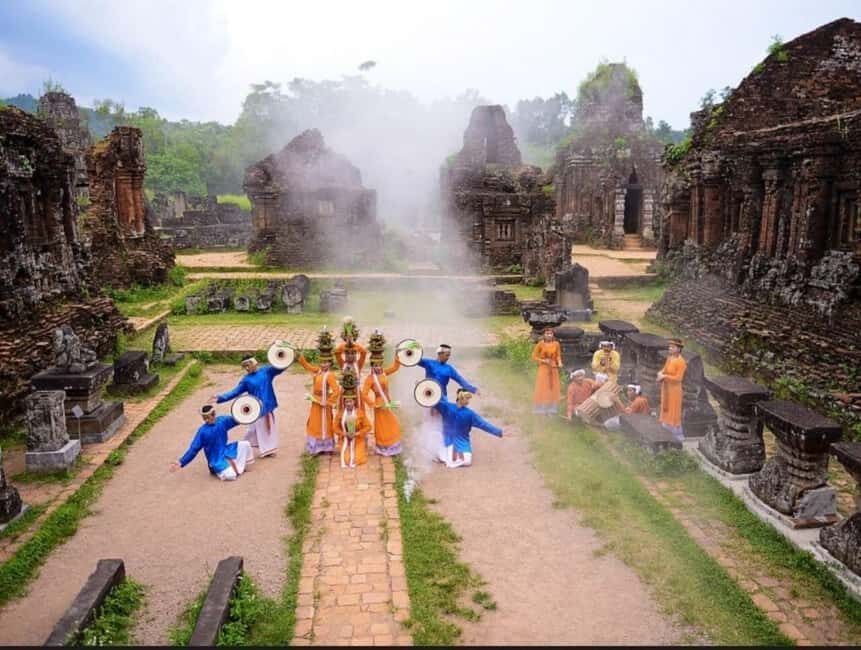
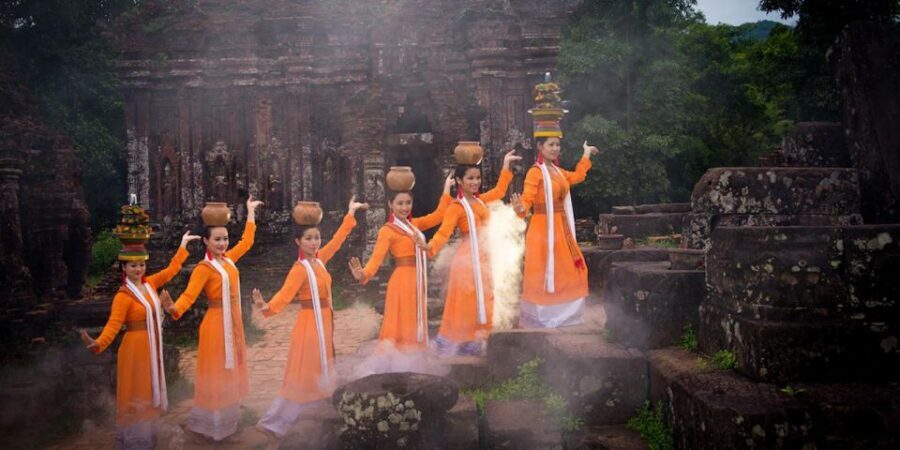
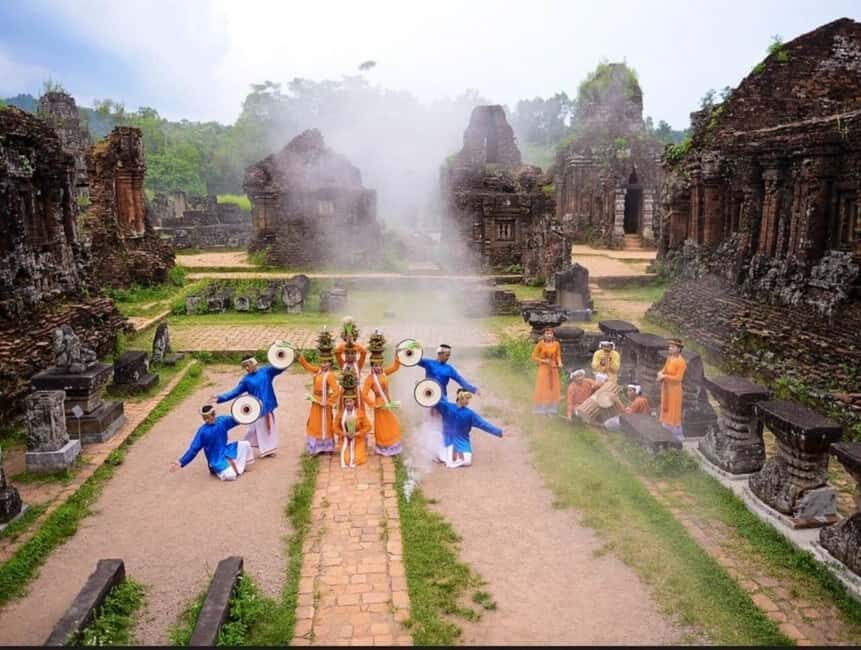
One of the highlights is a traditional Champa performance, including the Apsara dance. The timing can feel almost like the site itself is part of the show. You’re in a mystical setting, and then you watch a dance style that’s meant to connect movement, symbolism, and storytelling.
This is exactly the kind of cultural add-on that’s worth it. Ruins alone can turn into “same, same, old stones.” Pairing them with performance helps your brain keep track of what you’re seeing.
The only real drawback: uneven walking
The tour warns about walking—about 2 km at My Son. That’s not an all-day trek, but it’s also not “sit on a tram and sip tea.” Expect uneven ground and stairs/paths. If you’re visiting with mobility limits, think carefully.
Also, the tour runs rain or shine, so pack like you mean it.
Rice Paper Making at a Local House: Get Your Hands Dirty
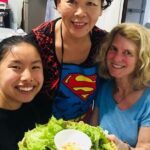
After My Son, you’ll head to a local house for the rice paper making course. This is one of those experiences that sounds simple until you try it—because rice paper is not just a souvenir. It’s a process tied to local ingredients, technique, and daily kitchen rhythm.
This part starts right after you return to the van at about 11:45. You’ll learn the steps to make rice paper by hand, and you’ll get to take what you make later. That “you do it” part is the difference between a culture demo and a real memory.

Why this is worth it (even if you’re not a foodie)
Food craft is a shortcut to understanding how people live. When you make rice paper, you’re learning a skill that supports local meals and local commerce. It’s also one of the most tactile parts of the day, which breaks up the temple walking and makes the tour feel less like a checklist.
Practical note: comfortable shoes matter here too. Even if the workshop area isn’t a hike, you’ll be standing and moving around.
Lunch in a Local Home: Vietnamese Food, Cold Herbal Tea, Fresh Air
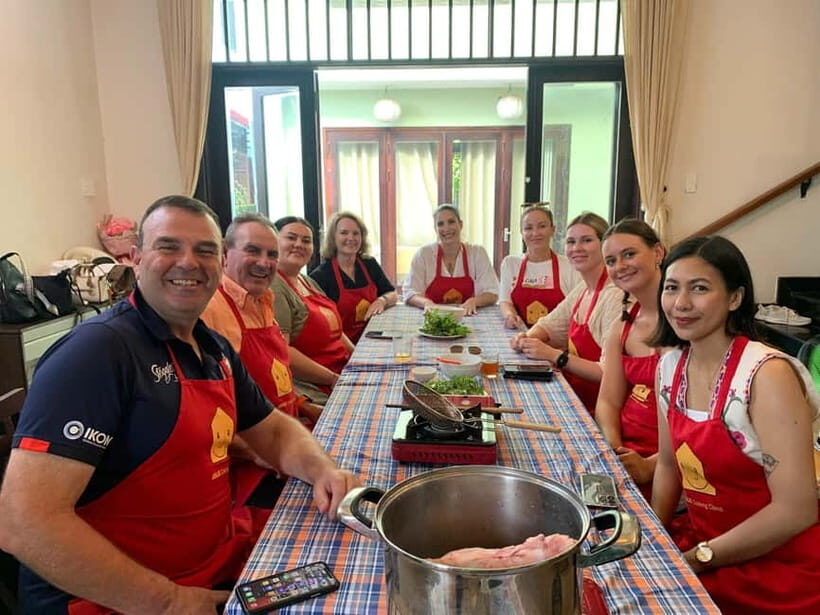
Lunch comes after the rice paper activity. You’ll return to the van and head to lunch around 12:30, again at a local house. The food is described as Vietnamese traditional foods, served in a more home-like setting than a standard restaurant.
What I like about home-style lunch stops is the atmosphere. You’re not just ordering. You’re being hosted, and there’s usually time to breathe. In this tour, you’ll also get cold herbal tea, which is a smart detail in central Vietnam—especially if you’ve been walking in sun or humidity.
This lunch break does two jobs:
- It refuels you after My Son.
- It slows the day down so the boat ride doesn’t feel like “one more thing.”
The tour includes lunch and a bottle of water. Drinks are not included, so if you like soda or juice, budget for that separately.
Thu Bon River Boat Trip: A Cooler Pace Back Toward Hoi An
After lunch, you’ll head out at about 13:00 for a boat trip on the Thu Bon River. This is a great moment to trade walking for sitting and let your senses catch up.
The itinerary calls out the cool breeze on the boat and the nice river scenery, with Thu Bon being the biggest river in central Vietnam. You’ll arrive in Hoi An around 13:30, then drop-off at your hotel and the tour ends.
I like this ending because it changes the soundscape. Temples mean footfalls and explanations. The boat means water movement, open air, and the chance to actually look at the riverbanks as you re-enter Hoi An.
If you’re the type who gets tired toward the end of tours, this segment is a built-in recovery. You get a scenic payoff without extra effort.
Price and Logistics: Why $27 Can Be a Good Deal
The tour price is listed at $27 per person, which is attractively low—especially considering you get multiple included components: hotel pickup and drop-off, an English-speaking guide, lunch, rice paper making, a river boat trip, plus water.
Here’s where value gets real: the My Son entrance fee is not included. You pay 150,000 VND separately. That’s normal in Vietnam tour pricing, but you should account for it so you don’t feel surprised on arrival.
Also, there are holiday-related surcharges: an extra 100,000 VND per person on public holidays (examples listed include Luna Tet dates for Feb 20–21, 2026, and Jan 1, 2026, plus 30 Apr – 1 May and Tet holidays). If your dates overlap, the final total might be higher.
And one more logistics cost: pickup/drop-off outside Hoi An city center has an extra charge depending on group size. If you’re staying around Da Nang or farther out, double-check whether your hotel is inside the normal zones.
The bottom line: if you want a day that strings together My Son + food + craft + a river ride without dealing with ticket lines and transport timing yourself, the price can make sense. You’re paying for coordination, not just the activities.
What the Day Feels Like in Real Life
This tour works best if you like a clear route with a few meaningful stops. You’re not stuck in one museum for hours. You’re moving through central Vietnam experiences in a tight, manageable timeline.
A nice detail from real-world feedback: the transfer and timing tend to feel smooth. The hotel pickup/return is part of the reason people leave satisfied. And because the My Son stop includes about two hours on site, there’s room to enjoy the place without feeling like you’re being dragged from point to point every minute.
That balance is important. You still get guidance, but you’re not trapped inside a strict script.
Who Should Book This Tour (and Who Should Skip It)
This tour is a good match if you want:
- Champa history connected to a real site, not just generic facts
- A hands-on cultural activity with rice paper making
- A straightforward route back to Hoi An, with a boat ride as your decompression time
- A tour that keeps lunch practical and included (plus herbal tea)
You should think twice if:
- You have back problems or any condition that doesn’t love walking on uneven paths
- You’re traveling with someone who has a pre-existing medical condition that could be sensitive to stairs/ground conditions
- Anyone in your group is over 95 years (this tour is not suitable)
And because it runs rain or shine, plan clothing for wet weather. Comfortable shoes are non-negotiable.
Practical Tips to Make It Easier on You
If you want the day to feel light instead of rushed, here’s what I’d do:
- Wear comfortable walking shoes. My Son requires real steps and paths, and the rice paper stop involves standing/moving.
- Bring sunscreen and a hat if you sunburn easily. Central Vietnam sun can be sharp even on days that don’t look threatening.
- Bring cash for the My Son entrance fee (150,000 VND) and any extra purchases. Drinks are not included.
- Pack a small layer for the boat. A breeze feels great until it turns cool, especially if you’re sensitive to air movement.
- If it’s a rainy day, go with quick-dry clothing and expect wet ground at the sanctuary.
One more small note: the tour includes a guide in English, which helps a lot when you’re trying to connect Champa temple details to what you’re physically seeing.
Should You Book This My Son and Rice Paper Making Tour?
If your goal is a balanced central Vietnam day—big cultural site, local food, hands-on craft, and a scenic finish—this is a strong choice. It’s not only about temples. It’s about how people live around them: what they cook, what they make, and how they share it with visitors.
I’d book it if you:
- want a guided visit to My Son Holyland plus time to wander,
- enjoy cultural performances like the Apsara dance, and
- like tours that end with a calmer pace (the Thu Bon River boat trip is a smart closer).
I’d skip or adjust plans if your group can’t handle about 2 km of walking or if rain would ruin your comfort level. In that case, you might want a different format with less walking or more flexible timing.
Overall: for value, structure, and the mix of temple + craft + river views, this tour earns a confident yes—especially if it removes transport stress and lets you enjoy the day without doing logistics math.
FAQ
What is the duration of the My Son Holyland & Rice Paper Making Tour?
The tour lasts about 330 to 390 minutes.
What time does the pickup usually happen?
Pickup typically starts between 7:00 and 7:30.
Is hotel pickup and drop-off included?
Yes. The tour includes two-way hotel pickup and drop-off within Hoi An, with a round-trip distance listed as 100 km. Da Nang pickup or drop-off outside Hoi An city center may have an extra charge.
Is the My Son entrance fee included?
No. You pay the entrance fee of 150,000 VND separately.
What activities are included besides My Son?
You’ll also do a rice paper making course, have lunch at a local house with Vietnamese traditional foods, and take a boat trip on the Thu Bon River.
Is lunch included?
Yes. Lunch is included and served with Vietnamese traditional foods.
What about drinks during the tour?
Water is included, but drinks are not included.
Does the tour include an Apsara dance or performance?
Yes. The tour includes a traditional performance at the mystical space, including the Apsara dance.
Is there a lot of walking at My Son?
You’ll walk around 2 km at My Son sites.
What should I bring for the tour?
Bring a camera, cash, sunscreen, and comfortable shoes.