REVIEW · HOI AN
Cycle to Hue Via Hai Van Pass
Book on Viator →Operated by Kong's Adventures · Bookable on Viator
Hai Van Pass is the main event. This one-day cycle from Hoi An is built around the Hai Van Pass coastal mountain ride, with views of beaches, rivers, villages, and lagoons. I also love how the day balances effort with breaks: you get a seafood lunch and real time at Lang Co Beach, including a chance to swim.
The main thing to consider is effort and heat. You’ll pedal roughly 70–80 km with one challenging hill section, and the tour notes warn about heat and humidity. Also, it is not for people who don’t know how to ride a bike.
In This Review
- Key moments that make this day ride worth it
- Hai Van Pass from Hoi An: the ride that earns its hype
- What you’ll feel on the bike
- Starting early: the part most people underestimate
- Monkey Mountain and Linh Ung Pagoda: a calm break before the pass
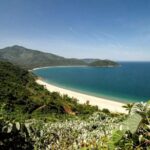
- Hai Van Pass: the coastal mountain road you’re really here for
- Lunch with a view: picnic time on the mountain
- Lang Co Lagoon and Lang Co Beach: beach time with real recovery value
- Why this section is such good value
- An Bang Cemetery and Tam Giang Lagoon: a quieter, more human side
- City of Ghosts (An Bang Cemetery)
- Tam Giang Lagoon (and the lagoon region)
- Bikes, helmets, and the van that keeps the day sane
- How hard is it, really?
- Food, drinks, and what’s included in the price
- The guide side: trained support you can actually talk to
- Logistics you should plan around (so the day feels easy)
- Price and value: is $160 fair for this route?
- Should you book this Hai Van Pass cycling day?
- FAQ
- How long is the cycling tour and what distance should I expect?
- What time does the tour start?
- Where does it start and end?
- What’s included in the price?
- Is the tour private?
- Can I swim on this tour?
- What should I wear?
Key moments that make this day ride worth it
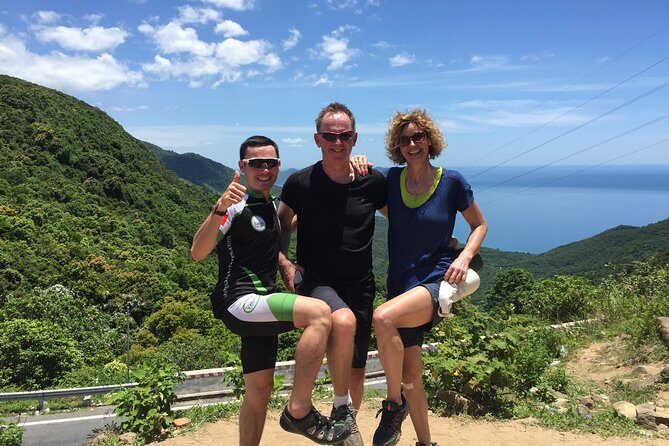
- Hai Van Pass, praised by BBC’s Top Gear for its coastal mountain-road views and big scenery
- Monkey Mountain and Linh Ung Pagoda with a 68m Buddha stop for photos and history context
- Picnic lunch on the pass plus time to wander where the views are doing all the talking
- Lang Co lagoon + white sand beach time with swimming and a seafood or local meal included
- An Bang Cemetery and Tam Giang Lagoon add a quieter, more reflective slice of central Vietnam
Hai Van Pass from Hoi An: the ride that earns its hype
Central Vietnam has plenty of pretty roads. This day route is different because the star isn’t a town or a temple first. It’s the climb, the switchbacks, and the moment you crest the Hai Van Pass and start looking out over sea and mountains at the same time.
The tour is structured for a smooth flow: you’re picked up early in the morning, then you roll through countryside and coastal roads. You’re not stuck in traffic the whole way, and you’re not just riding along one long boring stretch. Instead, you get variety—small farms and rice fields mentioned in the route description, plus coastal views that keep changing as the road turns.
One practical reason I like this tour format: you’re not doing it solo. You’ll have a local English-speaking guide and support as you switch between flat riding and the steeper sections over the pass.
You can also read our reviews of more cycling tours in Hoi An


What you’ll feel on the bike
Expect long, steady stretches, plus a couple moments where you’ll need to work. The distance varies (about 55–90 km), and the tour guidance suggests roughly 70–80 km with “one challenging hill” and mostly flatter riding otherwise. That’s important because it sets expectations: this is a proper day ride, not a casual spin.
If you come in with a basic fitness level and you can ride confidently, you’ll have a good time. If you wobble or you’re nervous on hills, this won’t magically turn into a gentle cruise.
Starting early: the part most people underestimate
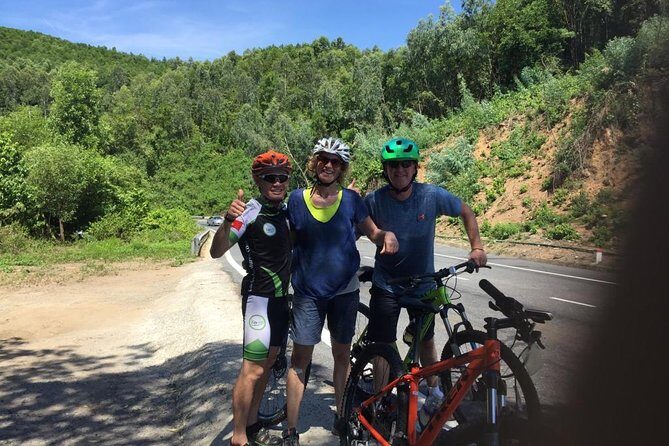
You start in the morning. The schedule points to a 7am departure, with pickup at about 7:30am from your Hoi An hotel area. That early start matters for two reasons.
First, you avoid some of the worst heat. The tour notes specifically call out heat and humidity as something to be prepared for. Second, the road experience is better when traffic is lighter. You’re still riding in Vietnam, so you won’t have a totally empty highway—but morning gives you more room to breathe.
This is also a private tour, meaning it’s just your group. No mixing with strangers, no awkward pacing differences with people who want wildly different effort levels.
Monkey Mountain and Linh Ung Pagoda: a calm break before the pass
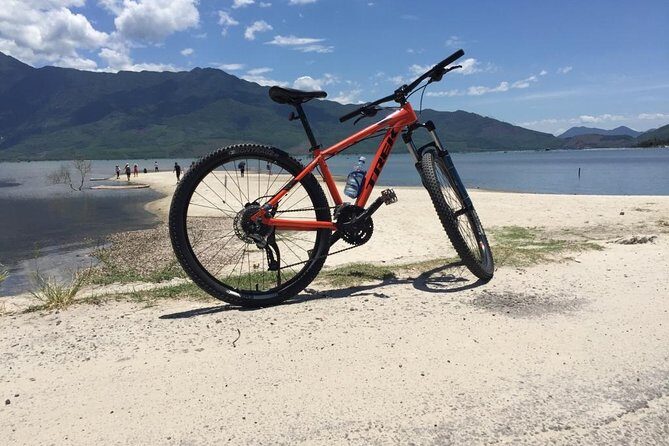
Before you tackle Hai Van Pass, you stop at Linh Ung Pagoda on Monkey Mountain. You’ll learn the story of the site, then you can take photos with the giant Buddha—described as 68 meters high.
This isn’t just a “snap and go” moment. The tour description emphasizes time for photos and views. That matters because it gives you a mental reset. Once you’re on the pass, you’ll be focused on riding and looking out. Starting with a scenic temple stop gives you that pause you need before the main climb.
Practical tip: wear shoes you can walk in comfortably. The tour recommends sport shoes and says no flip-flops.
Hai Van Pass: the coastal mountain road you’re really here for
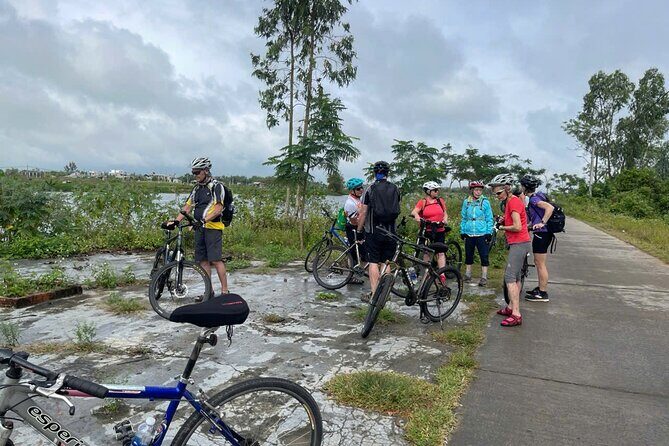
Now the big one: cycling up and over Hai Van Pass.
This is the section that earns the comparisons. The route is widely praised—listed here as being recognized by BBC’s Top Gear Vietnam as the most beautiful coastal mountain road in the world. Even if you don’t care about TV rankings, you’ll understand why people talk about it. As you climb and drop, the coastline and sky changes with every turn.




Lunch with a view: picnic time on the mountain
You’ll have a picnic lunch on the mountain. That’s a key detail because lunch on the pass isn’t just food. It’s time where you can stop riding, look around properly, and take photos that don’t look like they were captured through handlebars.
The tour includes fruit snacks and refreshing cold drinks during the ride too, so you’re not waiting for the main meal to keep your energy steady.
Lang Co Lagoon and Lang Co Beach: beach time with real recovery value
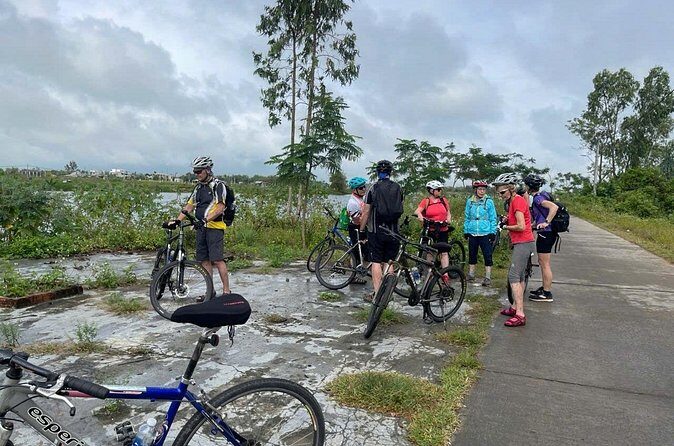
In the afternoon, you head toward Lang Co lagoon and nearby fishing areas. This is the part of the day that gives you back some breath.
You’ll visit fishing villages and then have time to wander Lang Co Beach, including time for swimming. That combination—cycling through quieter coastal areas, then actually getting your feet in the sand—makes the whole day feel balanced. You’re not just paying for views with sore legs.
Why this section is such good value
A lot of bike days stop at a scenic viewpoint and call it done. Here, you’re explicitly given time for beach wandering and swimming, plus a seafood or local food lunch included as part of the plan.
And the final touch is the return ride: the route description says you’ll end with picturesque sunset views along the way back toward Hoi An. Even if the sky is cloudy, the overall feel of the coastal return is usually memorable.
An Bang Cemetery and Tam Giang Lagoon: a quieter, more human side
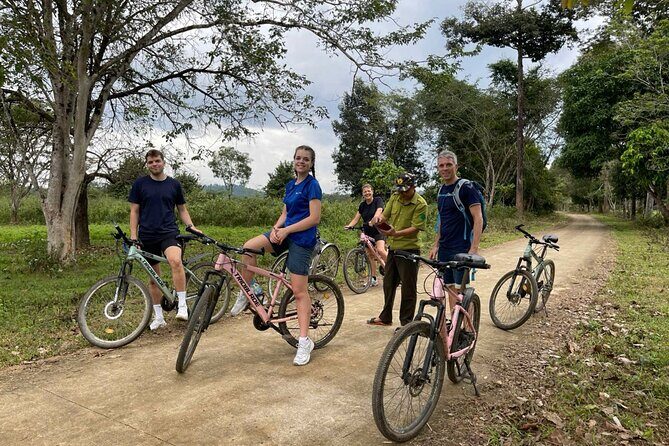
Central Vietnam travel can feel like it’s only about temples and beaches. This day adds two places that slow the pace in a different way.
City of Ghosts (An Bang Cemetery)
There’s a stop at An Bang Cemetery, sometimes called the City of Ghosts. I’m glad it’s included, because it gives you context for Vietnamese culture and local traditions beyond the usual postcard stops.
Just be respectful with your time here. Keep your voice down and don’t treat it like a photo shoot. If you’re sensitive to darker sights, this is worth noting before you book.
Tam Giang Lagoon (and the lagoon region)
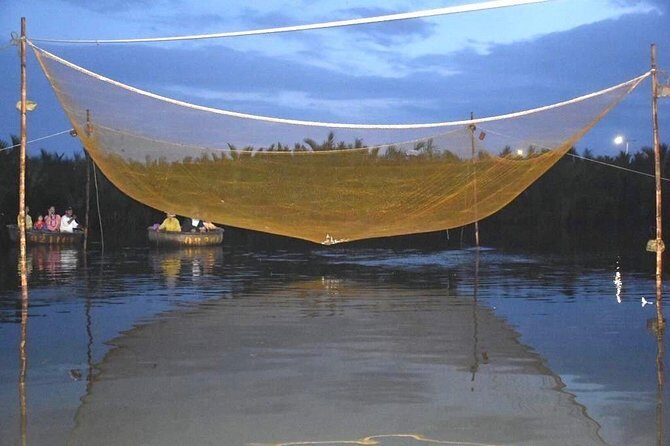
You also get time connected to Tam Giang Lagoon. The tour highlights mention Lap An lagoon, and both terms appear alongside lagoon cycling in the planning material. Either way, this is the “wide open water and sky” portion of the day.
Lagoon riding changes the mood from mountain effort to long views and calmer pacing. If you like photographing reflections, water birds, and the texture of fishing life along the edges, this part will land well.
Bikes, helmets, and the van that keeps the day sane

This is where the tour earns practical trust.
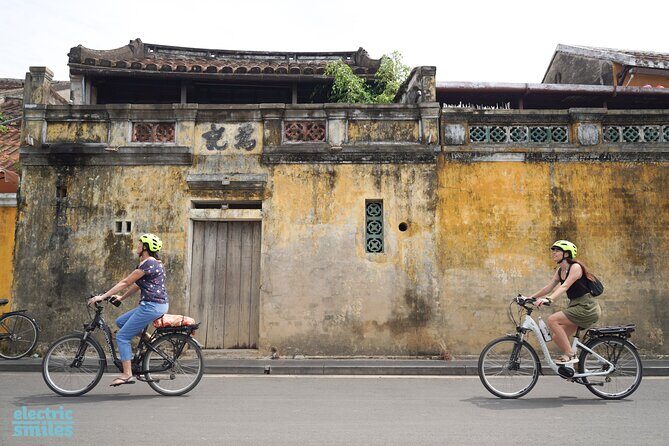
You ride Trek bikes designed for city and countryside riding, and you get helmets included. The description says all sizes are available, and you’re asked to advise passenger heights at booking—another sign they’re trying to fit the bike properly rather than handing you the first frame they find.
There’s also support from a driver and a van. In the reviews connected to this tour, the support is highlighted: the crew is attentive about safety and well-being, and the van follows along. That matters because it makes the day feel safer if you’re tired or if you need a breather.
How hard is it, really?
The route guidance points to about 70–80 km and one challenging hill, with lots of mostly-flat riding. That sounds doable, but remember: you’re dealing with heat and humidity, plus the energy cost of hills.
So I’d judge “difficulty” like this:
- If you can ride 1–2 hours without major stops, you’ll probably be fine.
- If hills make you panic, or you’re not comfortable in traffic, you may find it stressful.
The tour also says it’s not recommended if you don’t know how to ride a bike.
Food, drinks, and what’s included in the price
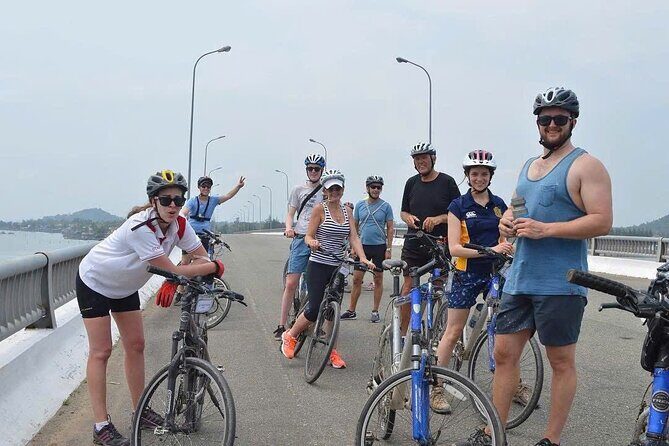
At $160 per person for roughly a full day (about 8 hours), the headline question is: what are you paying for?
You’re paying for:
- Trek bike + helmet
- Local English-speaking guide
- All entrance fees
- Fruit snacks and refreshing drinks along the route
- A seafood or local food lunch
That’s not a tiny bundle. A self-planned Hai Van Pass bike day usually means bike rental, a route plan, navigation headaches, and trying to manage food and entrances on your own. Here, the structure is already handled, and the inclusion of snacks and cold drinks is a real help on a hot day.
Also, one detail I like from the tour feedback: the guide and driver energy is described as high, and the crew is presented as attentive to safety and well-being. If you’re paying for a day that could be tiring, that kind of care is part of the value.
The guide side: trained support you can actually talk to
The tour is run by Kong’s Adventures. In the feedback shared for this experience, Ky Nguyen shows up as a host/guide figure, along with a driver for the day.
What matters for you isn’t a name on a website. It’s the behavior: the crew is described as attentive, supportive, and safety-minded, with equipment and transport that are well set up for the ride.
If you like a guide who talks through what you’re seeing (like the Linh Ung Pagoda stop), and also checks in about your comfort as you pedal, this is the right style.
Logistics you should plan around (so the day feels easy)
A few details are small, but they affect how smooth your day goes:
- Footwear: sport shoes recommended; no flip-flops.
- Weather readiness: the tour operates in most weather conditions, but it’s marked as weather-dependent. If poor weather cancels it, you’ll be offered an alternative date or a full refund.
- Food restrictions: you’re asked to advise allergies or restrictions when booking.
- Group setup: it’s private for your group only.
And because the tour calls out heat and humidity, bring breathable clothes and something to manage sun and sweat. The tour doesn’t list gear beyond shoes, but the weather note is clear enough: dress for cycling, not fashion.
Price and value: is $160 fair for this route?
I think $160 is fair if you want the whole package and you don’t want to wrestle with planning. You’re getting a full day, a guided route over one of Vietnam’s most famous passes, bike and helmet use, snacks and cold drinks, entrance fees, plus lunch.
What pushes it toward good value is the support system: van and crew means you’re less likely to turn the day into a struggle if your legs run out. The tour also explicitly includes a beach stop with swimming time—those “not just a photo stop” moments are where day rides often feel worth it.
If you’re the kind of cyclist who loves self-direction and you’re comfortable building your own route, then you might compare against renting a bike and paying someone to drive you. But for most people, this organized structure is the easier win.
Should you book this Hai Van Pass cycling day?
Book it if you:
- want the Hai Van Pass ride and don’t want to plan it from scratch
- can handle roughly 70–80 km with at least one tougher hill
- enjoy coastal views, lagoon scenery, and a mix of temples, beach time, and a reflective stop at An Bang Cemetery
- want real support (guide, equipment, van) so the day stays fun even when it’s tiring
Skip or reconsider if you:
- don’t know how to ride a bike
- hate hills or can’t manage day-long heat and humidity
- would feel uncomfortable with the cemetery stop, given the nature of what you’ll see
If you match the effort level, this is the kind of one-day Vietnam experience that feels like it compresses multiple “best-of” areas into a single, memorable route.
FAQ
How long is the cycling tour and what distance should I expect?
The tour runs about 8 hours. The cycling distance is listed as about 55 km to 90 km, with an approximate 70–80 km ride suggested for one challenging hill and mostly flat sections.
What time does the tour start?
The tour indicates an early departure around 7am, and it also notes pickup at about 7:30am in Hoi An. It’s an early day.
Where does it start and end?
It starts at Nhà Hàng Giếng Bá Lễ, 45/51 Trần Hưng Đạo, Phường Minh An, Hội An. The activity ends back at the meeting point.
What’s included in the price?
Included: Trek bikes for city and countryside riding (all sizes), helmet, a local English-speaking Vietnamese guide, entrance fees, fruit snacks, refreshing drinks, and a Vietnamese seafood or local food lunch.
Is the tour private?
Yes. It’s a private tour/activity, and only your group will participate.
Can I swim on this tour?
Yes. The plan includes swimming time at Lang Co Beach.
What should I wear?
Wear casual or athletic cycling clothes and sport shoes. The tour specifically recommends not using flip-flops. Dress for the weather and bring what you need for heat and cycling comfort.