REVIEW · HOI AN
Cooking with Jolie in Hoi An
Book on Viator →Operated by HPT TRAVEL COMPANY LIMITED · Bookable on Viator
Hoi An has a secret: cooking at home. It mixes a bit of classic town sightseeing with time in a real family kitchen, plus a market-and-farm ingredient hunt that sets you up for hands-on cooking.
I especially like the small group feel and the fact you make four Vietnamese dishes yourself with guidance from a professional chef and host family.
One thing to consider: there’s no pickup or drop-off, so plan to get to the start point on your own (and check for any public-holiday surcharge).
In This Review
- Key highlights worth your time
- A family-home class where the kitchen feels real
- Hoi An Ancient Town, the Japanese Covered Bridge, and Chuc Thanh Pagoda
- Market and coffee time: where the class gets its backbone
- The cooking portion: 4 dishes, real techniques, no background needed
- Vegetarian-friendly without feeling like an afterthought
- Small group size: why it feels easier to learn
- What’s included, what’s not, and how to plan your time
- Price and value: is $55 a fair deal?
- Who should book Cooking with Jolie in Hoi An
- Should you book this cooking class?
- FAQ
- How much does Cooking with Jolie in Hoi An cost?
- How long is the cooking experience?
- Where does the experience start?
- Is pickup and drop-off included?
- How many dishes will I cook?
- Can vegetarians join?
- What’s included with the class?
- What is the group size limit?
- What happens if the weather is bad?
- Is there any extra charge on public holidays?
Key highlights worth your time
- Family-home cooking in Hoi An, with a host household that shares the process behind everyday meals
- 4 traditional dishes cooked by you, not just watched
- Vegetarian-friendly with vegetarian ingredients available
- Market and farm ingredient shopping, plus coffee before you cook
- Small group size (max 12) for more coaching time
- Lunch and drinks included, so you actually leave fed, not just inspired
A family-home class where the kitchen feels real
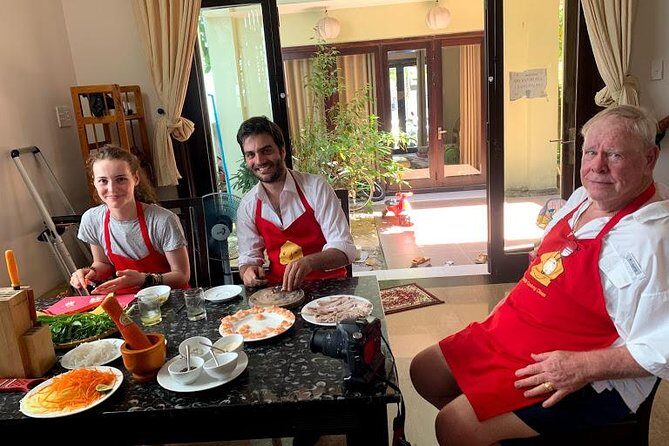
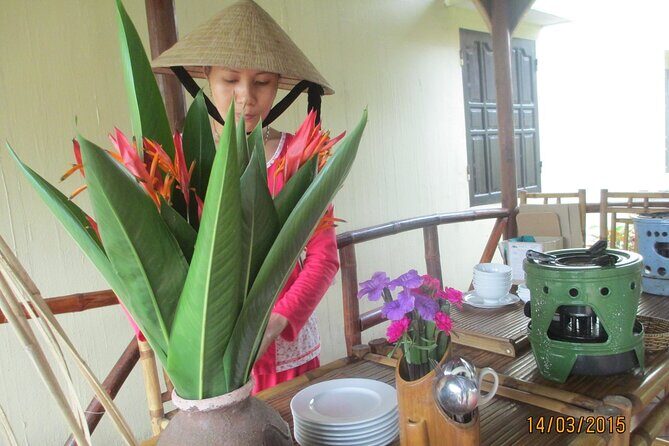
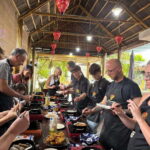
Cooking with Jolie in Hoi An is set up like a home cooking day, not a staged show. You’re learning in a family setting where food is part of daily life. That matters, because Vietnamese cooking is about technique plus timing, and those small lessons land better when the kitchen feels lived-in.
You also get what I consider the core benefit of a class like this: active instruction. The chef-led guidance is designed for people with no cooking background. You’ll be doing the work—chopping, mixing, shaping, and cooking—so you’re not leaving with a vague idea of how to recreate dishes at home.
In the real world, you’ll probably meet different guide combinations depending on the day. Names that show up in the experience include Rosie, Hannah (spelled Hannah/Hanna in some write-ups), Thuyen, and Kelly, with the host family pitching in. That’s a plus. Different personalities teach differently, and you’re likely to find at least one person in the group who makes things feel easy.
You can also read our reviews of more cooking classes in Hoi An
Hoi An Ancient Town, the Japanese Covered Bridge, and Chuc Thanh Pagoda
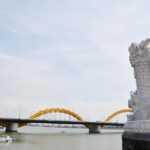
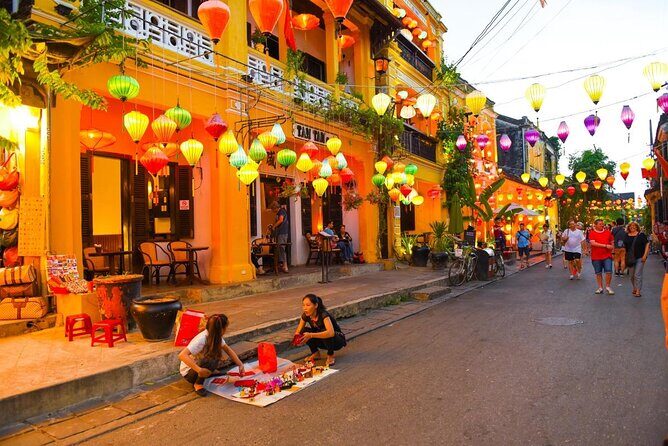
The experience starts with a cultural warm-up in and around Hoi An. You’ll pass through three iconic areas: Hoi An Ancient Town, the Japanese Covered Bridge, and Chuc Thanh Pagoda. Think of this part as getting your bearings first, then switching gears into food.
Hoi An Ancient Town gives you the first sense of place. Even a quick walk through the area helps you understand why the town is so strongly associated with heritage cuisine: the city is built for wandering, lingering, and snacking. If you’ve only seen Hoi An from photos, this helps you shift from postcard mode to street-level reality fast.
Next comes the Japanese Covered Bridge, a photogenic stop that also works as a quick anchor point in the neighborhood. You’ll get time to look around and take it in without it turning into a museum marathon.
Then Chuc Thanh Pagoda slows the pace. Pagodas tend to do that naturally: you get the calmer, more devotional side of the city before the kitchen chaos begins. It’s a useful contrast, especially if you’re someone who likes culture in small doses rather than hour after hour of formal sightseeing.
Practical note: since this portion is mixed with food activities, wear shoes you’re happy to stand in for a few stretches. This is a “short walks, then hands-on cooking” kind of day.
Market and coffee time: where the class gets its backbone
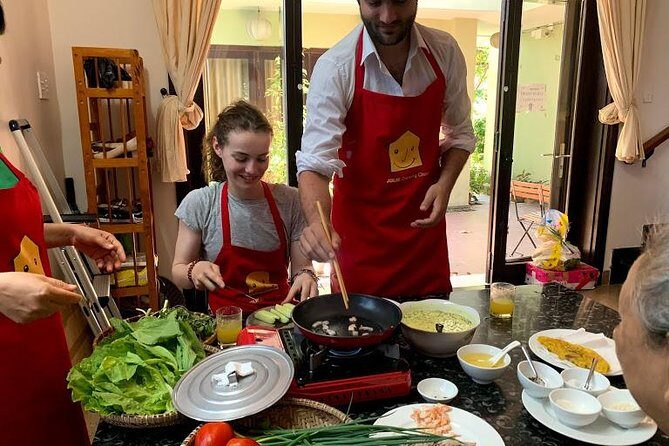
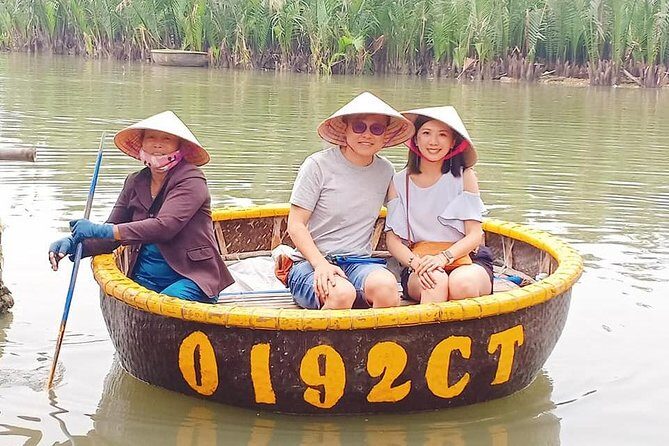
The heart of the cooking day is the ingredient hunt. You’ll pick up fresh supplies at a farm and market setting, with a chance to observe local life while you choose what goes into your dishes. This isn’t just shopping. It’s part of how you learn the ingredients, flavors, and prep choices that make Vietnamese food taste Vietnamese.
One reason this works so well is that you’re seeing produce in context. You’re not buying random packaged ingredients later and hoping it matches. Instead, you’re guided toward what you actually need and why it matters.
Right after the ingredient selection, you’ll have coffee, then you move into the kitchen. That sequence helps in a practical way: you start cooking with energy, and you’ve already matched the ingredients to the recipes in your head.
If your class schedule lines up with morning market hours, I’d treat breakfast lightly or skip it. In hands-on classes like this, you’ll be working up an appetite. People often recommend arriving with an empty stomach so you enjoy the full impact of the lunch you help cook.
The cooking portion: 4 dishes, real techniques, no background needed
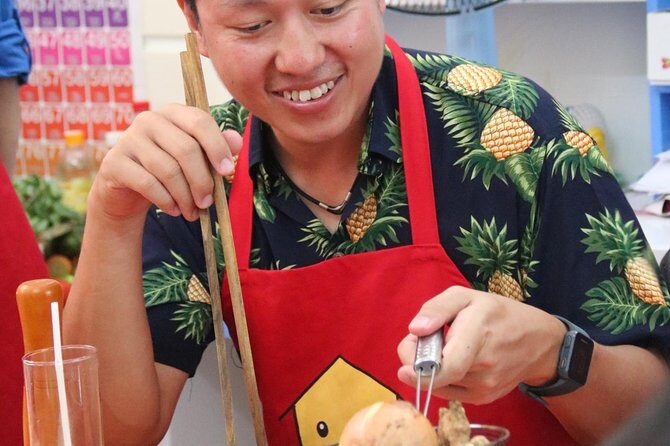
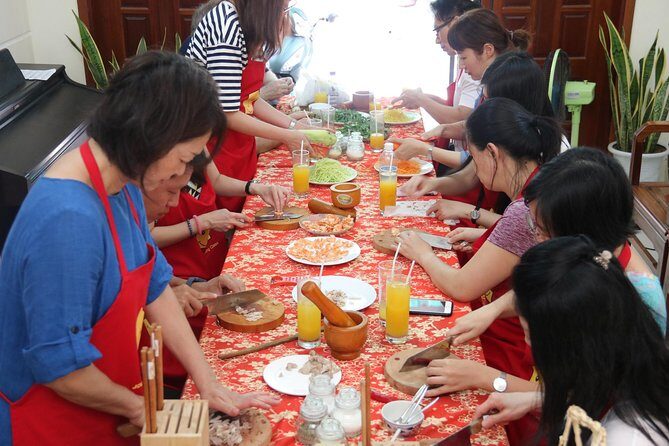
Once you’re in Jolie’s home kitchen, the structure is simple: you make four traditional Vietnamese dishes under professional chef guidance. The goal is to teach techniques, not just finish plates.
The class is designed so you don’t need prior experience. You’ll learn by doing, with coaching as you go. That’s where the “hands-on” part becomes valuable: you pick up how to handle ingredients, how to adjust during cooking, and how Vietnamese dishes are built around balance.
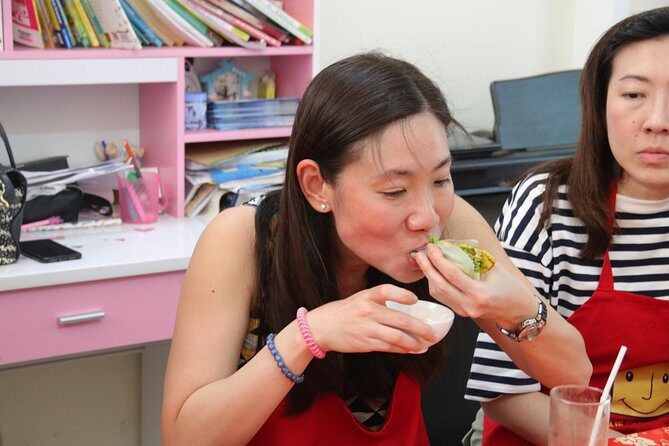
You’ll also eat what you make during the class. That is a huge quality-of-life detail. In many cooking experiences, you cook for an hour and then get a small sample later. Here, the lunch is part of the teaching moment, so you can taste right away and connect the flavor to the step you just did.
From the class format, there are some fun, memorable technique moments that often show up. For example, people have mentioned playful garnishes like tomato-skin flower shapes, and hands-on cooking steps like pancake-style flipping. Even if the exact dish details vary, the theme stays the same: you’ll practice skills, not just follow steps in silence.
And yes, the class can accommodate vegetarians with vegetarian ingredients, so you don’t have to sit out or settle for a plain alternative.
Vegetarian-friendly without feeling like an afterthought
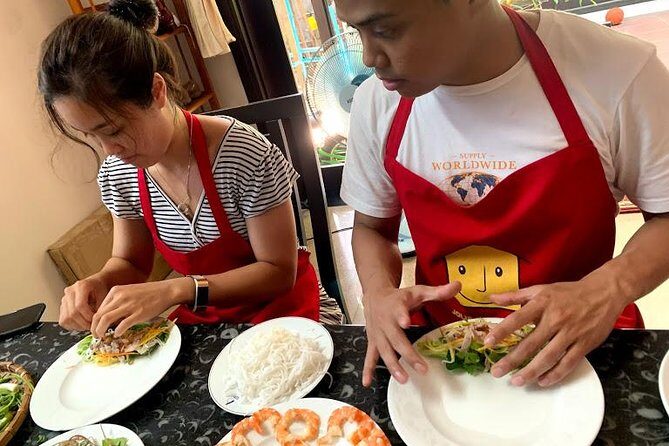
This is one of the experience’s strongest points for me. The class explicitly welcomes vegetarians and uses vegetarian ingredients, not just a swap of one component at the last second.
That means you can learn the full cooking process for the dishes you’re making. You still get the market-and-ingredient reasoning, and you still practice techniques relevant to Vietnamese flavors.
If you’re vegetarian, you’ll want to communicate your needs at booking so the kitchen can plan the menu accordingly. When a class handles this well, it changes the whole day from “hoping for something decent” to “I can actually learn.”



Small group size: why it feels easier to learn
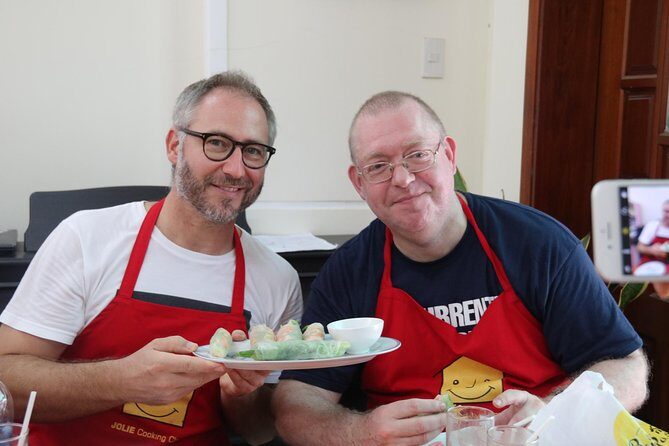
The group size is kept tight. The experience is listed as max 12, and it’s often described as small-group. In practical terms, that means you get more attention when you’re standing at a cutting board. It’s easier to ask questions. It’s easier to correct mistakes before they snowball.
For you, this matters because Vietnamese cooking techniques can hinge on small changes: heat level, stirring rhythm, thickness of batter, and timing. In a bigger group, you’d spend your time waiting. Here, you’re more likely to get the help you need while you’re mid-recipe.
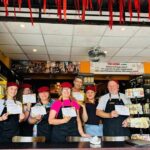
The class also includes fun as part of the experience. People describe the atmosphere as lively and interactive, with a light, friendly vibe. That’s not just mood. When the energy is good, learning sticks faster.
What’s included, what’s not, and how to plan your time
Here’s the clean planning picture.
Included:
- Lunch
- Bottled water, plus tea and coffee
- The cooking experience itself (including making 4 dishes)
- Fun as part of the program
Not included:
- Pick up and drop off
It runs about 5 hours. That’s a sweet spot. Long enough to shop, learn, and eat like a real meal. Not so long that you lose the whole day to one activity.
Meeting point is at 14 Lưu Trọng Lư, Tân An, Hội An. The end point is back at the same meeting area. Also, the start location is described as near public transportation, which helps if you’re staying somewhere central or using taxis.
Weather note: the experience requires good weather. If it gets canceled due to poor weather, you’ll be offered a different date or a full refund.
Price and value: is $55 a fair deal?
At $55 per person for about 5 hours, this isn’t a cheap impulse buy, but it also isn’t priced like a luxury show. The value is in three places:
1) You cook four dishes with guided instruction, and you eat the results.
2) You’re getting ingredient shopping as part of the learning process, not just a kitchen session.
3) Lunch and drinks are included, which quietly saves you money that would add up elsewhere in town.
Also, the class timing is popular; it’s booked on average about 57 days in advance. That’s a hint the experience sells out sometimes, especially for the smaller-group format.
Two budget considerations to keep in mind:
- No pick up/drop off means you’ll cover your own transport to the meeting point.
- There’s a $9 public-holiday surcharge payable on site if your date falls on a public holiday.
If you like doing one “real life” activity in a trip where you do more than take photos, this pricing model usually makes sense.
Who should book Cooking with Jolie in Hoi An
This class is a great fit if you:
- Want to learn Vietnamese techniques you can actually repeat
- Like market-to-kitchen experiences that connect ingredients to flavor
- Want a vegetarian option that still teaches you real cooking
- Prefer small-group settings with coaching
- Enjoy eating what you cook, right away, as lunch
It’s also a good choice for people who don’t want a heavy sightseeing day. You do get three cultural stops, but the kitchen is the main event.
If you’re the type who hates kitchens, hates chopping, or wants purely passive sightseeing, you might find the hands-on part less enjoyable. But if you like learning by doing, this is exactly the style of activity that works.
Should you book this cooking class?
I think you should book it if you want an honest, home-style Vietnamese cooking session in Hoi An, with small-group teaching, four dishes, and the market-and-farm ingredient hunt that gives the recipes context.
Skip it (or at least think twice) if getting to the meeting point is a hassle for your schedule, or if you’re tight on time and would rather do another sightseeing-focused activity that day. Since pick up and drop off aren’t included, your own transport plan matters.
If you’re choosing between a generic cooking demo and something more personal, this one leans personal in a good way: family kitchen, real instruction, and a meal that feels like part of daily life rather than a tourist performance.
FAQ
How much does Cooking with Jolie in Hoi An cost?
The price is $55.00 per person.
How long is the cooking experience?
It lasts about 5 hours.
Where does the experience start?
It starts at 14 Lưu Trọng Lư, Tân An, Hội An, Quảng Nam 560000, Vietnam, and it ends back at the meeting point.
Is pickup and drop-off included?
No. Pick up and drop off are not included.
How many dishes will I cook?
You’ll make 4 traditional Vietnamese dishes.
Can vegetarians join?
Yes. The class can accommodate vegetarians, and vegetarian ingredients are available.
What’s included with the class?
Lunch is included, and bottled water plus tea and coffee are included.
What is the group size limit?
The experience has a maximum of 12 travelers.
What happens if the weather is bad?
The experience requires good weather. If it’s canceled due to poor weather, you’ll be offered a different date or a full refund.
Is there any extra charge on public holidays?
Yes. A $9.00 per person surcharge applies if your tour date is on a public holiday, paid onsite.