Hoi An’s countryside turns quick sightseeing into hands-on time. This private day pairs village life—vegetable gardens, coconut-basket crab fishing, and island food work—with an evening walk in Hoi An Ancient Town. You get a real sense of how people earn a living here, not just how they look for photos.
I love the way this tour mixes active, messy learning with real breaks. The farming stop isn’t just a quick photo stop, and the food part is practical: you help make things, then you eat them. I also like that you’re not rushed through everything; the day is paced around multiple short village experiences.
One thing to consider: part of the experience depends on good weather, and some activities are water-and-footwork friendly rather than fully museum-style. If you’re expecting air-conditioned comfort the whole time, this won’t match that vibe.
In This Review
- Key points to know before you go
- Private village time around Hoi An: how this day stays personal
- Tra Que Vegetable Village: herbs, gardens, and a real farming mindset
- Bay Mau Coconut Forest: bamboo basket boats and learning crab fishing
- Tra Nhieu Fishing Village: whale temple beliefs and field-to-river scenery
- Cam Kim Island: grinding rice, making rice-paper snacks, and eating your work
- The foot massage + lunch rhythm: how the tour prevents fatigue
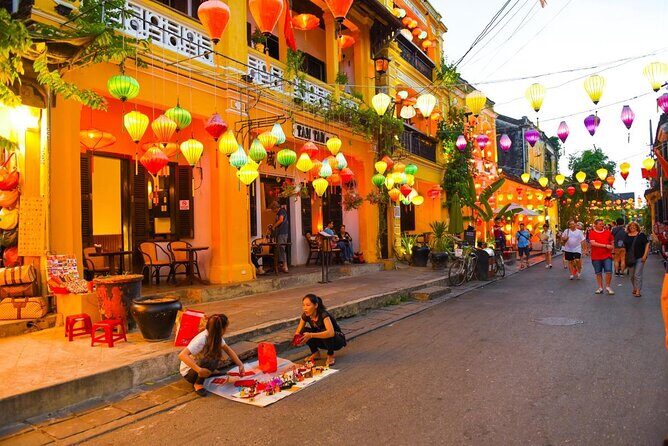
- Hoi An Ancient Town: guided context after the countryside work
- Price and logistics: is $65 really good value?
- Who should book this day in Hoi An’s villages (and who might not)
- Should you book Andy hoi an online Tours for this village day?
- FAQ
- FAQ
- How long is the Hoi An village island experience?
- Do you get picked up from your hotel?
- What’s included in the price?
- Is there a mobile ticket?
- Is this a private tour or a group tour?
- What is the cancellation policy?
Key points to know before you go
- Tra Que Vegetable Village: meet a local family and learn traditional garden growing methods
- Bay Mau coconut forest basket boat crab fishing: ride on a bamboo basket boat and learn local net techniques
- Tra Nhieu Fishing Village + Whale Temple: pass rice fields and see village work tied to local beliefs
- Cam Kim Island rice-paper snack making: grind rice, use rice milk, and sit down with what you made
- Foot massage + lunch included: you’ll earn the slow-down after crabbing and farming work
Private village time around Hoi An: how this day stays personal
This is a private tour, so you’re not stuck waiting on a big bus group or fighting for space in someone else’s schedule. Your guide can set the pace based on your energy level, and that matters on a day like this where you’ll be switching between countryside stops, food work, and walking in the old town.
You can also get pickup (offered when you book) and you’ll have transfers between the villages and Hoi An Ancient Town. For a 5–6 hour day, that saves time and keeps the logistics simple.
One smart detail: the day is built around “learn, do, then eat.” Even if you’re not the type to sign up for cooking tours, you’ll still get plenty of hands-on moments—especially with farming and fishing.
You can also read our reviews of more tours and experiences in Hoi An.


Tra Que Vegetable Village: herbs, gardens, and a real farming mindset
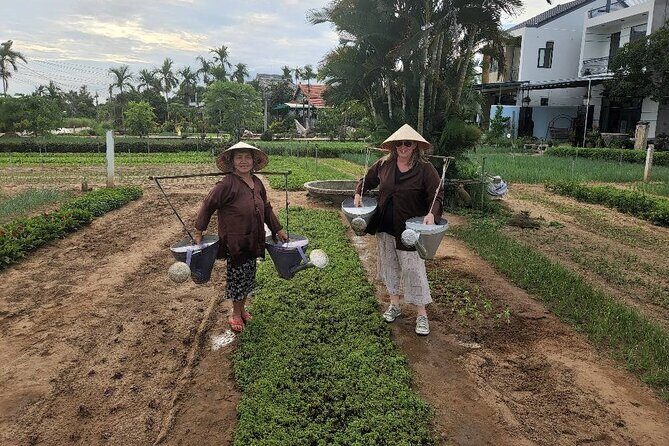
Tra Que Vegetable Village is where the day starts in a way that feels honest and close-up. You meet a local family who grows different vegetables in their gardens. This stop is short—about 20 minutes—but it’s long enough to get the feel of the place.
What I like here is the sensory part. You’ll be around herbs and working gardens, so you quickly understand what makes Tra Que famous: the smell of plants, the careful growing, and the rhythm of people who know their crops.
Practical tips for this stop:
- Wear comfortable shoes you don’t mind getting a little dirty. Even if you’re not digging, this is farm terrain.
- Bring a camera if you love village photos, but also bring curiosity. Ask what the family grows and how they care for herbs. You’ll get better answers than just taking pictures.
If you want to go beyond basics, you might find that some versions of this experience include hands-on farming tasks like working the ground or helping with seedlings. That kind of participation is where the learning becomes real.
Bay Mau Coconut Forest: bamboo basket boats and learning crab fishing
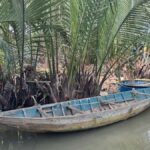
Then the tour shifts from land to water at Bay Mau Coconut Forest. This is the moment that turns a countryside day into something you’ll remember: you ride in a bamboo basket boat and try crab fishing.
You’ll also learn about how locals handle fishing gear. You’ll hear how big fishing nets are thrown and used, which gives you the context for what you’re doing on the water. And because you’re actually on the boat, it stops being theoretical fast—you feel how the activity works and why local technique matters.
The stop is about 1 hour, so it’s enough time to get a couple of attempts and settle into the rhythm, without feeling like it’s turning into a long waiting game.
A few things to think about:
- You’ll likely get a bit of splashing around the edges. Quick-dry shoes or sandals with secure straps can help (as long as they’re comfortable on boat steps).
- If you’re sensitive to motion, mention it to your guide early. They can help you position yourself on the boat.
If your goal is a fun activity with genuine local skill behind it, this is the centerpiece stop.
Tra Nhieu Fishing Village: whale temple beliefs and field-to-river scenery
Next comes Tra Nhieu Fishing Village, with a mix of cultural learning and countryside views. One key highlight here is a temple of Giant Whales, built by local fishermen. It’s not just an odd roadside stop—it connects the sea, the work, and the beliefs of the people who depend on fishing.
You’ll also pass corn fields and rice paddies, plus you’ll see cow herding and day-to-day work in the countryside. The drive along the river bank is part of the value here: it helps you understand that this isn’t a single attraction—it’s an entire working landscape.
This stop lasts about 45 minutes, so you get enough time to take in the temple setting, look around, and still keep momentum for the rest of the day.
What can be tricky:
- The scenery is lovely, but it’s still a moving day. If you’re the type who needs long quiet breaks, you might prefer to focus on one or two areas rather than trying to photograph everything.
Cam Kim Island: grinding rice, making rice-paper snacks, and eating your work
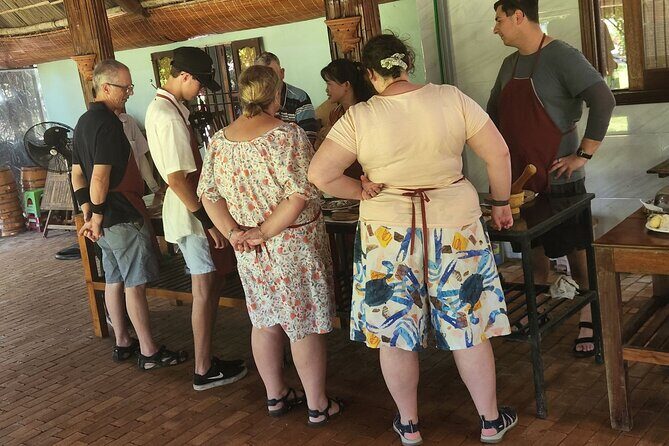
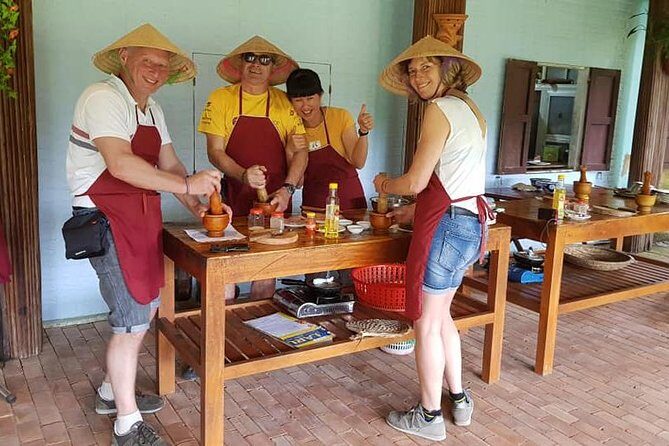
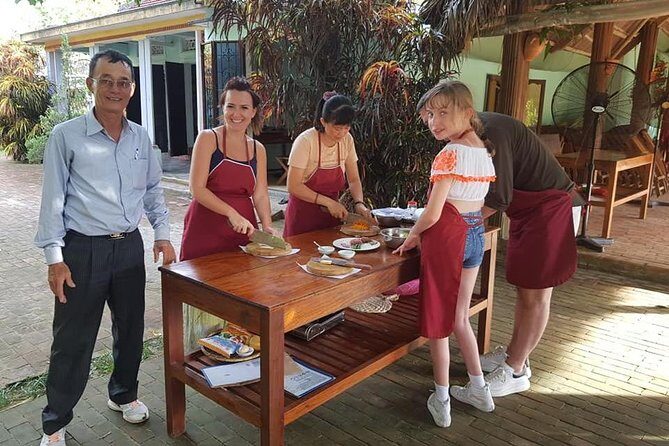
Cam Kim Island is where the “do it yourself” part gets very concrete. You meet local people and help with small daily tasks—grinding rice, using rice milk to make rice papers, and preparing snacks.
This stop is around 30 minutes, and it’s designed so you’re not just watching. You’ll sit down afterward to enjoy the food made by your hands. That’s a big difference between a show-and-tell activity and something you can actually taste.
Why this matters for value:
- You’re not paying for photos. You’re paying for time in real village routines.
- You’ll leave with a stronger idea of how daily labor becomes food—especially with ingredients and steps that feel simple but aren’t always familiar to visitors.
If you’re thinking about dietary needs: the tour data says lunch or dinner at a local restaurant is included, and snack time is part of the hands-on work. But no specific dietary accommodations are listed, so if you have allergies or strict dietary rules, message the provider before booking.




The foot massage + lunch rhythm: how the tour prevents fatigue
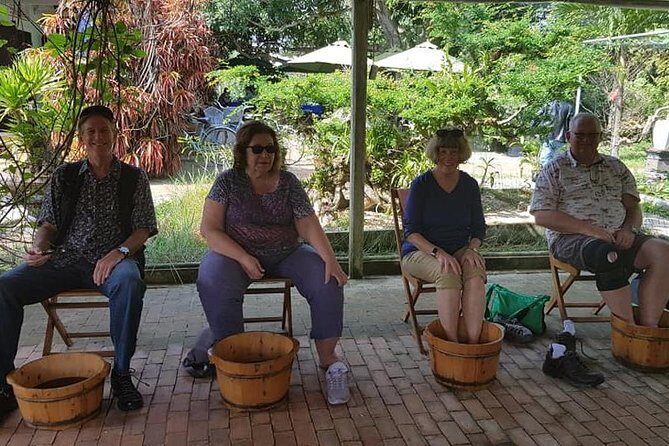
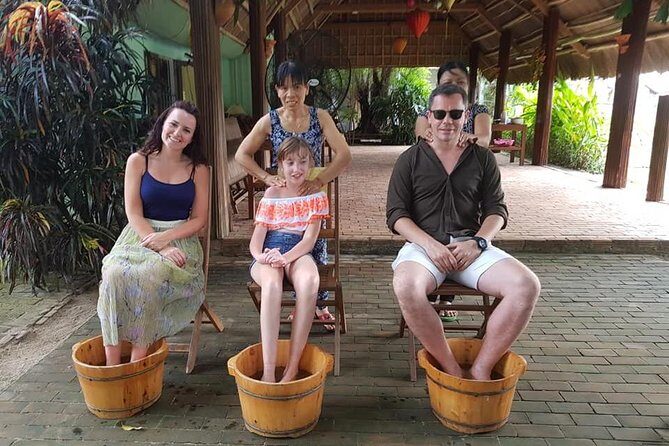
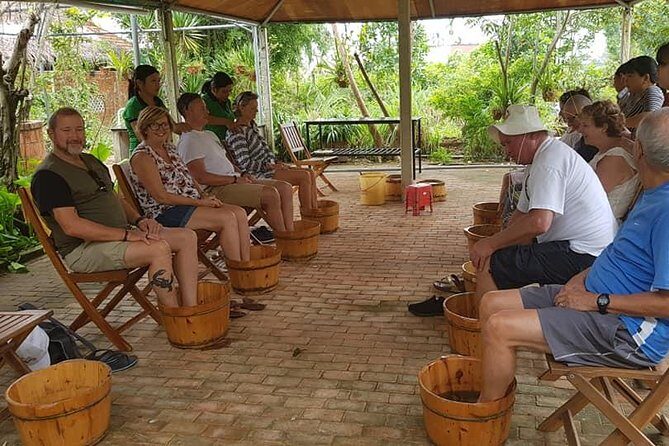
After farming and fishing work, your body will want a reset. The tour includes a foot massage, which is a smart addition because your day has a lot of standing, boarding, and walking.
You also get lunch (or dinner) at a local restaurant, plus water. I like that the tour handles the food side. In Hoi An, it’s easy to spend time hunting for the right meal. Here, you get a built-in pause so you can keep enjoying the day instead of multitasking your way through it.
Balance check:
- This isn’t a spa day. The massage is there to help you recover, not to replace a full afternoon of wellness.
- Lunch/dinner is included, but drinks are not. If you like soft drinks or iced tea, plan to pay extra.
Hoi An Ancient Town: guided context after the countryside work
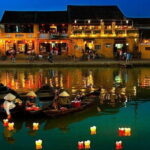
The day ends with entry to Hoi An Ancient City and a guide who explains its history and significance. This sequencing is clever. After you spend the day learning about farming, fishing, and island food work, the ancient town stops being just a backdrop. The guide can help you connect what you saw outside town with how this region developed and why it mattered.
You’ll likely get to explore the old town while your guide adds context. Even if you’ve visited Hoi An before, the guide’s framing can change how you notice details—especially when you understand the mix of local life and the old trading pulse of the area.
A practical note: Ancient Town streets can be lively and walk-heavy. Wear comfortable shoes, and keep your evening pace realistic. You’ve already had an active day.
Price and logistics: is $65 really good value?
At $65 per person for about 5 to 6 hours, the value depends on what you’d otherwise piece together yourself. This price includes several key items:
- English speaking guide
- village entrance tickets
- basket boat ride fee
- lunch or dinner
- transfers (and pickup offered when you book)
- water
- private tour for your group
- mobile ticket (for easier entry)
Those add up fast if you try to book separately. You’d need transport across multiple stops, pay for individual entrance fees, and arrange a basket boat/crab fishing activity on top of a guided walk in the Ancient Town.
What’s not included:
- drinks and personal expenses
My take: this is a fair price for a day that mixes activities and access. You’re not just paying to be dropped at one place; you’re paying for the whole chain of village learning plus guide-led Ancient Town time.
Who should book this day in Hoi An’s villages (and who might not)
This tour fits best if you want:
- hands-on experiences (farming, food work, and crab fishing)
- a private day with a guide who can tailor your pacing
- a mix of culture and practical local skills, not just sightseeing
It’s also a good match for couples and small groups who like active days but still want structure. The itinerary is short enough to keep energy up, but varied enough that it never feels repetitive.
Who might hesitate:
- If you’re expecting mostly indoor time, this isn’t the right pick. You’ll be outdoors in villages, on boats, and walking in Ancient Town.
- If your schedule is fixed and weather is a big concern, remember the experience requires good weather. When weather is poor, you’ll be offered a different date or a full refund.
Should you book Andy hoi an online Tours for this village day?
If your idea of a great Hoi An day includes real village work, food you help make, and the kind of guide who can explain what you’re seeing, I’d say yes, book it—especially at this price point.
The standout strengths are the practical learning moments: working gardens, riding a basket boat for crab fishing, making rice-paper snacks, plus a foot massage and Ancient Town time at the end. Add the personal touch from the guide side—like Andy personally making sure things are going smoothly—and you’ve got a day that feels built for people who actually want to connect with the place, not just tick boxes.
FAQ
FAQ
How long is the Hoi An village island experience?
The tour runs about 5 to 6 hours.
Do you get picked up from your hotel?
Pickup is offered, depending on what you request when you book. Transfers are included as well.
What’s included in the price?
The tour includes an English speaking guide, local village entrance tickets, the basket boat ride fee, lunch or dinner at a local restaurant, and water.
Is there a mobile ticket?
Yes, the tour includes a mobile ticket.
Is this a private tour or a group tour?
It’s a private tour/activity, so only your group participates.
What is the cancellation policy?
You can cancel for a full refund up to 24 hours in advance. If you cancel less than 24 hours before the start time, the amount paid isn’t refunded. The experience requires good weather, and if it’s canceled due to poor weather, you’ll be offered another date or a full refund.